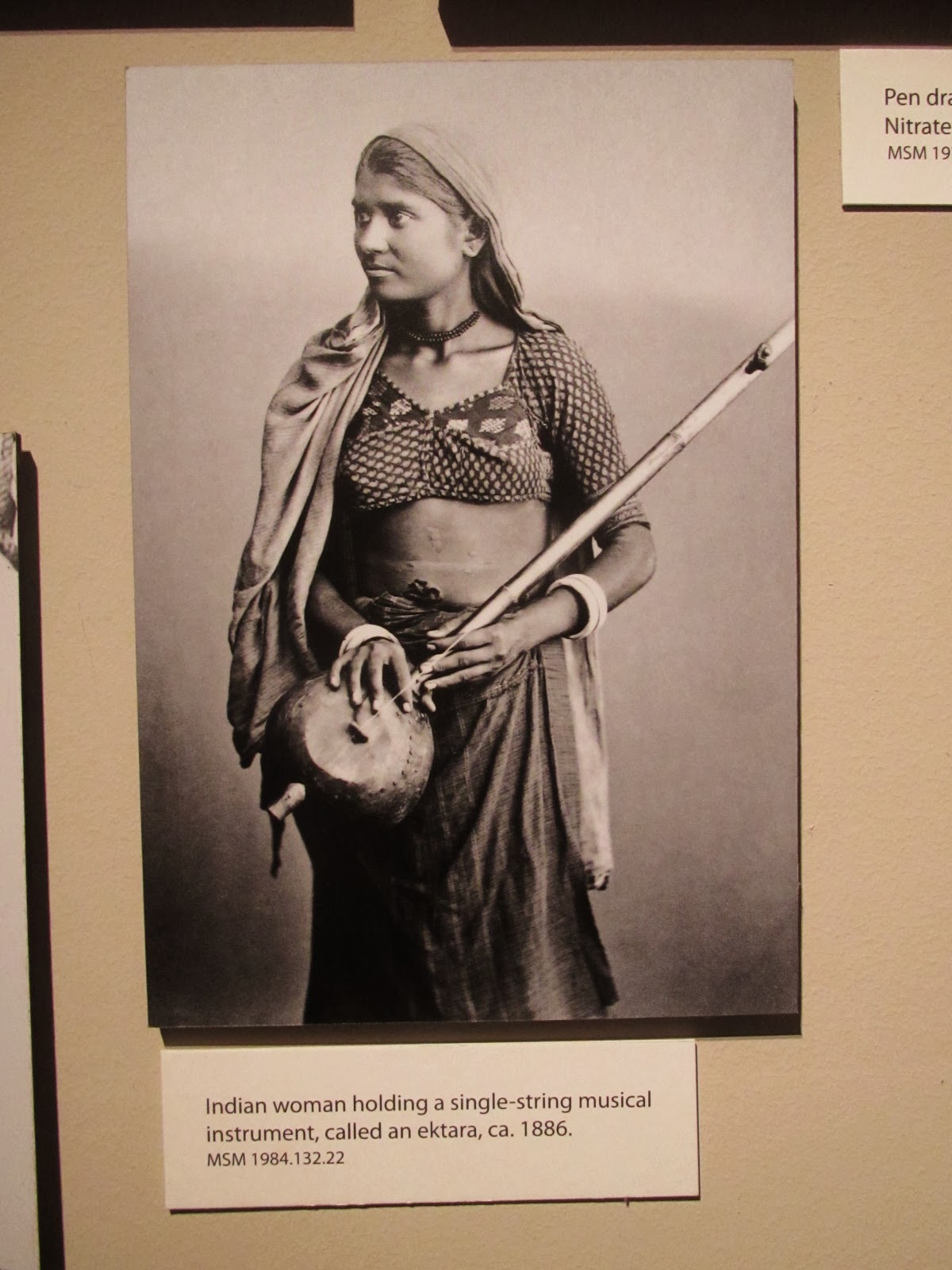
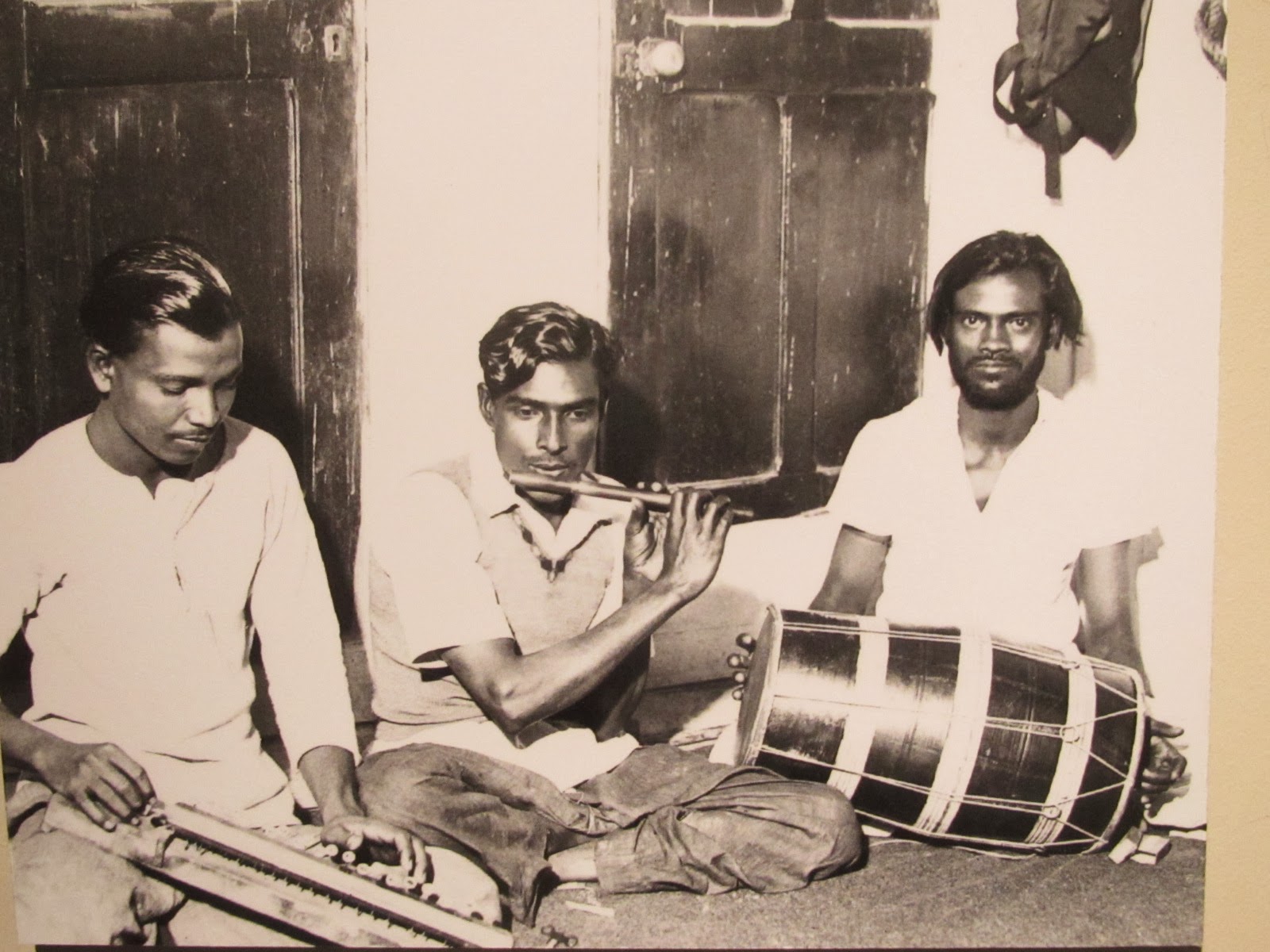
Another surprising find at the Mystic Seaport Museum: 

Educational Technology, Research, and Evaluation

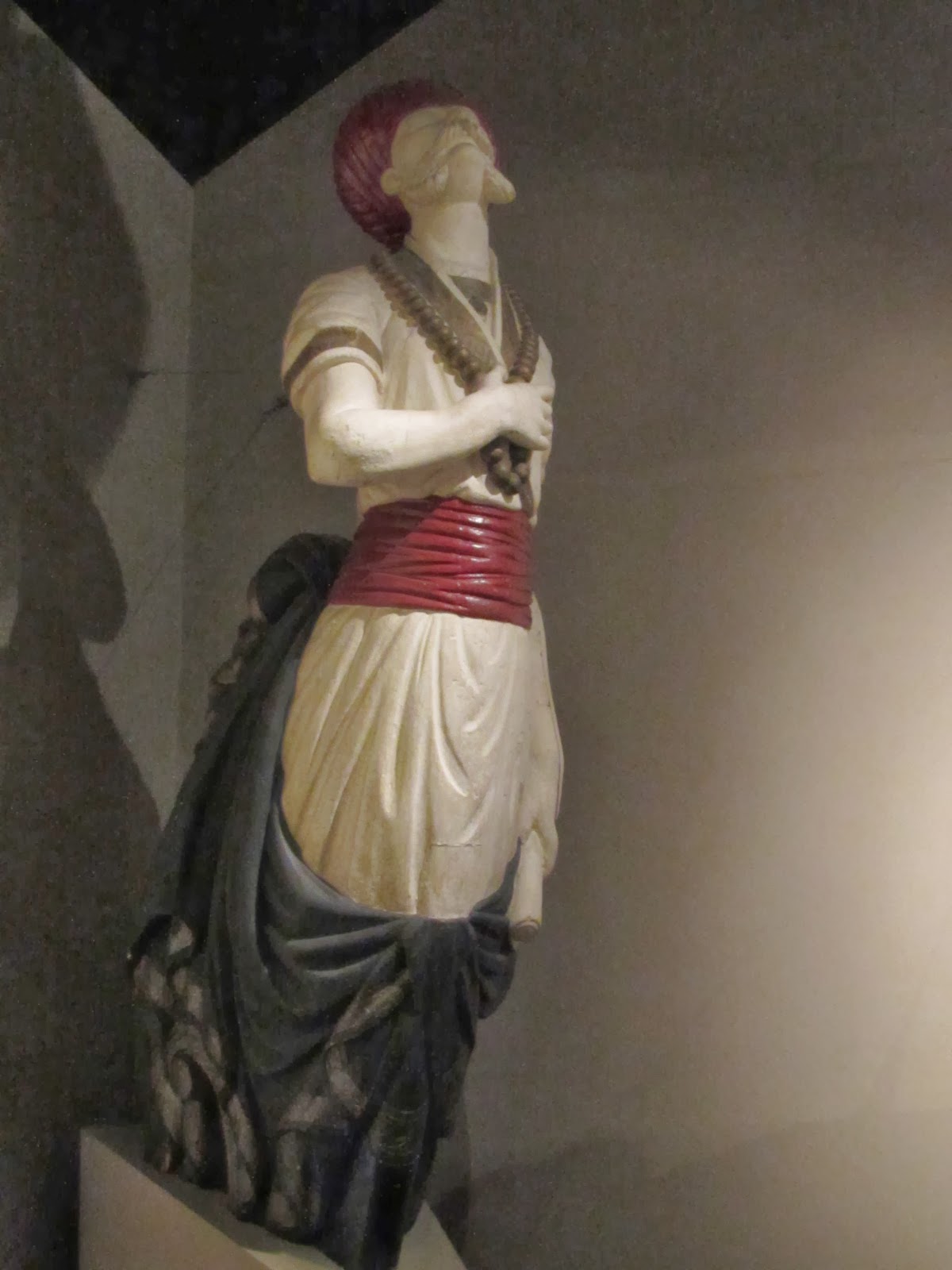
This figurehead is identified as ‘Asia’. It was carved by an Indian artisan for H.M.S. India, launched in Bombay in 1824. The description below says “The turbaned figure is an impressive symbol of India’s economic and social importance in the British Empire.”

Everybody at the information desk was happy to talk and give more information. The most interesting conversation of the evening however was with an older lady. We were talking about Myanmar, a word she could not place. I described it as Burma, the country to the east of Bangladesh. We had a lot more confusing back and forth as she thought it was next to Pakistan and I could not understand how she could miss the whole big chunk of India in the middle.
After some back and forth we realized that the visual of the map in her head was fine, facts from history was the problem. She was in school when Bangladesh was still part of Pakistan and was not aware of its formation in 1971. Part of history that I took for granted as part of world history was not an obvious nugget of information for her.
Some of it is also about geography and how we see things as near-far, relevant-irrelevant, or in size big-small based on where we currently live. More on perception of geography and how we see maps some other time.
One very important event was burning of the Gaspee as the event leading to the declaration of independence rather than the Boston tea party that I learned about in school (in India) learning about American Independence.
The Gaspee Day committee has been arranging various events to acquaint the public with an event that is as much a part of the national heritage as Paul Revere’s ride and the Battles of Lexington and Concord. The Burning of the Gaspee was the first link in the chain of events that led directly to the Declaration of Independence.
A short description from the Gaspee Day committee website:
“In June of 1772 brave colonists from Rhode Island burned the British revenue schooner, HMS Gaspee, during what has become recognized as the first bloodshed of the American Revolution.
For the past 49 years the village of Pawtuxet, RI has commemorated this act with our annual Gaspee Days Celebration. “
The other first (or is it a second) was the Providence art club. The club was started in 1880s by 10 men and 6 women who wanted to create a permanent place for artists to get together, work, have an exhibition gallery and where connoisseurs can go to buy art.

It was fascinating to visit studios that some of the artists opened up for the gallery night. Most interesting was talking with Anthony Tomacelli. Listening to him explain his process of painting and how different colors interact with each other changed how I look at art and the different hues of blue, orange, and violet.
The Little Pictures Show and Sale that the Providence Art Club hosts every year is also a first. The exhibition starts in November and goes on till Decemerb 23. The art has to be smaller than 16 X 16 and priced at $250 or less. I was told that this is an opportunity to buy an original piece of art by some well known area artists cheaper. This year is the 109th year of this exhibition.
There were other firsts and seconds (Providence seems to have a lot of seconds) mentioned by tour participants. I am planning to explore the history of the area more through its buildings and museums. Will post more as I explore more.
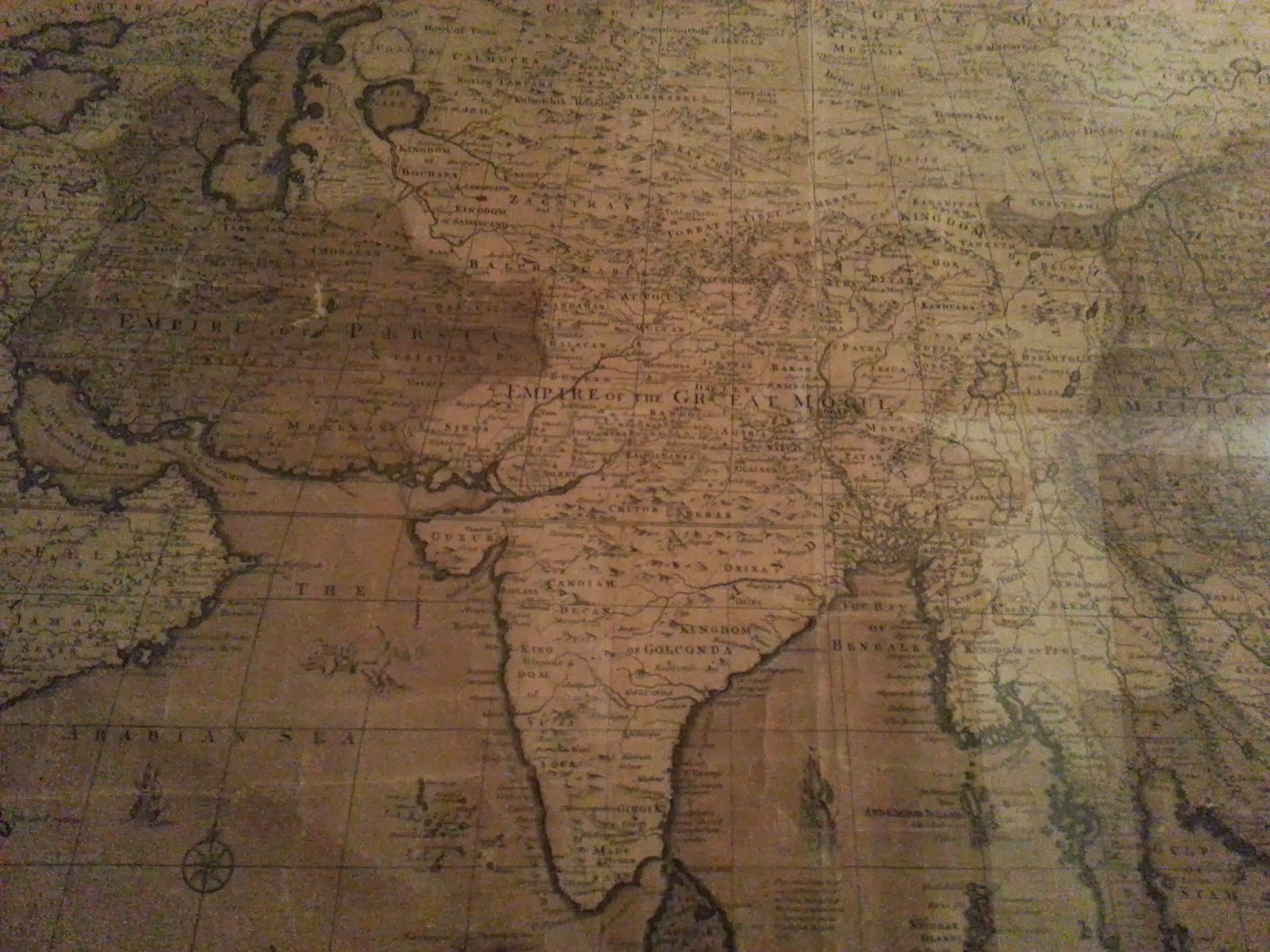
I was surprised and elated to see a map of India when visiting the John Brown House Museum in Providence. The map is actually of Asia next to another framed map of America with western part uncharted.
John Brown was a merchant and ship builder. He was active in the China trade during 1760s -80s. The map looked like it was well used. You can see the paper worn out and with creases in spite of it being displayed flat in a glass frame at present.
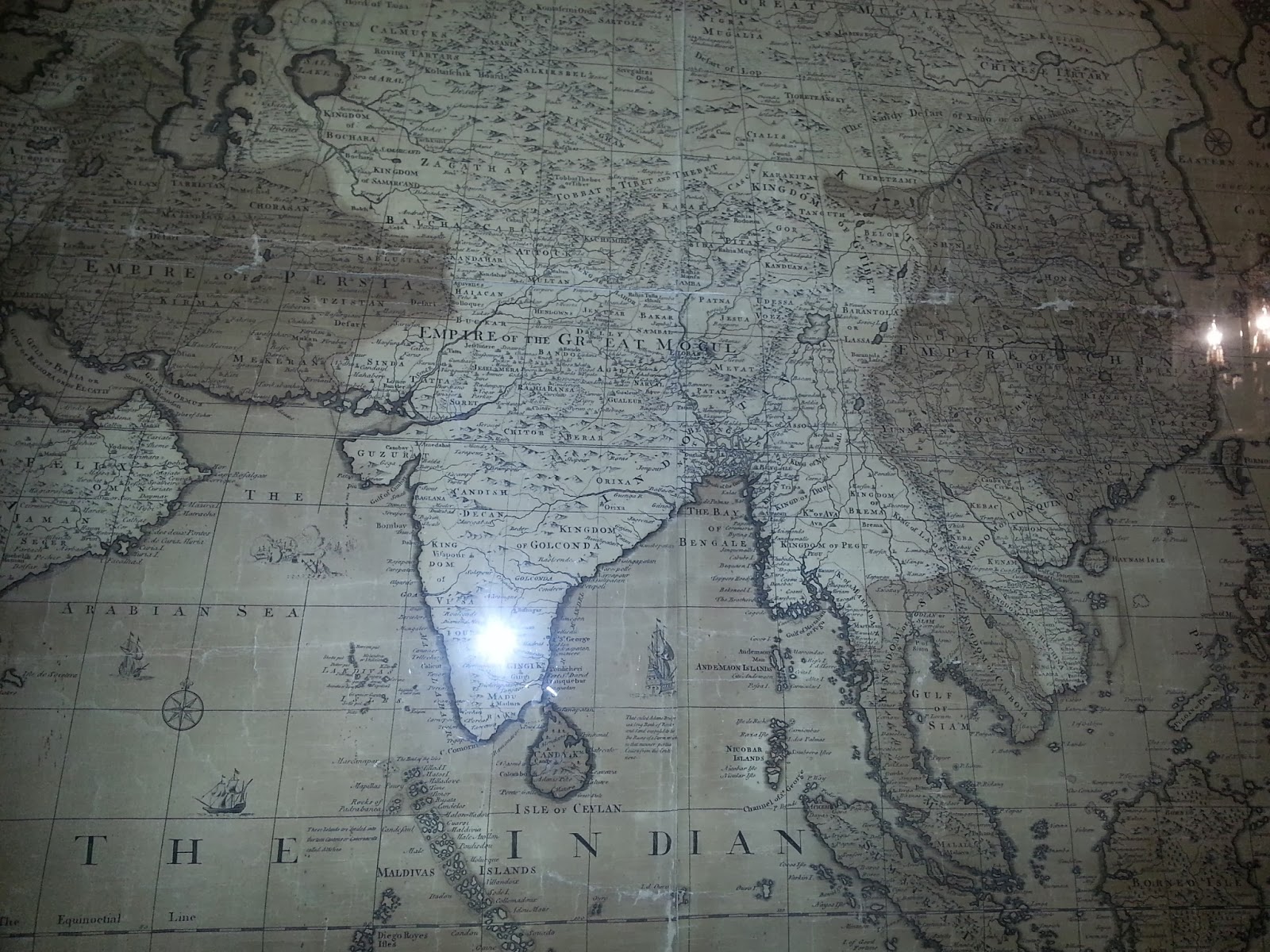
I was quite excited to see the old names/spellings of the familiar land masses of the Indian subcontinent. If you see the larger version of the above map you can clearly see the northern part named as ‘The Empire of the Great Mogul’. On the west of that is Empire of Persia and to the east is Empire of china. There are many kingdoms marked so are ports, major inland cities, rivers, and mountains.

Lot to digest, for example – Choosing two girls from these specific circumstances and not others to contrast, especially since the struggle between tradition and modernity was a thread throughout. The visual of the girl sitting at the beach facing the Mumbai skyline juxtaposed with silhouettes of mountains and temple spires on the left shows this thread of presentation to come. As the documentary progressed, it was very interesting to see assumptions made about what is ‘modern’ when it comes to women in India. What is considered freeing, enabling and how it is shown as one or the other rather than a complex mix in both the paths these girls chose.
I want to go back and watch it again to see how certain views, values, visuals were highlighted or played down.
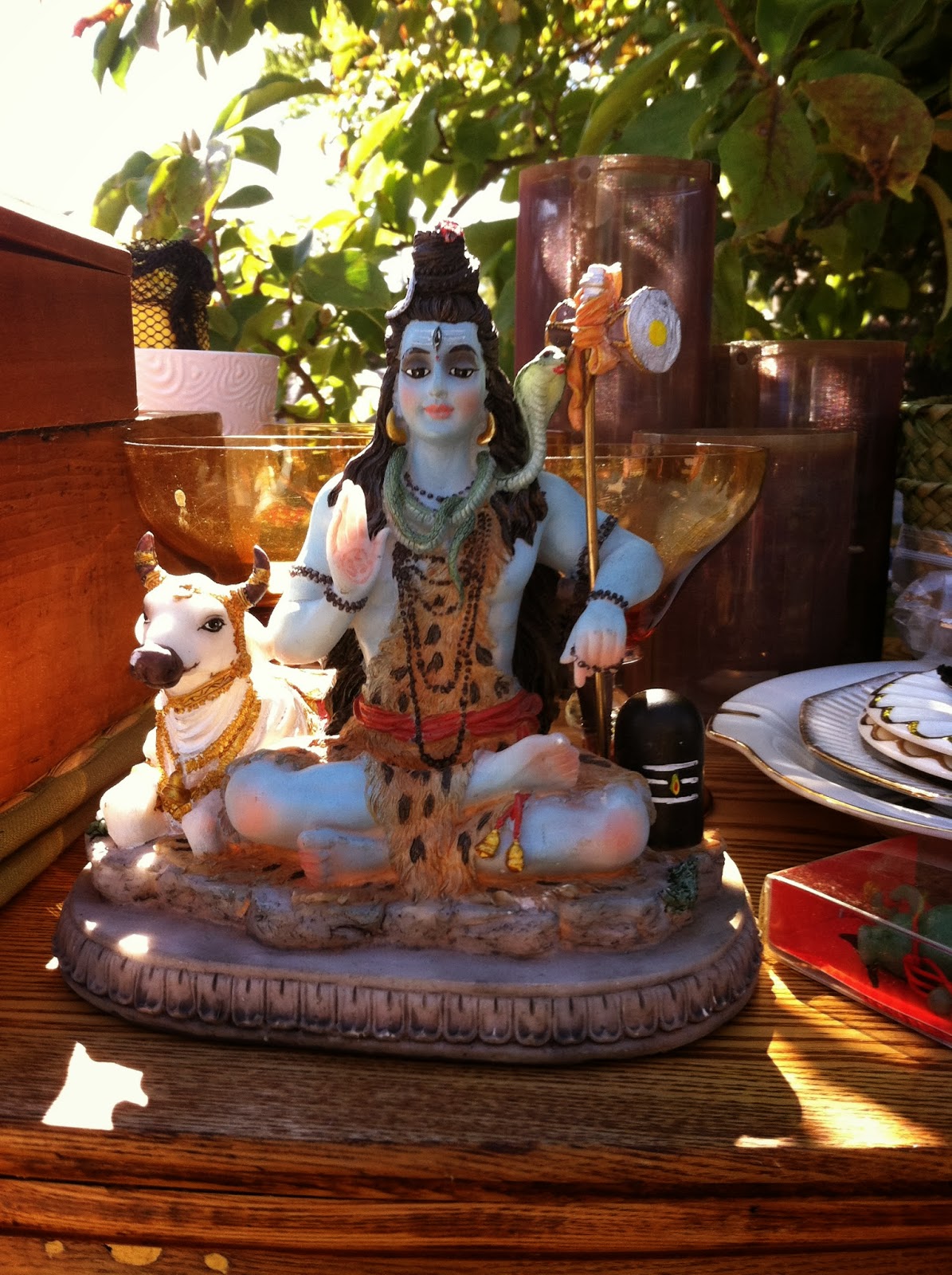
The lady manning the booth had various Ganesha idols, a bull that looked more like Nandi than the bull outside New York stock exchange. It seems her friend collected deities and these were some of her finds on a trip to India.
My efforts at creating google circles was supremely unsuccessful (mostly because of google+ not working for me) so has been making groups on Facebook to selectively share stuff. Some of what I share is geographically related. For example the Africans in India exhibition I recently shared is accessible only to people living in NYC, so are various events at TC, Columbia University or other neighboring institutions. Some of it is more personal, like cute photos of my friends visiting us and celebrating Christmas, opening presents that are not necessarily unworthy to be shared with acquaintances but not particularly necessary to broadcast either.
I created a page on Facebook for my extended family and it has picked up really well. However, there is no way I can include some of the activities of the family I acquired here in US over time like my friend Marcelle and her two boys, my roommate Selen. After my parent’s visit to US the task has become much more difficult. Not only do I have two versions of family but some of the members of these two versions know each other well and I would like to share ‘stuff’ that both will enjoy.
The other side of it is to think about what will people I am related to want me to share. I had not thought about it before. Now that I think about it, I enjoy, actively read everything my sisters, friends in India post in spite of it being absolutely not related to me due to it being locally relevant geographically or local to some conversation I am not party to. Stalking my sisters and friends gives me a feeling that I am part of their lives more than possible given the distance (much of it in time zones).
This long ‘thinking out loud’ is not about the functionality so much but my inability or I think more of my aversion to define my various relations as to where they fit on the plane of relatedness.
I have talked once in a while with my friends from South Africa about the people of African origin on the Indian subcontinent. I knew of them as Habashis who lived in Gujarat. I know that they came to India first as traders and seamen. However, I did not know anything about them beyond their existence. Habashis or the Abyssinians came to India from Ethiopia (Abyssinia). The exhibit mentions the port of Barygasa (modern day Bharuch, Gujarat) that was considered to be an Ethiopian town because of the east African traders who had settled there. So that is where my story of Africans in Gujarat came from I guess. I also knew of Siddis of Janjira but had not really thought of them as people from Africa.
The online exhibit put a lot of people and events I knew in perspective of the flow of people between different continents. This experience was similar to how things I already knew clicked in place when I was reading the book Sea of Poppies by Amitav Ghosh. I knew of the opium wars in China, the famines in Bengal, the British in Calcutta, history of Parsis in Bombay and so on but all of it clicked together in terms of actual people who moved between different places at that time and how happenings in one affected people in other far away places.
I could identify some of the historical happenings and names but did not know their African origin. For example, Ibn Batutta is a well known name for the record of his travels during 1300 A.D. in India, but I had not thought of his origins. He was a Moroccan. Malik Ambar, the formidable general during the Nizamshahi rule in the Deccan. I know of him but now I can place him in the overall migration, and movement of people from Ethiopia, to Arabia, to India as slaves, seamen, ivory traders. See the map of movement of people here.
The most surprising find was of the group of Habashi slaves from Goa when it was under Portuguese rule who ran away to Karanataka in free India. I had no awareness of these events. When we were growing up I heard stories of how my grandfather sneaked in and out of Goa during the Portuguese rule to see his relatives and friends and visit the temple of the family goddess. I never heard the story of the Habashis though. Now it is too late to ask him about them.
The online exhibition has a lot of images, paintings and photos – past and present that make this discovery interesting and more human than just reading the text.
The Schomburg Center also has an ongoing exhibition of images and artifacts open till July 6, 2013. Here is the information about it in case you are in NYC and are interested.
PS: Africa felt like a far away land when I was in India. I think I understand Africa (especially east Africa) differently now after coming to US in terms of where it is geographically in relation to the Indian subcontinent and how it is connected from land and sea. Conncections that I did not clearly see before. I wonder if physically being on another continent changes the way you look at the world geographically. Or does the awareness come from the multi-national crowd and subjects I am exposed to in New York City and in Teachers College.

