India Outside India

Indian Food gone wrong

Some WTF moments shared by my friends related to my post about flavored ‘Ghee butter’:

This DoughnutPlant abomination. Doughpods introduced August, 2016 are savory filled yeast doughnuts:
//platform.twitter.com/widgets.js

//platform.twitter.com/widgets.js

//platform.twitter.com/widgets.js
The Ghee butter conversation:

Parag’s photo share of Dosha bars at Wholefoods:
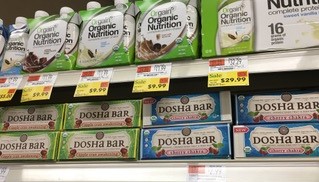
Dosha Bars at Wholefoods

Ayurveda, is the new buzzword at its peak. I have seen it used as an alternative nutrition/diet thing that everybody is following which is already disturbing. People study for 4-5 years minimum for a basic Ayurvedic Doctor degree you know and then MD etc after that. They practice with seasoned Vaidya’s before they start practicing on their own. So how about don’t use the word casually. Knowing your grandma’s herbal remedies is not Ayurvaeda either. I diagress. But you can see why my brain has gone haywire:
Dosha® Bar – Cherry Chakra (Balances Vata)
Dosha® Bar – Blueberry Balance (Balances Pitta)
Dosha® Bar – Apple Cran Awakening (Balances Kapha)
People please desist. I am fine with it being a snack bar and consumed as such. Not a ‘dosha balancing’ bar.
If it was that easy to figure out which dosha was aggrevated and then balance it with a simple snack bar who would need Vaidyas or Doctors.

//platform.twitter.com/widgets.js

India Outside India

Cultural misappropriation: Ghee butter, Chai tea,

Ghee butter? Really?
Explaining the absurdity of ‘chai tea‘ was my first pet peeve when I moved to NYC. But this tops it all.

We saw ghee first in the upscale predominantly white farmer’s market on Hope street. The vendor selling ghee waxed elloquent about health benefits of ghee and offered it for tasting on a piece of bread. Unusual choice.  I wasn’t quite sure what to think about it. Then I saw a shelf full of flavoured glee bottles in Whole Foods and WTF is the only exclamation I could conjure.

The double name as usual – Naan bread, samosa potstickers, ghee butter ….
No no no! It is not spreadable butter. Ghee is not butter. That is the whole point. There were some ‘ghee oils’ in that shelf. not sure if I would rather take that than calling it butter.

Ghee has fallen victim to the health craze unfortunately and seems to have captured people’s imagination. Himalayan salt, Turmeric, and Vanilla were the offerings when I visited last week – two flavours to bring the healthy Indian to merge with the newly found health food and the vanilla to give some ‘I know this’ comfort to the regular American I guess.
(I am disturbed by vanilla chai but once again this tops it)

The bottles do not explain the method of preparing it. Is it clarified butter made of cream or butter churned from yogurt? The distinction is very important according to Ayurveda from where I am assuming the whole health food excitement is coming from.

Now to the suggestated pairings. I can live with using it to saute, sear, and bake. The vanilla ghee however is sugested to be pairied with coffee. Once again WTF

India Outside India

Trinis at Patel’s

Yesterday I was pleasantly surprised to see my colleague from Brown University in the Patel’s store. Since the opening last year we have been regular customers but never imagined meeting anybody I know professionally.

She had three big bags of dried hibiscus flowers. I have never seen dried hibiscus as food ingredient in Indian stores in USA or consumed dried hibiscus except once as part of some exautic tea. My colleague told me that Trinis make a tea with the hibiscus flowers and some spices for Christmas. I wonder if availability at Patel’s is because a lot of Trinis and Caribean customers frequent the place or I missed some Indian connection, which is quite possible given the culinary diversity of India.

India Outside India · Musings

Gudhipadva and the Hindu New Year

Now that we have Whatsapp in addition to Facebook and a growing number of people back home using it, we don’t need Kaalnirnay. As any important festival or religious day dawns in India earlier than in US, we start getting whatsapp messages the previous night.

It was Gudhipadva on March 28. I received plenty of images of gudhi and wishes for the new year. What surprised me this year was the number of messages that said Hindu Navavarshachya Shubheccha. When did Gudhipadva become Hindu newyear? At best it is Marathi new year.
Hindu Nav Varsh Ani Gudi Padwachya Hardik Shubhechha
Gudhipadva is the first day of the first month (Chaitra) of the year, making it the new year’s day. But this calendar is not ‘The Calendar’ of India or Hindus. To start with there are regions that follow the amaant system and others that follow pournimaant system. In north India the month ends with a pournima or a full moon day while in the south it ends with amavasya i.e. no moon day. This clearly makes the first day of month 15 days apart so how can we have the same new year’s day?

Secondly, there are regions that follow a completely different calendar system other than the lunisolar calendar that we use in Kalanirnay for example. The Malyalam calendar is a solar calendar. First of each month is based on the movement of sun through the zodiac. When I started digging more I realized that there are other regions that follow a similar method. Read more details about different calendars in India here. I have not even started digging into conventions in different communities that start the year in different months or seasons.

People calling Gudhi Padva, hindu navavarsha or Hindu new year wipes out all these differences. These are not nuances. These are completely different practices.

I wondered where the ‘Hindu nava varsha’ nomenclature came from suddenly as I had not seen it before. Seems that RSS always referred to Gudhi Padva as Hindu nava varsha. I wonder if the copy paste and forward system of whatsapp made it so ubiquitous that it finally reached me. The question is whose new year is it then? Mostly Marathi upperclass hindus pretending that their practices are the practices of Hindus of all shapes and sizes.

You might think it is a small thing, it is just wording but for me it showcases homogenization of hinduism and what it means to be a Hindu. It is disturbing.

India Outside India

India via Brazil

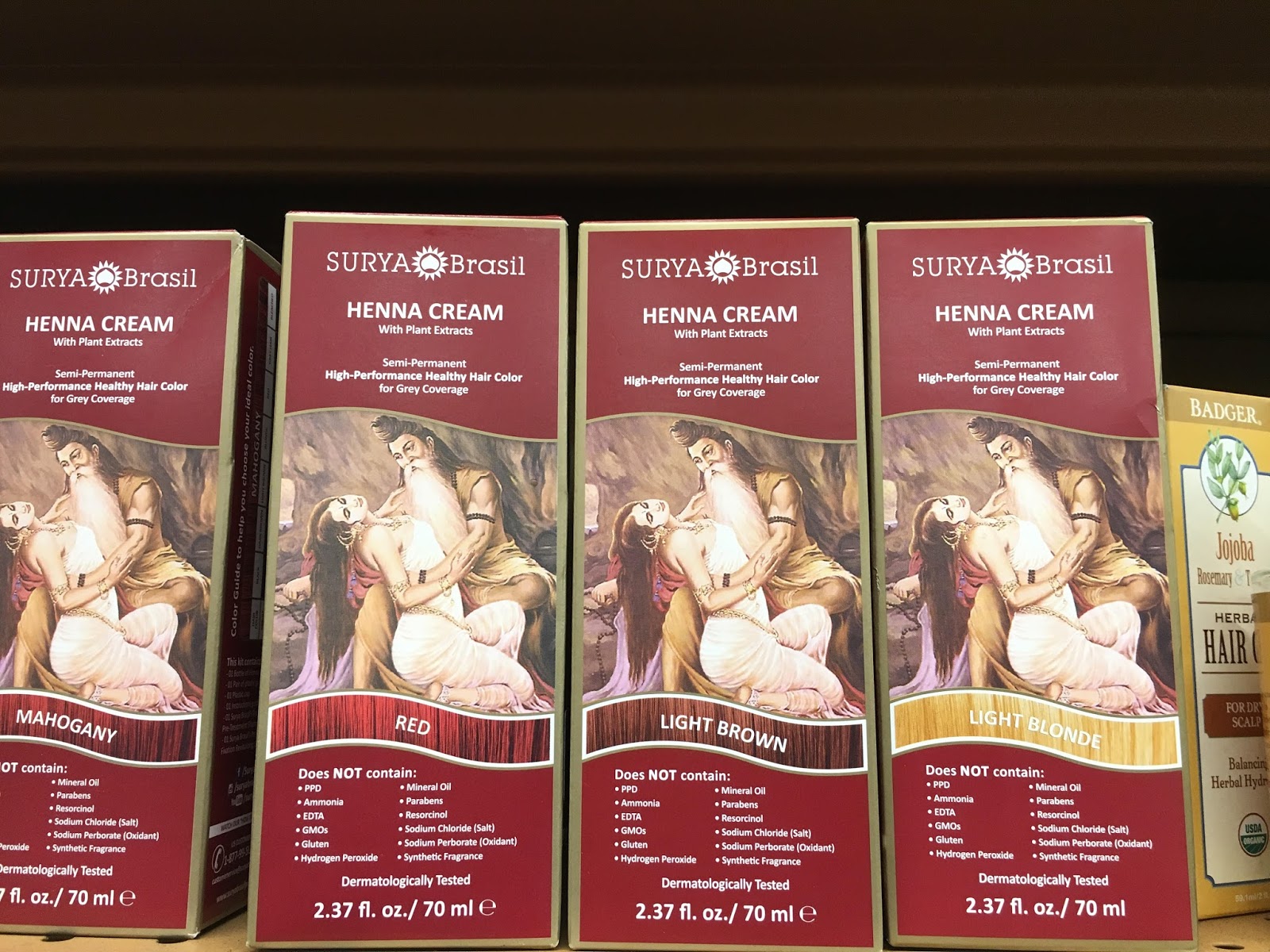
Hair color product for women, as seen on Whole Foods shelf :

A google search shows that Surya Brasil is a company from Brazil. It was baffling at first, this journey of henna and the mythological imagery (invoking possibly Vishwamitra and Menaka) ending in US via Brazil. A little digging led me to this:

I was born and raised in Brazil but my heritage is equal parts Italian and Indian and it was my family who showed me how to take care of myself and use the best of what nature provides,” – Wanda Malhotra, one of the founders of Surya Brasil.

There is of course the usual calling on the Ayurveda.  I am really tired of people name dropping Ayurveda for anything and everything. Ayurveda is a nuanced and well developed medicinal system with its own pharmacopeia. Your grandma’s home remedy is not Ayurved. Just like your knowledge of how to use aspirin does not make you a doctor.

Coming back to the visual itself. I see the sage Vishwamitra and Menaka in the image. Although a lot of hair on the sage, the product is meant for women. (The website has a different product line for men.) May be women who want to seduce unavailable or difficult to get men?

The image reminds me of Raja Ravi Varma’s paintings of mythological figures in Marathi or south Indian garb made popular by the lithographic prints to the point where you can find these styles of images on calendars in tea shops and sugarcane juice stalls in Maharashtra.

I wonder what was the motivation of the company when they used the image and what non-Indians seeing this on the shelf in Whole Foods think of it. Probably invoking the natural, the ancient, and the exotic?

India Outside India

The Turkish connection

Selen and I used to get a kick out of finding words and phrases that sounded similar in Turkish and Marathi our respective mother tongues. For example, Jalim Duniya, a phrase we use in Marathi (originali Hindi, Urdu) to dramatically convey ‘cruel world’ means exactly the same thing in Turkish just with less drama involved 😉

Not only do we have words that are similar but some words that point to India in some way, a reminder of the trade links between the regions long back.
When visiting the Spice market (Egyptian market), I saw something named Indian Saffron. After a bit of digging I realized that it was turmeric, not saffron at all. Seems that it is used as a low priced substitute food coloring for the real saffron. That made me very sad as we do grow Saffron in India. Many times it is also sold to unsuspecting European and North American buyers who do not understand the difference.

Another baffling one was ‘Hindi’, i.e. the bird Turkey. How did the bird get the name in the U.S. that points to Turkey and then in Turkey it points to India? After digging a bit for the origin of the word, the mystery deepens, the bird actually is native of the Americas so didnt really reach Europe from India via Turkey.  😮

This wikipedia article has some theories about the origin of the word. Some of it is related to Columbus. Of course, who else? 😉

India Outside India

The Indian Elections

Facebook has been going crazy for a while building up to the Indian elections. I have never seen stronger views for and against and emotions running so high with respect to the political parties. I am happy that my Facebook feed showed views from all sides. That means I don’t live in a news bubble.

I was surprised when a friend mentioned that many people from NJ were going home to cast a vote. I was somewhat ambivalent. Mostly being geographically and thus emotionally feeling distant and not able to sift through all that was being said in the media.

The greatest shocker though was the gathering in Times Square to watch the Indian election news as the counting began May 16 morning IST and May 15 night eastern time.

I am not still sure how I feel about the landslide win for BJP with a record breaking 68+% voter turnout. Mostly because I cannot figure out if the people’s mandate was based on their understanding of who will put the country on track or with the understanding of who the country and putting on track is for.

India Outside India

Figureheads

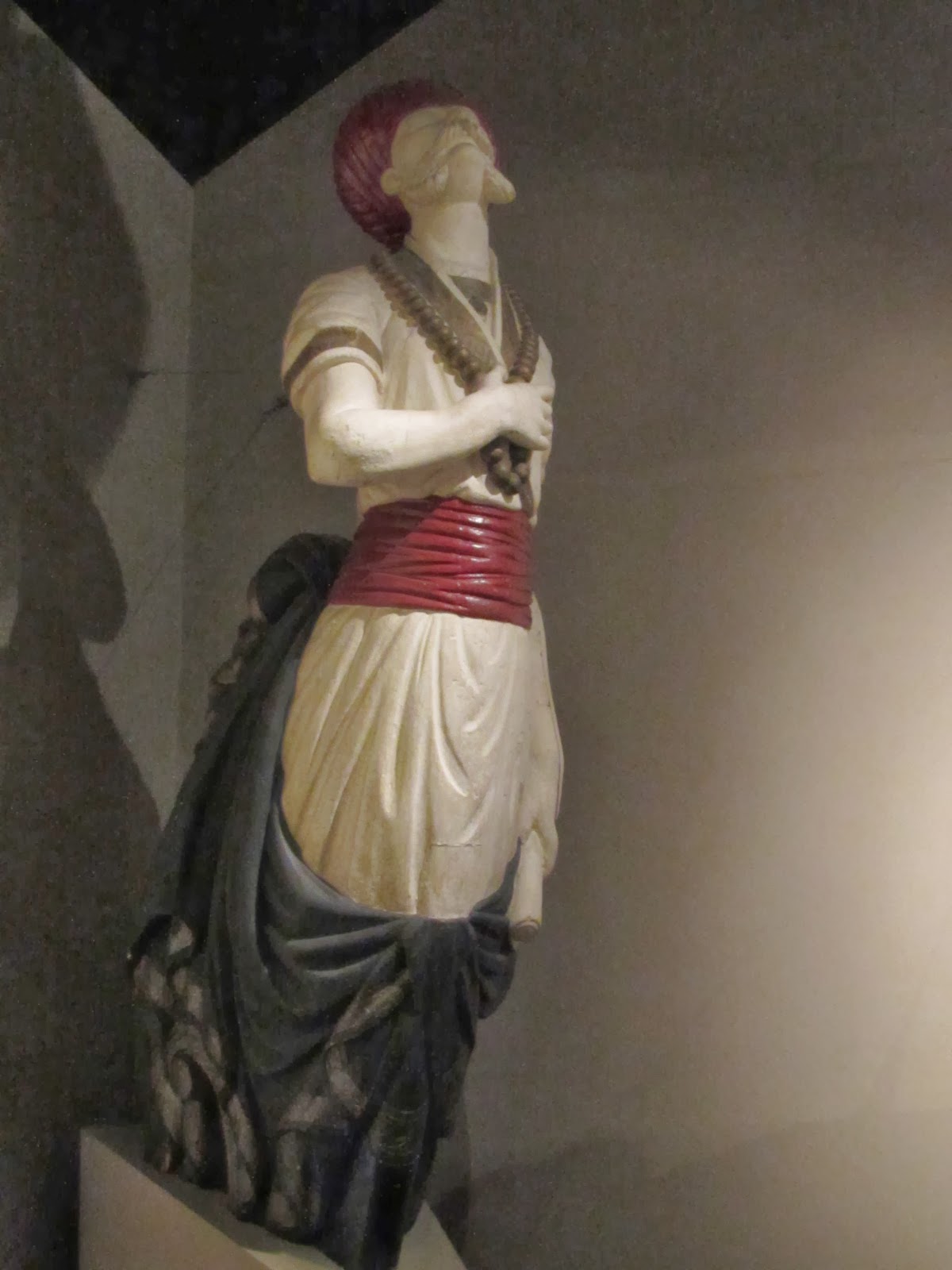
Was surprised to see Maratha looking figureheads in the Mystic Seaport museum among mostly European Ladies some more dramatic, some realistic.
This one did not have a name or origin except the sparse description of it being ‘exotic’. To me it looks very much like a Marathi/Maratha saint. The beads he is wearing reminds me of Varakari tradition and the scroll in his hand says that he is mostly not a warrior. 

This figurehead is identified as ‘Asia’. It was carved by an Indian artisan for H.M.S. India, launched in Bombay in 1824. The description below says “The turbaned figure is an impressive symbol of India’s economic and social importance in the British Empire.”

India Outside India

Indian subcontinent as seen through an American merchant’s eyes

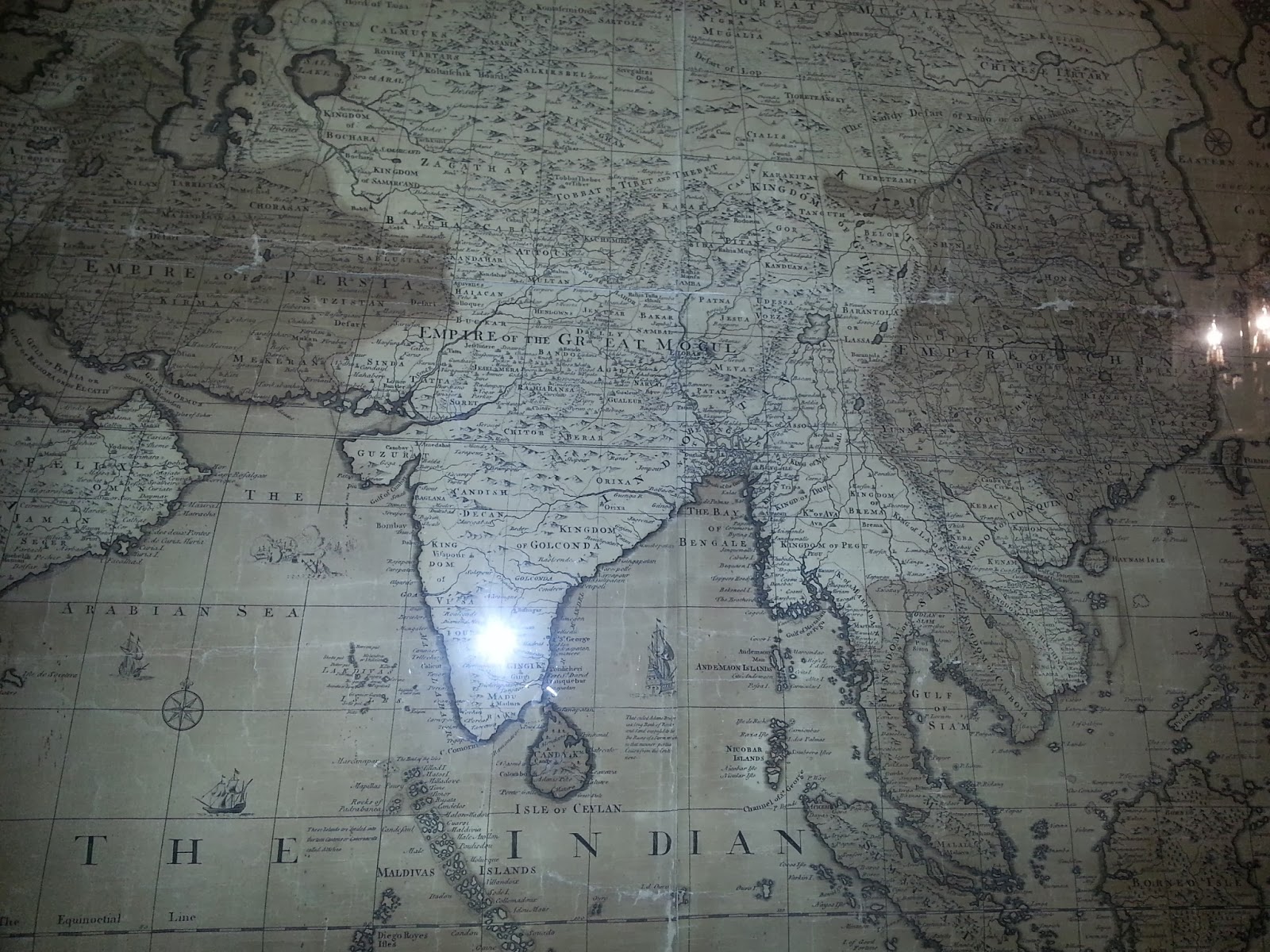
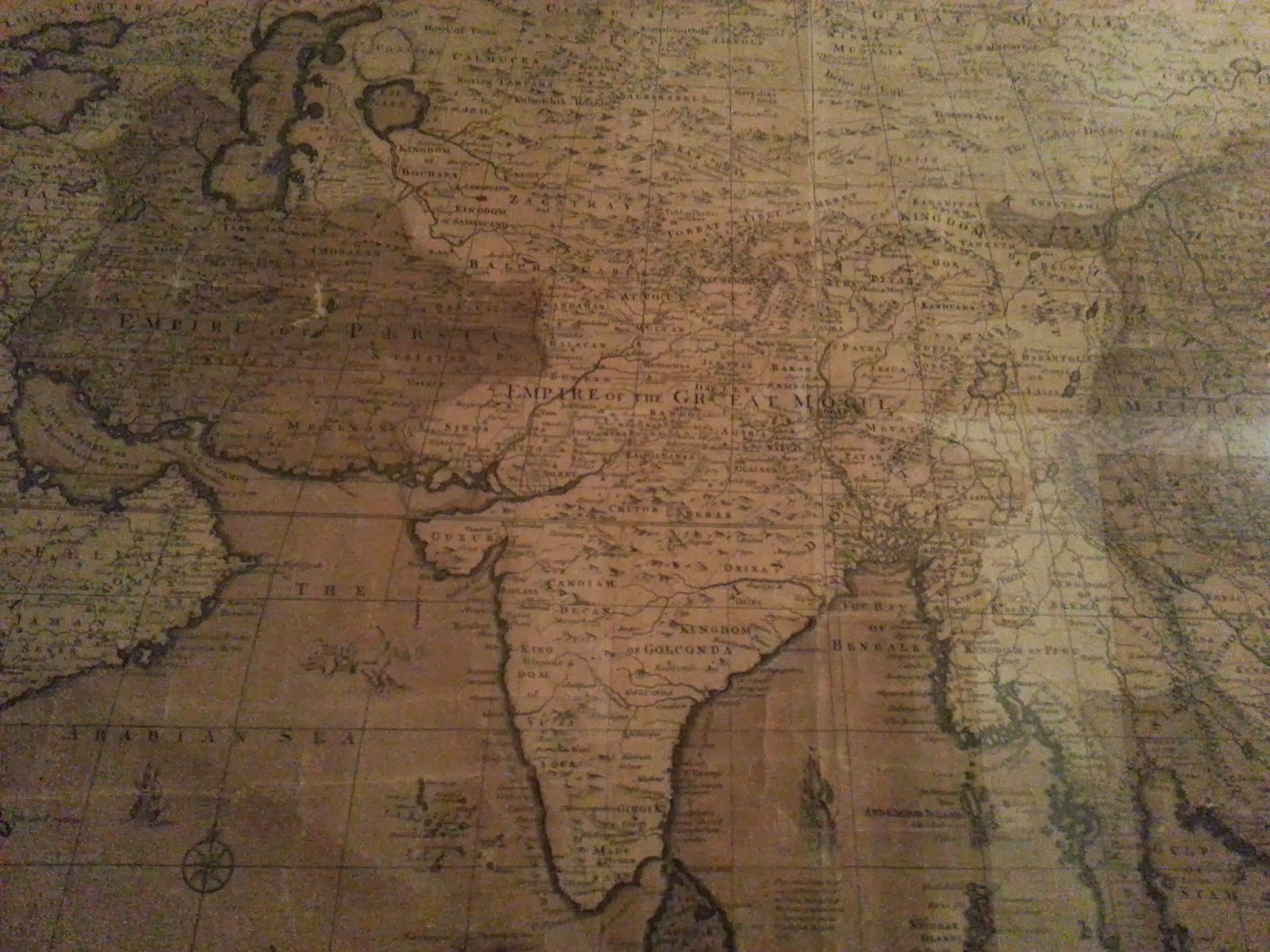
I was surprised and elated to see a map of India when visiting the John Brown House Museum in Providence. The map is actually of Asia next to another framed map of America with western part uncharted.

John Brown was a merchant and ship builder. He was active in the China trade during 1760s -80s. The map looked like it was well used. You can see the paper worn out and with creases in spite of it being displayed flat in a glass frame at present.

I was quite excited to see the old names/spellings of the familiar land masses of the Indian subcontinent. If you see the larger version of the above map you can clearly see the northern part named as ‘The Empire of the Great Mogul’. On the west of that is Empire of Persia and to the east is Empire of china. There are many kingdoms marked so are ports, major inland cities, rivers, and mountains.