Dilli Diary

Ramleela

After agonizing over which Ramleela to go to we selected one at the Red Fort. We started towards the pandal we could see as we were coming out of the station. The red fort is closed for the duration of the festivities. P1030213.JPG

The first reaction when we entered was excitement like a child. There were joy rides including multiple ferris wheels; all the mela food items – buddhi ke baal (cotton candy), bhel and variety of chaats, barfacha gola (chusky/shaved ice) were right there with the other fun stuff like photo studios, stalls where you could win gifts when you throw a ring or shoot correctly at a target, kid’s toys, haunted house. Basically all the things you experienced in a mela as a child or saw in an Indian movie where the brothers get separated. LOL.

After taking in all that was on offer, we made a beeline to the Ramleela stage. On both sides of the stage there were empty pandals, some with lavish seating. As we realized later, these were for the special guests of people who paid for these spaces as a contribution to the Ramleela.

No crowds at this time so we decided to explore the huge food pandal in front of the stage. The stalls were beautifully decorated with the ingredients of dishes they were selling and the chefs and servers were dressed impecabelly. The pandal had much more of a royal feel than the food stalls we saw coming in.  We ended up trying three snacks – Mung chilla, Kulle, and paneer mava tikki. The green and mithi chatanis were nothing like I have had before. Thick and flavorful.

After PetPuja we decided to explore the rest of the mela beyond the stage. To our greatest surprise it was the LavKush Samiti’s mela right next door. The feel was much different than the New Dharmik Samiti mela we had just left behind. It was also bustling with people. The ramleela was going on the stage already.  No royal looking food stall here though it was full of the same kind of stalls and food items but with slightly less fanfare. Both the Samiti’s had put up digital screens as backdrops but the Lavkush also had huge screens further away from the stage that showed multiple storylines going on the stage. When we arrived Ram and Lakshman were walking in the forest probably after Sita’s abduction. The song narrated their dialogue. For a long time they kept walking slowly across the stage so we decided to go back to the New Dharmik to see what was going on there.

We sat for a long time waiting for some movement. The volunteer kids dressed in white and khakis arrived, had their food, took their places for crowd control and tied the remaining food in a bag next to their posts to the bamboo poles dividing the seating zones. After a short chat with them we realized that the performance will not start for another hour and will go on past midnight. The weather was beautiful, the air smelled of grass clippings, so we decided to settle down with our main course of dinner.

Throngs of crowds started arriving and we realized it must be time. Ram, Lakshman, Sita arrived in a chariot and went round the huge seating area. Then Bharat and Shatrughna arrived and did their rounds. The story moved faster. The background music was sophisticated and more importantly the acting was really good and believable. As the scenes unfolded on the stage, newer characters came out to make their rounds through the crowds.  We liked the imposing Ravan the most.

Ready to go home we reached the metro station and realized there was a third mela organized by the Shri Dharmik Samiti, next to the first one. We had missed it as we came out of the metro with our backs to their entrance. This one needed an Entry Pass. We were told this was the best one that we should not miss and some person at the door made sure that we got a pass. Visits to the three melas was a lesson in sociology and how the class differences play out. We realized that the placement matched exactly with the classes that gathered there Lavkush, New Dharmik, and Shri Dharmik – everybody going to the one that they felt most comfortable with. The look and feel was different; the security arrangements were different; some food items in Shri Dharmik weren’t available in others and some of the toys on offer showed the class divide as well. I wondered if the Shri Dharmik used the passes as a special effort to keep what they thought as the ‘rifraff’ out. It was quite an education about Delhi society.

Some interesting things we saw in Shri Dharmik Samiti’s mela:

Dilli Diary

Pujo Ascche

p10301291.jpgAs the weather gets better I am planning my walks to understand this city I call home now. Opened up the season with a pre-Durga Puja walk with Delhi By Foot yesterday.  My way of trying to get a hang of how to do pandal hopping during Durga Puja, supposedly the thing to do in Delhi in October.

The walk in CR park ended up being an insider’s look on the frenzy as Bengali’s get ready for the most important festival of the year. The bazars were overflowing with people shopping in the book fair; buying the special Pujo magazines; wandering through Pujo mela bursting at the sims with stalls of clothes, accesories, home goods; preparing for cultural programs, dance competitions, and last minute planning meetings.

The pandals are getting ready for the arrival of the goddess and her family.

The idols are getting ready at the Kumhor next to the Kali badi in CR Park. Some are being created in the pandals. The visit to the workshop where artisans were preparing the idols reminded me of our childhood visits to the Dhondphale workshop in Rastapeth before Ganesh festival. My father in a bid to avoid the fetival crowds used to take us to the workshop in lieu of the pandal hopping later.

The idol making is completely different in this case however and I am glad I could see behind the curtain work going on. Unlike the lone Ganesh, Durga Puja idols we saw were created as a family – Durga with her lion, flanked by Ganesh with the mouse, Kartikeya with his peacok, and the sisters Lakshmi and Saraswati. The whole family is created on a backdrop built with bamboo. The torso, limbs and body parts, unlike the ganesh murti are first created in hay and then finished with multiple applications of clay of various viscocity. Most of the idols were going to be dressed in actual cloth so only the visible parts were being painted. This was new and different as Ganesh idols come ready with the clothes and accessories created in clay and painted to show the fall of the cloth.

The idols in one of the CR park pandals are ready but still need color, clothing and accesories. The artisans from Kolkata have been working right here since August. When we visited the pandal they were creating paper mache decorations that depict the art forms of Bengal. Organizers urged us not to post photos and ruin the surprise. Looking forward to visit some of the pandals starting saptami to see the finished look.


Dilli Diary

Hidden Gems: Church at Turkman Gate

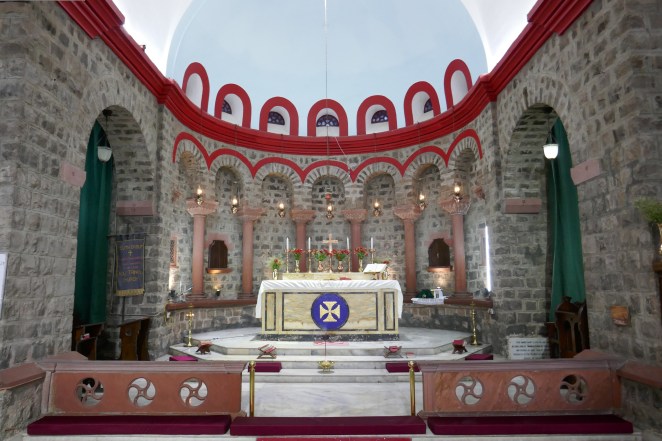
A short walk in the gali to the right of Turkman Gate brings you to an unexpected sight – The Holy Trinity Church. The facade is unlike any other church I have seen with two domes flanking the central sloping roof. P1030040

The day we visited the Church was getting ready for the Sunday 8:30 am service. People had started coming in. Each one removing their footwear outside before going in, just like you would in a temple or a mosque.

The alter is painted simply in white and red, just like the facade.

P1030041

To the side are two baptismal pools. One for babies on an ornate pedestal and one for adults, a small step pond. The adult baptismal pool was filled for a ritual planned that day.

After enjoying a serene moment in the church we stepped back into the chaos of Old Delhi.

Dilli Diary

Disappearing Crafts

Came across this promotional video about Rogan art on amazon India facebook page. Reminded me of seeing it for the first time at Hunar Haat in February at Connought Place.

I had planned to write about it and a couple of other interesting artisans I met at the Haat who were trying to revive or save these dying practices. Somehow never got around it so here it is.

Rogan Art
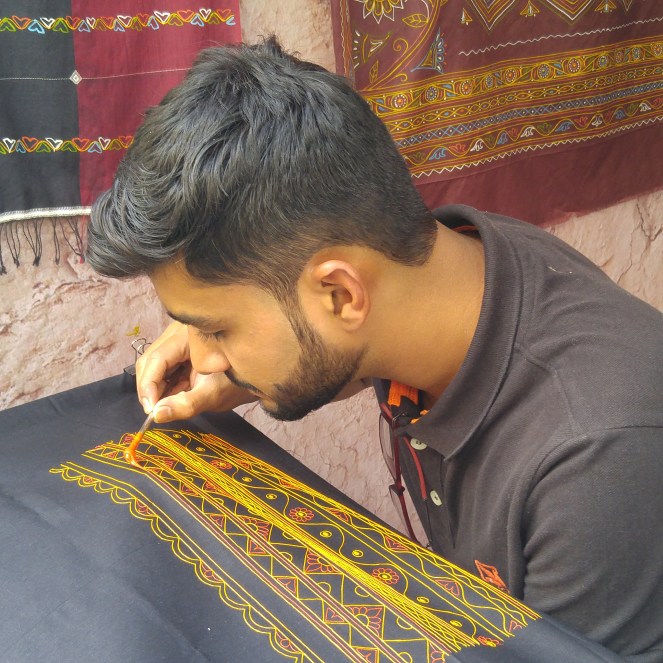
Khatri’s son working on his piece oblivious of the onlookers.  20180218_152250.jpg

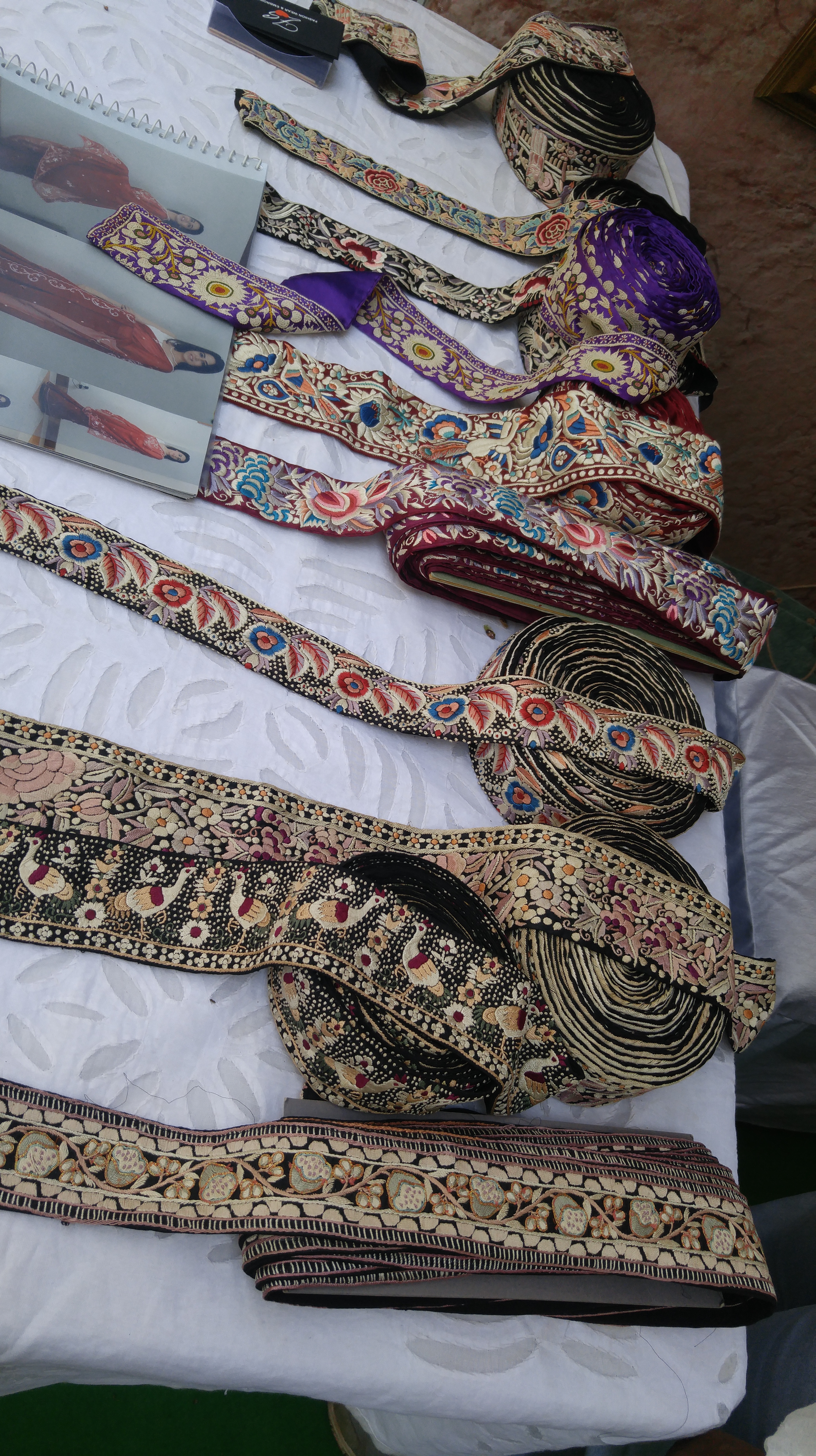
The borders for parsi saris. One of them was priced at Rs 90,000. The embroidery work for these intricate designs is hard on the eyesight. …. works to save this art by providing good working conditions, better wages, and by training the new generation. 20180218_151415.jpg

Watch the documentary on the artisans here.

Dilli Diary

Pune-Delhi on Duranto

We decided to take the train back home to Delhi from Pune – Partly to reminisce about Parag’s Pune-Delhi travel as a student, and partly to fulfill my love for train journeys. I am glad we decided to take the Duranto, a superfast train that brought us to Nizamuddin in 20hrs.

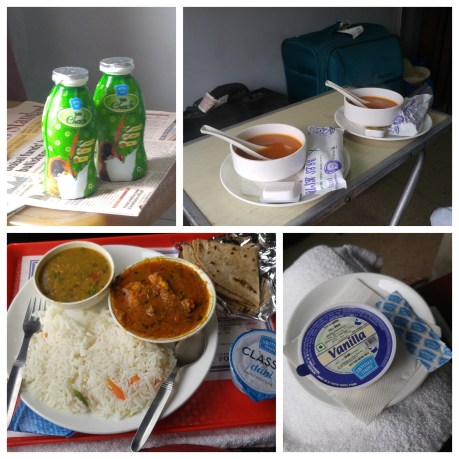
Our first train journey in India after 12 yrs was memorable due to the landscape outside and the service provided. We had an unending supply of food, clean bedding, and very helpful servers. Here are some photos:

duranto food collage

The route was different than the other trains to Delhi that go through Daund. We took a North westerly route going via Khandala, skirting Mumbai, continuing on to Gujarat, and then Madhya Pradesh. It is end of June. The Monsoon has settled in making it the best time to enjoy the landscape through wide windows spanning the entire coupe.

IMG_5990

Khandala ghat area as always was full of waterfalls. Lush green undergrowth covering  all the rock faces everywhere.

After a patch of concrete jungle as we went past outskirts of Mumbai, it was mostly pastoral landscape. Some areas were tilled, ready for sowing, waiting for the right amount of rain, some drenched in rain ready probably for paddy. Some people were catching fresh water fish and probably crabs in shallow rivulettes and fields filled with water:

The 20 hr time was managed because there were only 5 stops. Vadodara was the longest at 16 minutes where we got a chance to get out, buy the famous gujarat peanuts, and watch the hustle and bustle:


Dilli Diary

Delhi Unseen

Coming home late nights or getting out early morning, you see a completely different Delhi.
Tonight we saw this gentleman heating milk on the road outside his dairy. The milk will have to cool down in shallow rectangular trays which will take beyond midnight on a hot day like this. Then put the ‘khatai’ to make dahi / yogurt ready for tomorrow morning.

This slideshow requires JavaScript.

On a parallel road cooking commences early in the morning. At 6 am when we walk by we see men who man the ‘cool water’ carts get ready for the day with a hefty breakfast of Puri bhaji or rajma roti or chana roti.

Dilli Diary · Musings

Food for thought: Vegetarian Delhi

I was perplexed when we encountered multiple situations where our search for a house bumped against the ‘vegetarians only’ requirement. Till then I thought of Delhiites as a staunchly meat eating people. When I thought of Delhi I always thought of it as a Muslim and Punjabi city with Mughlai and Punjabi food influence, in my mind heavily dependent on meat.

When house hunting, contrary to this belief, we found many more eateries serving purely vegetarian food, many times vegetarian versions of what I thought was predominantly meat dishes like chaap. Chaap as far as I understand is minced or cubed things cooked on skewers. The area we live in is full of chapp places selling paneer, soya, green jackfruit, and so on. I assumed it was a very specific thing about our neighbourhood.

Today the INTACH heritage walk however completely changed my understanding of delhi residents. We were supposed to meet near the Jain Temple in front of the Red fort. I was curious how a Jain temple ended up just outside the Red fort gate. It was astonishing to learn about the importance of Jain treasurers in the Mughal courts. The history books told us about the Rajput and maratha warriors in the court but I never heard the stories of other communities. Our walk through Chandani chawk and surroundings with multiple Jain temples, and havelis of Jain merchants further wiped out my mental map of delhi as a culturally/historically Muslim and Punjabi city.


Dilli Diary

Eating out: Good, bad, ugly

1. Good: Saving condiments
Was pleasantly surprised and was really proud to see a place to deposit unused condiment sachets in a fast food restaurant. Have seen it multiple times since then at variety of places.

2. Bad: Standardized boring food
I was told that Delhi is the best place for a foodie. I have been dissapointed so far. May be it is an information asymmetry problem.
Everywhere you go it is the same old stuff – dal makhani, paneer makhanwala or variation of it with meat and veggies with the same base. I am sure there are so many interesting local dishes so why dish out the same old? Other options are MacD, sandwitches, burgers, and other standardized ‘western’ food at exhorbitant prices. I know I can go to CP for different cuisines and old delhi for local food but I am perplexed by the lack of real food in our vicinity. I miss thali in Pune or for that matter weekend Buffet at Rasoi in Providence, RI. I can’t believe I ate well in USA than in the capital of India. sigh

3. Unbelievable: Saving energy at the cost of food
We realized last week that shops just switch off the power to the freezer every few hours to save electricity cost. Thought it was a particular shop but then started looking for it and it is rampant. As it gets warmer outside (read scortching hot) the dairy products seem to have really short life, Dahi is sour. I haven’t started buying frozen meat yet and most probably I will just forget about it. I worry about medicines that need refrigeration. How are we supposed to know if the medical shops do this too? Hope it is a local problem and not a regular practice everywhere.

Dilli Diary · Musings

International Kala Mela

Last week I started feeling frantic as the sun felt hot and unbearable mid day, a signal of the excruciating heat to come that will stop all excursions for 5 months. As I looked for city walks, fares, or food tours and such found two things that I decided fit the bill: International Kalaa Mela organized by Lalit Kala Akadami and the Hunar Haat, a fare organized by the ministry of minority affairs to give platform to minority artisans. More about Hunar Haat later.

20180216_174948

It was a fascinating experience, so many different materials, genres, techniques, and motivations. The most intersting conversation was with ….. Sen. I was commenting about the different techniques on display and how it might be educative to students and artists alike when she commented – Seeing all these techniques makes it difficult to find yours. You have to unlearn to find your voice. Unlearning is much more difficult than learning.’ That stopped me in my tracks in addition to her beautiful paintings capturing different moods of the sea. We had a long chat about capturing sea, my impressions of paintings about sea and sea related art while I lived in Providence-Boston area, and the reason why her blues pulled me in more than I had ever experienced before. I started looking at all the things I was seeing with a different eye after these conversation. Sometimes I complain that some of the classical vocalists favour gimmic over expression. I started seeing that in the paintings as well.

Couple other conversations with artists about how they decide to frame their piece was an education in itself. I wonder if these practicalities are formal part of an artist’s education or they aquire the sense over the years experimenting with colors, textures, shapes, and empty space.

Some experiences were wordless silent observation. Like this pair painting without any thought to the onlookers.