Musings

Back to school

This was an interesting eye-opener about how the discourse of learning-loss with respect to students feeds into the deficit mindset.

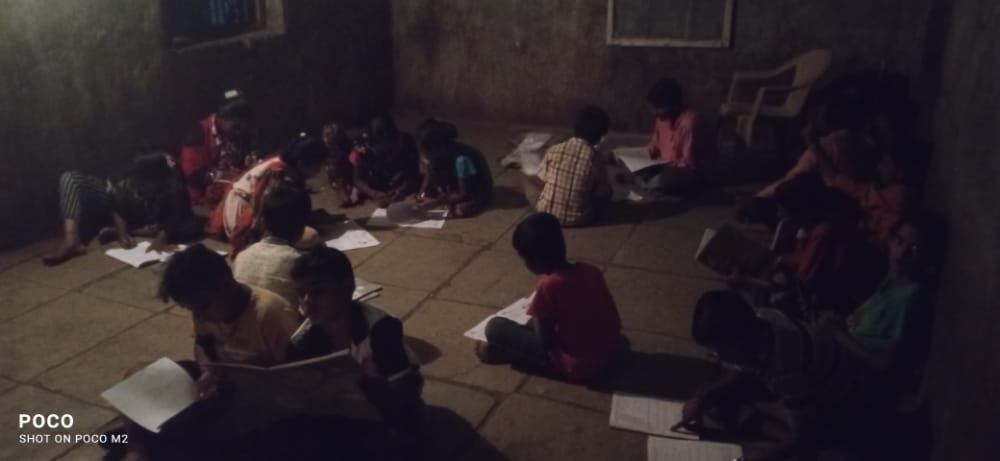
The middle school boys from Bhosga last year who took harvest contracts and earned money during the pandemic, we see you. We see that you are doing your best to learn from life and thrive in the present circumstances.
We see you now coming in for the Anandshala everyday late at night after a days work. Especially the girls who have the added responsibility of the household chores. Prithvi, we see you, working the whole day and then teaching the kids in the evening with so much enthusiasm. Managing in a room without a door, taking the light bulb with you every night so that vandalism would not affect the learning on the next day. We acknowledge you attending the facilitator’s meeting on the phone while you were harvesting soyabean.

Although the video referes to the American educational system, the discourse is no different in India. The rhetoric of skill-loss or learning-loss is all pervasive with the AP report and a variety of education experts commenting on it primarily as they build an argument for schools to open again.

I am not against schools opening. It is necessary in most places. However, focusing on the skill loss puts us (teachers, policy makers, administrators, education experts) on the defensive. Can we acknowledge that the children lived through a pandemic just like we did. They learned to live in a pandemic, they survived. Can we plan teaching and learning acknowledging the fact that each child brings something to the table? It is not just the teachers or the people who design the curriculum that have things worth giving.

Schools are not the only places learning happens. Children coming back to school are not leaky buckets left half empty that teachers now have to fill upto capacity with herculean efforts. Pandemic did not freeze them in place. Just like all of us adults, they lived through it. Lets try to connect back with that experience in mind.

Musings

Covid Diary: I can’t smell

Everything went quiet. I did not realize till now how much of the experience of life was smell. It was a meditative silence at times turning eerie. I talked about the especially unsettling eeriness during the lockdown. Now I wonder if part of it was not feeling the nature and people around me through smell. 

The aromatic herbs we eat, how much of the taste is actually smell? The Lucknow Saunf I so love has a beautiful sweet taste that is not much affected by lack of smell. Pudina however lost its personality. The taste doesn’t seem to be its key strength. The gaminess of meat is a lot about smell, I knew that, but experiencing it was a revelation. Without the overpowering smell, I experienced the nuance of texture and tastes more deeply. Lack of smell accentuated feeling of other senses.

My strong sense of smell is not just my own, it is an asset for my household. We realized that as we keep adding to the pile of burnt vessels every day. Over the years, we have been depending on my nose to tell us when the milk is boiled; when the butter is clarified; when the khichadi is about to burn and needs water. Without my nose we need to have other processes like standing there and visual inspection to manage these tasks.

My sense of smell is waking up again. I got a whiff of a strong-smelling ointment as if it was the light aroma of Jai Jui from the neighbours’ garden on a summer breeze. You feel it for a split second and it is gone before you can acknowledge it to yourself. It is the most pleasing sensation. Whiff of eggplant roasting was like heaven. I would have been fine without the whiff of open sewers but even that was mesmerizing. As if I am waking up from a deep sleep.

Dilli Diary

Eerie quiet

This is the second week in Delhi lockdown. The second wave or whichever wave it is, has been quite deadly and devastating. The appeals for oxygen, hospital beds on twitter, WhatsApp are heartbreaking. We are thankful to just be out of lozenges and other medicines that have substitutes.

The most surprising part has been the pindrop silence on the weekend it started. Generally, there are kids flouting the curfew. People walking. Vehicles passing by. This time it feels different. The air is thick with foreboding. I realized it a bit late in the week as we were struggling with health ourselves.

Then I start hearing reports of people from our 4 household building. An elderly neighbour is unwell and being treated at home with oxygen as there are no beds available. Another family in isolation. So 3 out of 4 down. And it dawns on me that each and every building around the neighbourhood garden in front of us must have covid positive cases. Delhiites otherwise do not let go of their daily rhythms for pesky rules and shutdowns.

Social Media, Technology & Education

Teaching in Covid times: Looking back

We are almost at the end of November. The HE institutions in India with semester systems are now winding down while the ones with annual systems hopefully are settling in the rhythm of teaching online. In the beginning of the academic year, I wrote about thinking differently to achieve best outcomes for online teaching and ideas for assessment and final exams. I hope many were able to tweak their teaching strategy to suit the online environment keeping in mind their students’ background and resources. 

The strategy of teaching with multiple 10 min long videos and 1 hour synchronous time per week seems to have gone well. The good part is that now the teachers have multiple recorded videos that can be reused for online teaching or teaching in flipped classroom mode after the f2f teaching resumes. 

Some teachers just imported their classroom to online mode with the same hour long or longer lectures multiple times a week. Most of these teachers reported dwindling interest from students. Fatigue has set in for both teachers and students as the crucial element of classroom interaction that kept up motivation was missing. It has been especially demotivating for students without resources to attend synchronous lectures everyday. Some of the constraints for synchronous learning were: lack of a dedicated device for each person in the house, patchy data connectivity, lack of space in the house at specified time.  

If you were unable to implement some of the suggestions from my previous posts, I would love to know what the constraints were. If moving from an hour long lecture to 10 minute chunks of videos seems daunting, I can help you figure out how to do it. If institutional policy is the constraint, I am happy to help redesign policies that work for all in the given circumstances keeping in mind specific constraints of your teachers and student body. 

Social Media, Technology & Education

आपकाळ शाळा बंद छ! School is currently closed

Many non-Marathi people asked if I could share a summary of the webinar or the survey report. To start with here are some points I jotted down as I was listening. Will share the report/paper when available. The webinar is also available on Youtube if you missed it yesterday. Starts with the survey report and secon half is panel discussion. You can watch two short video clips of participants at 49:35 or so. In Gormati.

What is going on with the education of children of migrant workers in the Covid times? The families move to the SugarCane fields in Oct-Nov and come back in May after the end of season. Historically, their children dropped out for this period and found it difficult to go back to school.

Jnana Prabodhini started साखर शाळा (SakharShala), short term (100 days) schools attached to sugar mills. In 2008, after the Right to Education (RTE) act it became legally mandatory for the children to be enrolled in AshramShala, residential schools or SakharShala at the premises of the sugar mills. During Covid lockdown, the AshramShalas closed down. No other educational activities were available for these children. Various waves of unlock has opened the work spaces but not the education spaces. It is time for the workers to migrate. As the AshramShala is not open yet, the children will go with their parents and will not return to school till May next year, effectively losing an entire school year.

JPP Harali center was working with AshramShala students focusing on specific aspects of development before the Pandemic. The insistance on expression in student’s own language made these programs very successful. After the lockdown in March 2020 students returned home and have been out of school. The survey was an effort to understand the current situation. The survey focused on basic information of each migrant hamlet, specific information about the families, and understanding educational needs of 10-12th grade students. With the survey questionaire, the exercise was also used to have candid conversations with people of all ages. The survey was conducted in 30 hamlets in 3 Districts of Usmanabad, MH – Lohara, Tulajapur, Umarga.

Some findings:
– Afraid of school although also reverance. School loved for playing games. Afraid as they have not got the educational materials and have not done the exercises received on mobile phones.
– Overall, fathers were indifferent while mothers were more worried/passionate about lost education. Older people acknowledged that it was the first generation that had managed to stay in school and school shutdown has reversed the situation.
– If something is not done sooner, students will not return to school. Students have forgotten what they learnt and joined parents in the fields.
– Gender specific – Girl students will be married off while young boys will join the labour force.
– Online education is an alien concept. Most do not have mobiles. 77% have been completely out of touch with their school education. 10% received books but no instruction or visits. 12% have managed some education through mobile or TV.
– 48% families will take the kids with them when they migrate, out of which 14% will take some kids and leave some kids back with elders. Even if schools start later, the children will not be around to go to school. However, If school starts in Dec-Jan, 78% families are ready to send their children back.
– Reasons to take children with them: 59% families do not have elders/relatives who will stay back to take care of children left behind. 19% families expect their grown up children to work with them in the field.

Panel Discussion:
Abhijit Kapre: Education (or lack thereof) of children of sugarcane migrant workers is not a new problem. Many organizations are working on it. How has Covid affected/exacerbated the situation.
Note: following are some interesting points from the panel discussion. not a summary.

Pravin Mahajan: Covid has not changed the situation much for this population. Migration is not going to stop. In the last decade their is recognition that this situation exists. Instead of thinking of stopping it, it is necessary to build systems acknowledging it. Children should not be separated from parents till 8 yrs of age. It is not advisable to stop children from going with their parents. The problem is not migration but lack of resources at the site of migration.

Nutan Baghade: Brought up other facets of keeping children in school – need to work with parents and not just students. Gave examples of variety of schemes that stopped migration.
Gender issues – early marriage is a major issue in Marathwada. Need concerted effort on village level. Need for dialogue with parents of girls around 8th grade. Ensuring safe spaces. Parents do not want girls to go far from home so distance from home becomes a major variable for dropouts. Need to work with boys to make spaces safe for girls.
Note: YoungLives working paper based on study of schools in Andhra Pradesh has identified Distance from school as a significant factor in school dropouts at secondary level “more dropouts are observed before completing secondary education in communities where a public high school is more than 5 km away (36.4 per cent), compared to communities where the school was closer (23 per cent).”

Prakash Ranavare: Residential schools at the sugar mill with parents visiting on the weekly breaks did not work. Parents did not trust/like to keep younger kids away from them even during week days. Suggested schools midway from two mills and students travelling to school every day. Following the migrant group and educators meeting them where they are, has worked in some places (Theur??) but do not have enough people to do it in other places.

Pravin: Should not worry too much about गुणवत्तापूर्ण शिक्षण. Children who are 4-5th generation students vs students who are 1st or 2nd generation unfortunately have the same syllabus. It is not useful for either. Need to rethink what is quality (गुणवत्तापूर्ण) education for 1st generation children. If they stay with education and enjoy it, you can say it is quality. सर्वांगीण विकास – all round development is the key.
Note: I agree with the all round development but expecting less from 1st generation students is a slippery slope/recipe for widening the gap. This kind of low expectation bias is what did in the black students.

Social Media, Technology & Education

Assessment in Covid times

Most of the colleges in India, conduct a final exam to assess student learning. Covid has put constraints on large gatherings to take an exam. It is a good reason to get out of the entrenched system of final exams, external examiners and all its trappings. Ideally we should be focusing on continuous assessment by the teacher rather than depending on a one time effort to assess semester-long learning.

Take a moment to think through why you need timed final exams. There could be a variety of reasons. Competitive timed exams with invigilation have a primarily gatekeeping objective. A similar reason I have heard multiple times at the university/college level is – keeping sanctity of education or the degree.

If we agree that the primary aim of the whole exercise of a degree program is learning to think/do/communicate X, who do we assume or believe is responsible for the learning? The ‘sanctity of education’ discourse and need to monitor exams closely, presumes that the institution and the teachers are responsible for student learning. If you believe that the students are responsible for their own learning, you might not need monitored exams.

Over the years, many teachers have commented that students have a short term objective to get good grades rather than giving importance to learning and it is their responsibility to goad students on the path of long term benefit away from short-termism. If you believe this, you can think of learning as a shared responsibility and inculcate the culture in your classroom from the first day of class. Design assignments that would push for learning rather than performance. Grade for effort, rather than right or wrong answers.

This is a conversation you need to have with yourself at the beginning of the semester and plan your assessment strategy based on it.

Just a note: If students want to cheat rather than learn, they will. Fixed and strict time limits, video monitoring of students while writing the exam etc establish the culture of teachers being responsible for learning and provides more impetus for students to find ways to skirt the constraints. Rather than motivation for learning, these methods end up being punitive for students who do not have a stable internet connection, separate room, and a separate robust device to take the exam on.

Alternatives to monitored exams
Open book test: If you would like to know how well students can apply something they learnt, the best way is to give them a problem solving assignment that cannot be completed by copying from the textbook or easily googled. An open book test with a lenient time frame gives importance to higher order learning than rote learning and makes sure that the most disadvantaged students are not penalised.

Final paper, presentation, or a product: Works well if you can break it into multiple short assignments throughout the semester leading to the end product. This scaffolds the process of creating the end product, especially important for students who might balk at a lengthy writing assignment or students who have never worked on a semester long project who might falter at time management skill. This assignment gives you a glimpse into the process as well as the end product making the grading more meaningful.

For more ideas see this list from Center for Innovative Teaching and Learning at Indiana University.

Continuous Assessment
Rather than thinking about how to move the final exam and invigilation online, it might be a good time to embrace continuous assessment. You can start by converting your final product or exam into a semester long process as mentioned above. If your subject does not lend itself to a final product or the students are not prepared for it you can start small.

A simple addition of a weekly homework for attendance grade mentioned in the previous note can start you on this path. The homework can be a simple reflection exercise. For example, write the main point of today’s discussion or lecture; list 3 takeaways from the session today. Another of my favourite exercise is – list skills, techniques or concepts that need more work this week, What do you plan to do about it. The plan could be self study, practice problem solving, ask for help from peers or time for office hours. These exercises teach students how to take responsibility for their own learning. That for me is the most important skill they can learn than any ‘content to be covered’ for a subject.

Social Media, Technology & Education

Teaching in Covid times

The UGC timeline of August 1st week to start the academic year for already registered students is now upon us. It is quite clear, at least in places like Delhi where I live, that university campuses cannot/will not open for face-to-face instruction. I hope Universities have planned before hand for this eventuality.

In the winter semester, campuses closing suddenly meant, the classroom instruction was moved to online as an emergency measure. There was no time to learn or follow best practices. No time for preparation of online resources or setting up processes for clear communication. We survived through that. However, the August 1 starting is not sudden, we know we will have to teach online so there is no excuse for just copying classroom practices to online and hope or pretend that it will work. These two are completely different spaces with their own strong and weak points. Replicating the face-to-face experience online in the name of not lowering /keeping standards will be a huge mistake.

Here are some areas in which teachers and administrators need to think differently to achieve best outcomes. These are based on decades of research in online and distance teaching and learning:
Classroom time together
The best part of face-to-face instruction is constant feedback for the teacher; quality time with the teacher and peers for the student. However, it is not translated well at all in synchronous online teaching. An online lecture due to its lack of non-verbal feedback is one of the least productive teaching strategies. The best part of ‘online’ is the flexibility of not being present physically. By asking students to attend lectures in real time fails to capitalize on the best that online can offer.

Instead, teachers need to plan for recorded lectures for basic content, and a follow up session every week to check in with students, address queries, expand on the material already provided. This takes care of practical difficulties students face such as – lack of stable connection, lack of space to study, lack of individual resources (computer, mobile, internet connection) for each person in the house to use at the same time. This also gives students time to mull over the material and apply the concepts so that they are much more prepared in the weekly check in session. Overall, a much more productive use of resources and the synchronous teaching time.

When creating rules about contact hours, the important point for administrators would be to think about total hours spent in synchronous and asynchronous contact rather than being hung up on replicating the twice or thrice a week timed lecture in the classroom, in an online setting.

Grading for attendance
As we shift from the weekly timed lectures to a mix of synchronous and asynchronous teaching, we also need to rethink the participation grade. Many teachers, use attendance in face-to-face classroom (and may be being vocal in that space) as a proxy for participation. Colleges also have policies about attendance. In the changed circumstances it will be punitive for the most underserved students unless the colleges can provide a dedicated computer, internet connection, and space where they can attend the synchronous online sessions.

Instead think of activities that can be completed asynchronously, such as discussion forums, regular ungraded homework assignments that can tell you if a student is participating. If colleges have a generic classroom attendance policy, administrators need to change it to participation policy to keep up with the times.

Planning for an hour-long lecture vs planning for a unit
In a face-to-face setting, our syllabus/ instructional planning is generally based on the number of hour-long lectures we have in a semester and the content to be covered. With the focus shifted to a mix of synchronous and asynchronous, the time together cannot be the central unit of planning anymore.

Instead plan based on a unit focused on subtopics you want to introduce. Best practice is to think of a subtopic that can be handled as a weekly unit. The unit can have recorded lectures, readings, activities that scaffold learning with the material provided, and a culminating synchronous session. The recorded lectures further need to be thought out as small subtopics that can be explained in bite sized short 10-minute videos. Depending on the complexity of ideas, each video or a group of videos can end into a self-study question. Such possibilities of self-check peppered throughout the unit keep students on task, provide feedback to the teacher, and creates basis for the participation grade.

Administrators need to offer workshops and/or ongoing consultations from a specialist to help teachers plan for the online settings. They also need to provide technology support and consultation so that teachers can prepare quality online content.

These are just a few places where we need to make a thoughtful shift. I will write in more detail about assessments and grading in the next post. Now that we are not available physically during our assigned lecture hours, clear communication and managing expectations is also going to be an important aspect. I guess another post on that is in order as well.