Dilli Diary

Chance Finds: जाते थे जापान पहुंच गये चीन

The Saturday outing to IARI Pusa campus yesterday turned out to be a bust. The idea was to visit their biomass utilisation unit to get some vermicompost, leaf-compost, and whatever else they could offer. Turns out the campus staff recently negotiated a 5 day week that was put in practice today. facepalm
That meant the entire afternoon/evening plans just suddenly evaporated. No compost, no seeds, no visit to their fresh produce store, no wandering in the campus enjoying the greenery.

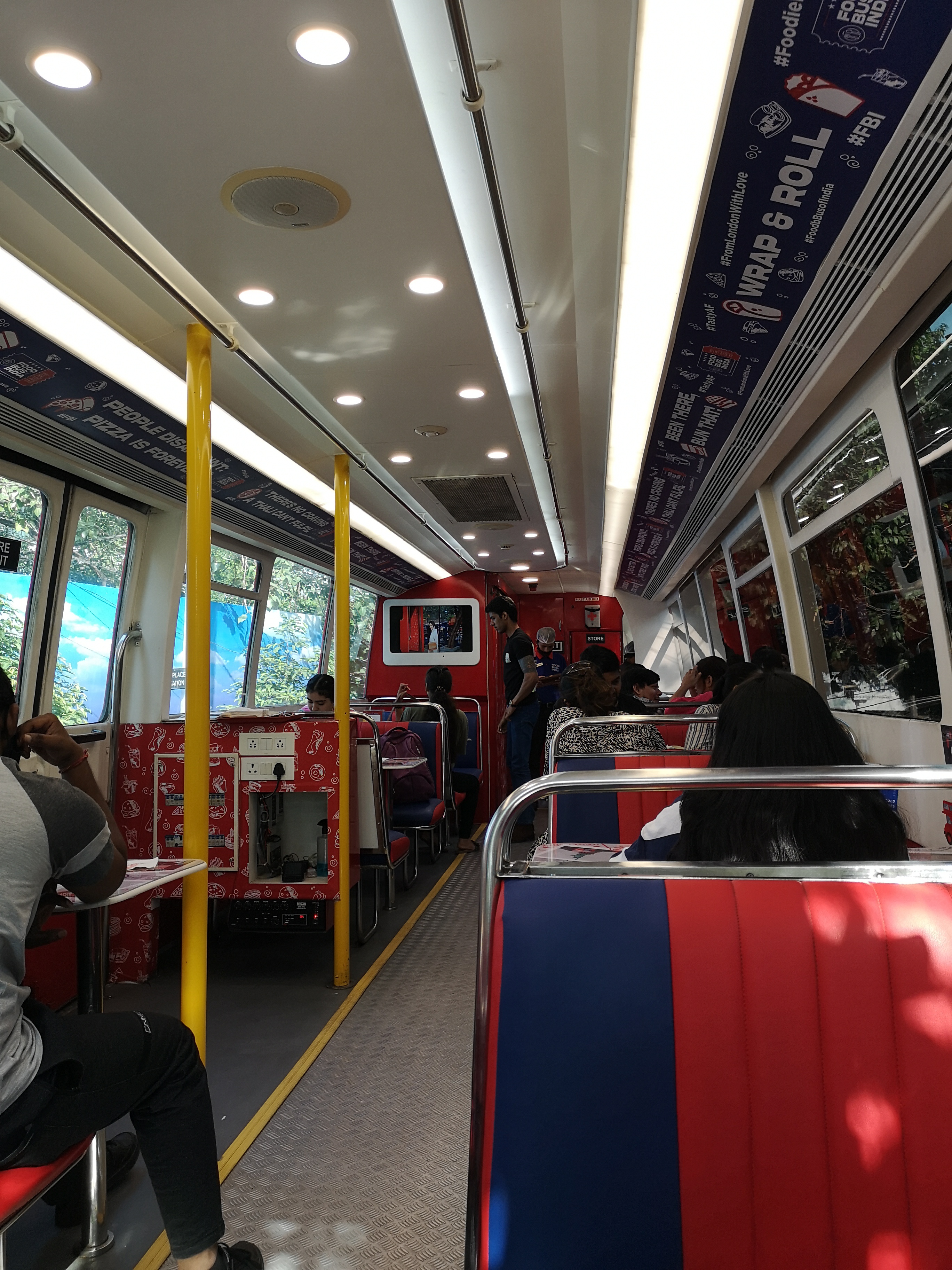
Decided to salvage the day by visiting barafkhana area for seedlings. The 7 kms took more than 2-3 hrs due to a traffic jam. It became so ridiculous at a point that, for the sake of our sanity, we decided to stop at this quirky cafe set up in a double decker bus.

By the time we got to barafkhana, hurriedly bought last remnants of the seedlings before everything closed, and started back the journey home, it was sundown. On the way back we hit traffic again. Of course… what were we thinking. This time the shops in front of a Kalibadi caught our attention. We had no idea where we were. Had never been to this temple, so decided to check it out and may be make a meal out of the stop.

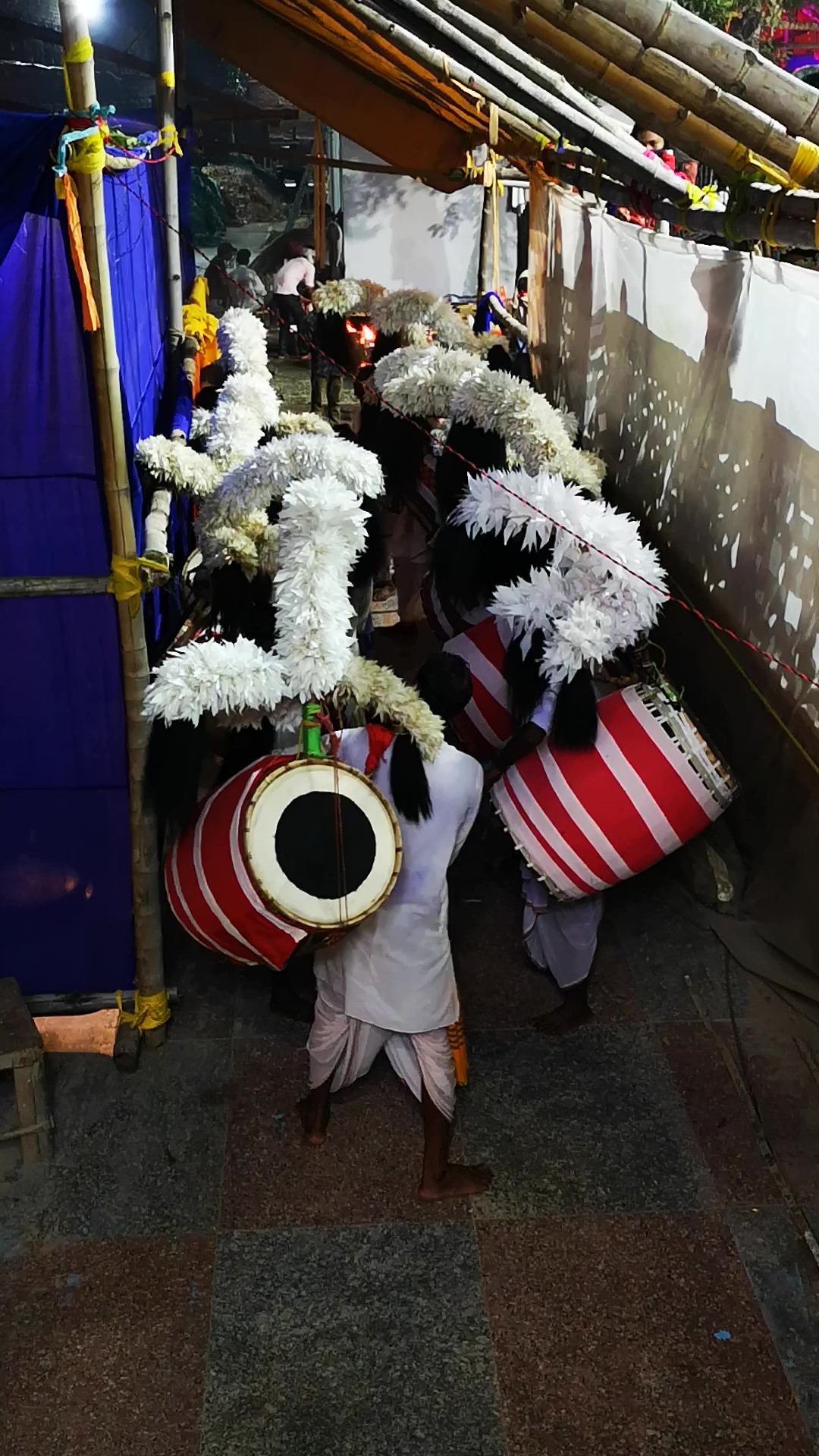
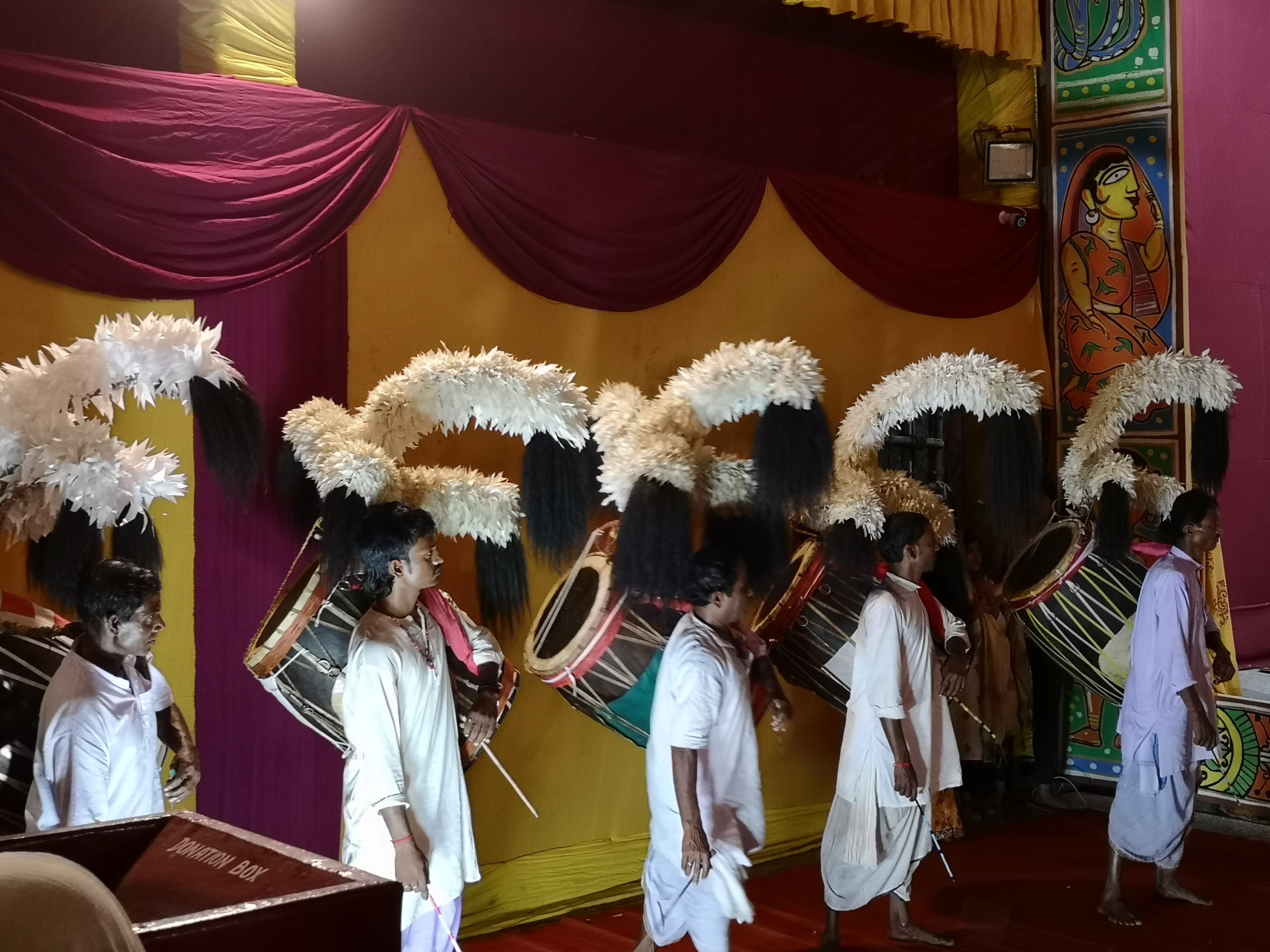
The temple and the huge pandal in front of it was bustling with festive energy. The Durga idols were closed to viewing with a curtain. Everybody was waiting expectantly. The main temple has a beautiful idol of Kali. A side shrine housed a shivlinga with the garbhagriha decorated with 12 Jyotirlingas. As I was exploring the surroundings, I heard the sound of dhak coming from the back of the temple. Some ritual was underway. I could see at least 6 drummers congregated outside a small enclosure with their dhaks decorated with red panache. The electrified energy was visible as they moved fluidly with the drumbeats even in that cramped space.

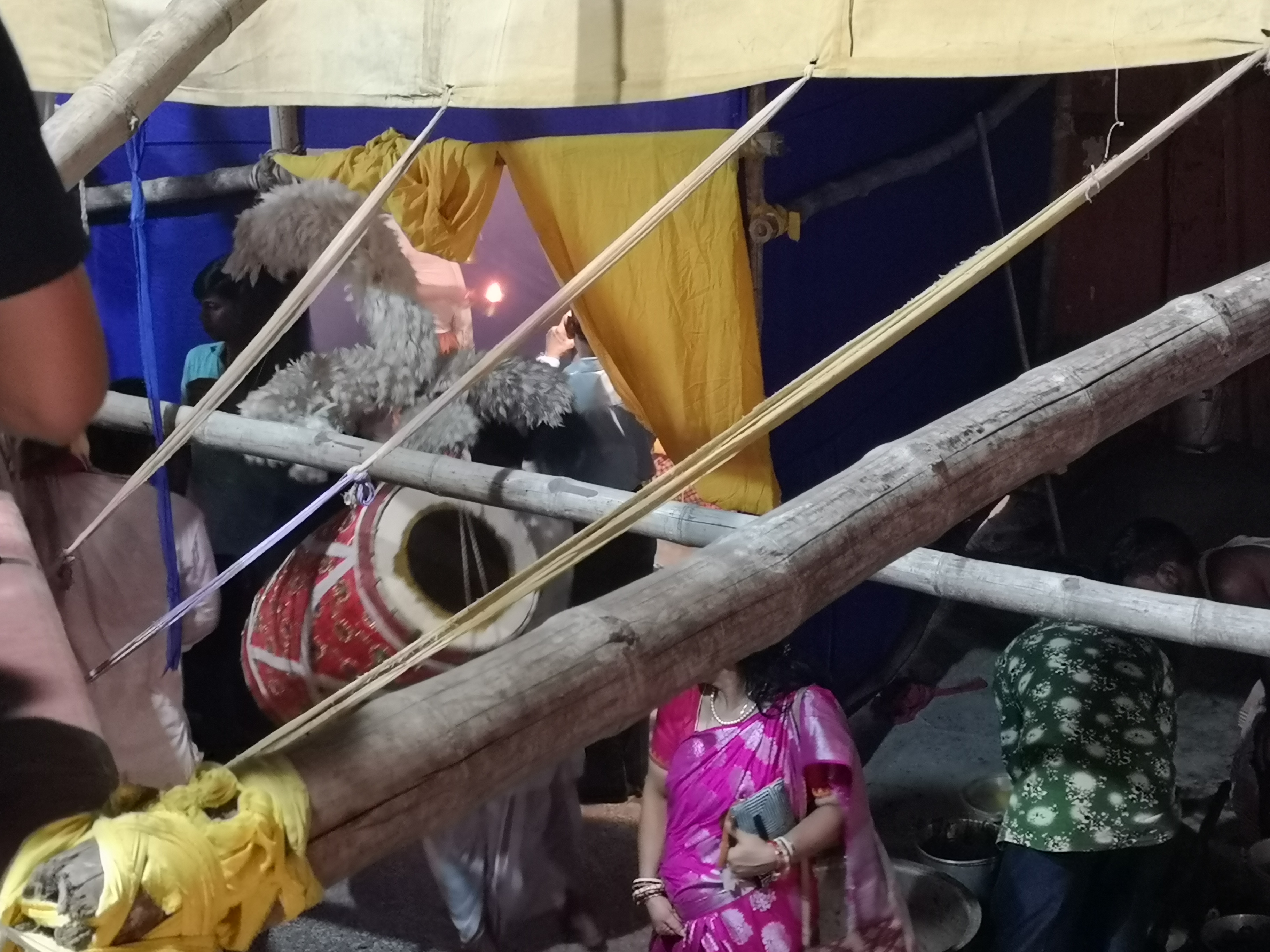
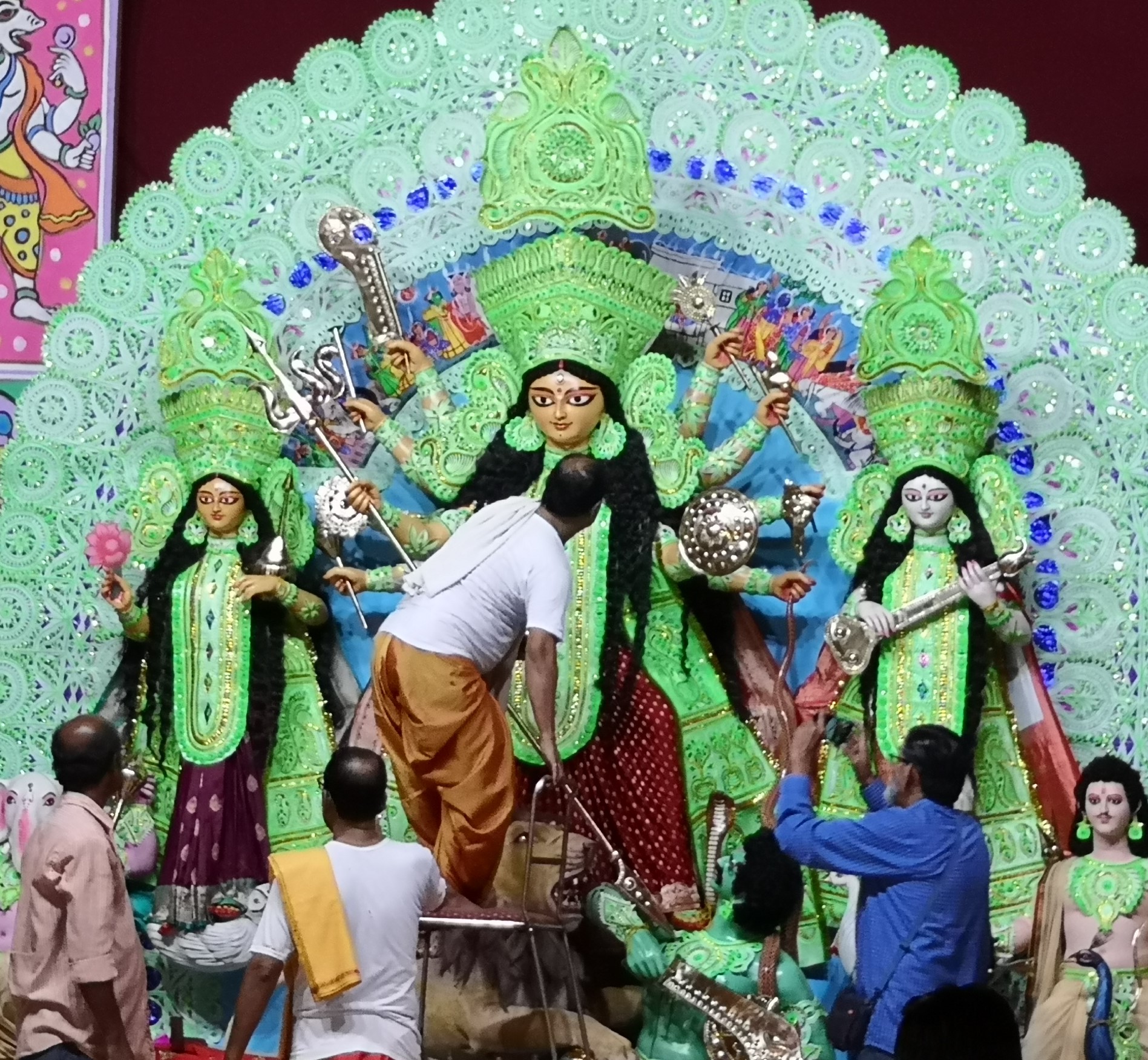
The party then moved to the pandal and set up in front of the Durga idols. The curtain was removed and the priests started what looked like rituals for invoking, welcoming the Durga and the family for the festivities. Each idol – Durga, Laksmhi & Saraswati, and Kartikeya & Ganesh – were offered flowers, tilak, fruits, and aarati. Every offering to each idol was accompanied by a short drumroll. This went on slowly and methodically for a while. I wish I had somebody to explain what was going on.

After all the family members were invited, a box of ornaments were brought in. Till now I had not realised that Durga as well as the others did not have आयुध in their hands. One item at a time patiently placed. Veena वीणा for Saraswati, mace गदा for Ganesh, a bow धनुष्य for Kartikeya, खड्ग/वज्र for the Mahishaura. With the spear भाला pointed at the Mahishasur placed with utmost care the picture was complete. I realised now that it was Shashthi, the first day of the Durgapuja festivities. Something I had not experienced the last time I attended it before the pandemic.

The process and the end result was mesmerising. The Dhaks were now in motion again. This time with more space, the drummers moving as a group, dancing facing inwards building on each others’ energy, plumes on the dhaks bobbing up and down rhythmically. Reminded me of JP Dhol pathak in Ganesh Visarjan procession.

When we were new to Delhi, I wandered about aimlessly, and got to know the city through such serendipitous finds. Covid shifted the way I approach the city, the spontainity is lost. This festive season, a chain of events, otherwise frustrating, helped me get back to that mood.

PS: Some other glimpses
Musings

Navaratri vs Durga Puja

The Navaratri vs DurgaPuja fights continue. I wrote about the meat shop closures in Gurgaon and Faridabad couple days back. That was Delhi NCR, so although ignorant, I can understand it somewhat.

Now hindutva groups are taking offence to a Bengali advertisement by Fortune foods that shows a woman planning for the 4 day feast including fish and meat. See Scrolls’s coverage here. According to Scroll the organization translated the lyrics in Hindi. From what I can see it is a completely wrong translation that adds the Navaratri ethos to a Durga Puja related video and creates a completely different story. I could not find that translation but on twitter found the @HinduJagrutiOrg congratulating themselves with followers commending them and the Hindu Ekta/unity.

Hindujagaran.org has a message about the advertisement on their site  “इस विज्ञापन में महिला को आदिशक्ति दुर्गामाता के रूप में दिखाया गया था आैर उसके हाथ में शस्त्रों की जगह विविध प्रकार के खाना बनाने के चम्मच दिखाएं गए थे । इस तरह मां दुर्गादेवी का मानवीकरण कर उसका अपमान किया गया था”

So the outrage here seems to be about humanizing the goddess. The problem however is that Bengalis do consider Durga as if she is a family member coming down to her Maayaka for the four days with her family and pamper her as if she is the daughter of the house. She is the mother and the daughter and a lekurvali as we would call her in Marathi. This is my understanding from interacting with Bengalis around me. This advertisement perfectly showcases the Bengali spirit during Pujo times. You can see that in the comments from Bengali people on the youtube video. It sounds somewhat like the liberties we take with Ganesh, our favourite deity. It is done out of love and sense of closeness. How can that be insulting?

Last year Javed Habib similarly had faced outrage for ‘using’ Durga in his print advertisements that show Durga coming to his saloon with her family. Here is the Indian Express coverage.  I am told that it is a tradition for Bengalis, in print media and cartoons, to showcase Durga with her family doing everyday tasks. The article at the end also shares some of the print ads that have appeared before. Habib is not insulting a Hindu goddess, he has depicted the Bengali spirit perfectly.

These episodes were pretty disturbing for me, much more than the meat shop closures. Both these advertisements were targeted at Bengali people. It wasn’t even in their North Indian backyard. The hindutva organizations in both these instances have gone looking for insult and excuse for outrage. Is this a pre-election ploy to get people riled up about things that don’t matter or do not even exist?

The people responding to the tweet are Marathi and Hindi. Marathi probably because ShivSena is part of the consortium of hindutva organizations. That scares me. I wonder about the future of my home state Maharasthra, the social activism hub of 19th century. It is unfortunate/alarming if this is what we are leaving behind for the next generation when the previous generations left us the legacy of Phule and Karve.

To improve your mood a bit after all this doomsday talk, here is one more Pujo song from Sawan Datta. Enjoy!

Musings

Your food, my food

I am pretty excited about pendal hopping for Durga Puja. I know it is not Kolkatta but I will take whatever I get as my first experience of Durga Puja in  Delhi – the dhak, dhunachi, the dance, the merrymaking, and most importantly the food. Started the planning already by joining a pre-Durga Puja guided walk (more about it here) and googling for lists of ‘do not to miss’ pendals and food items.

Although Bengali Durga Puja is about the goddess and coincides with the Navaratri celebrated in North India, it has a completely different ethos. Navaratri is about fasting while food, dressing up, and merrymaking are the integral part of Pujo. These are both Hindu people celebrating Hindu festival but the practices are completely different. During the pre-Durga Puja walk a north Indian couple of foodies were telling me about how difficult it is for them during pendal hopping as they see all this wonderful food but can’t touch it as they don’t eat non-veg (meat, seafood) during Navaratri. They were at the pre-Durga Puja walk so that they could eat what they would otherwise miss during the actual celebrations.

In the popular media however, there is utter ignorance about other communities living in such close proximity. Not just ignorance but belief that their version of the Navaratri is The Hindu version of what happens during the nine days.

A comment on article about ‘not to miss food items during Pujo’ ridicules the author for mentioning non-veg dishes. “How can you be stupid to add this during these days. Don’t you know people don’t eat non-veg during this time?” is the general tone in many places on the internet as Bengali people remind sommenters that for Bengalis the rules are different. The bhog for the goddess includes illish, the fish most favourite of the bongs.

On this background I read the news today that a consortium of 22 Hindu groups has threatened to force shut all meat shops in Gurugram (Gudgaon) during the festival of Navaratri. Shivsena, one of the member of the consortium, has gathered 125 members to coax or coerce meat shop owners to comply. First of all what is Shivsena doing in Gurgaon of all the places. It is a local organization from Maharashtra. Secondly, who gave them permission to decide what people should or should not eat during Navaratri.

I am not quite sure if this is being portrayed as a religious thing – Hindus vs other meat eating religions. It is wrong even then. However, it is worse as one way of being a Hindu is being touted as The way. How about look just a few miles away in Chittaranjan park, shops brimming with mutton and fish readying themselves for Durga Puja. Those are Hindus too. That is also a ‘traditional’ way to be a hindu.

This monolithic image of a Hindu being touted and enforced with threat of violence is the most dangerous thing about the right wing spread.  I always thought that acknowledging the different practices of Hindus makes them open to live with people of other religions peacefully and participate in their celebrations.  If we loose sight of the colourful diverse canvas of hindu practices and our ethos of celebrating each one, there is no hope left for harmony among religions.

Dilli Diary

Pujo Ascche

p10301291.jpgAs the weather gets better I am planning my walks to understand this city I call home now. Opened up the season with a pre-Durga Puja walk with Delhi By Foot yesterday.  My way of trying to get a hang of how to do pandal hopping during Durga Puja, supposedly the thing to do in Delhi in October.

The walk in CR park ended up being an insider’s look on the frenzy as Bengali’s get ready for the most important festival of the year. The bazars were overflowing with people shopping in the book fair; buying the special Pujo magazines; wandering through Pujo mela bursting at the sims with stalls of clothes, accesories, home goods; preparing for cultural programs, dance competitions, and last minute planning meetings.

The pandals are getting ready for the arrival of the goddess and her family.

The idols are getting ready at the Kumhor next to the Kali badi in CR Park. Some are being created in the pandals. The visit to the workshop where artisans were preparing the idols reminded me of our childhood visits to the Dhondphale workshop in Rastapeth before Ganesh festival. My father in a bid to avoid the fetival crowds used to take us to the workshop in lieu of the pandal hopping later.

The idol making is completely different in this case however and I am glad I could see behind the curtain work going on. Unlike the lone Ganesh, Durga Puja idols we saw were created as a family – Durga with her lion, flanked by Ganesh with the mouse, Kartikeya with his peacok, and the sisters Lakshmi and Saraswati. The whole family is created on a backdrop built with bamboo. The torso, limbs and body parts, unlike the ganesh murti are first created in hay and then finished with multiple applications of clay of various viscocity. Most of the idols were going to be dressed in actual cloth so only the visible parts were being painted. This was new and different as Ganesh idols come ready with the clothes and accessories created in clay and painted to show the fall of the cloth.

The idols in one of the CR park pandals are ready but still need color, clothing and accesories. The artisans from Kolkata have been working right here since August. When we visited the pandal they were creating paper mache decorations that depict the art forms of Bengal. Organizers urged us not to post photos and ruin the surprise. Looking forward to visit some of the pandals starting saptami to see the finished look.