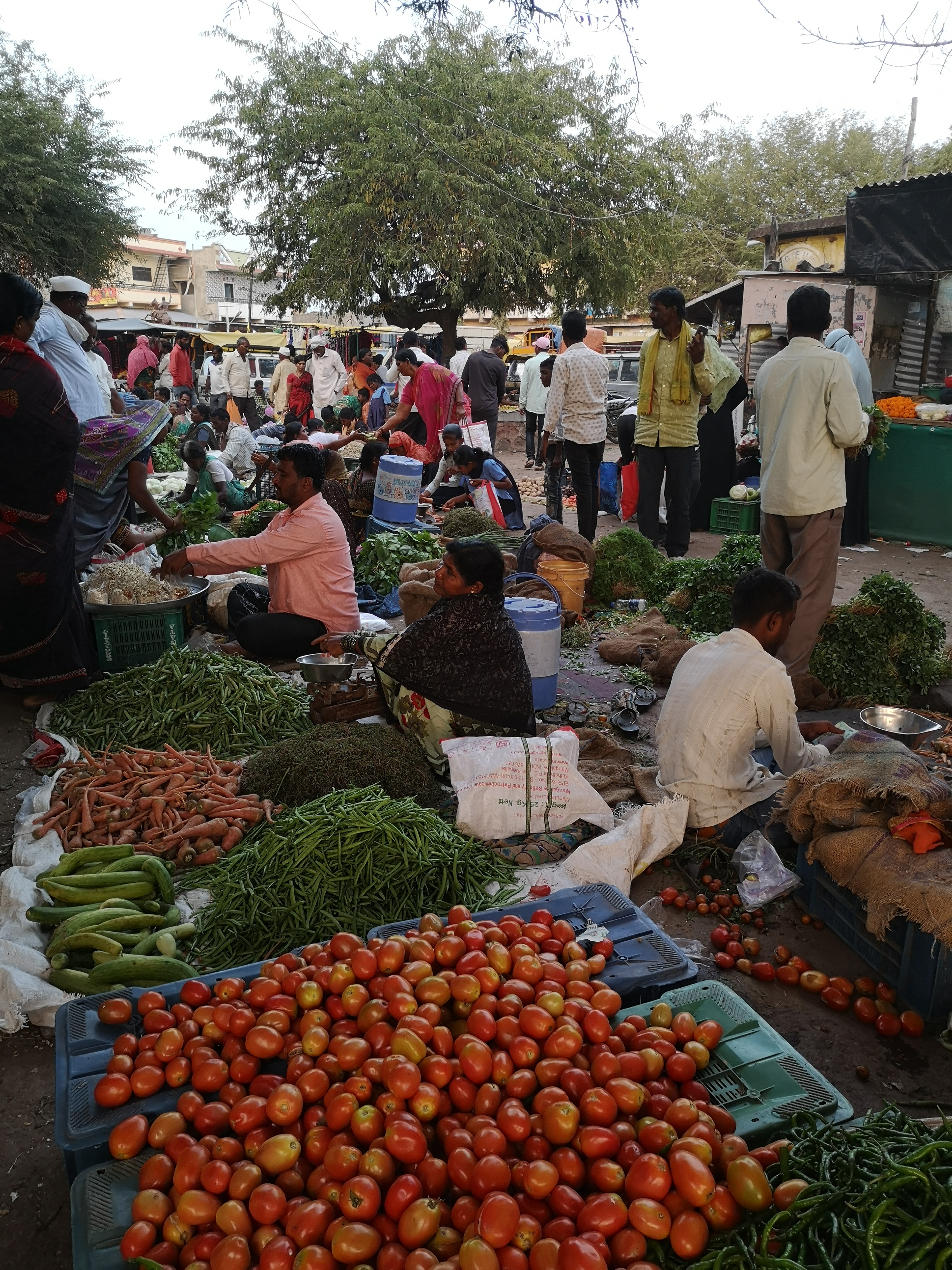
Vela Amavasya (वेळा अमावस्या or येळवस) is a major socio-religious event in Vidarbh, Marathwada region. This was my second time in Harali around this time. The excitement was palpable the whole week. The Anandshala meetings leading to it were planned keeping the event in mind. The Saturday before Vela Amavasya, the weekly meeting was wrapped up in time to visit the weekly bazar at Jalakot. In addition to the regular fare, the market was brimming with produce needed to cook the special dishes for the day.


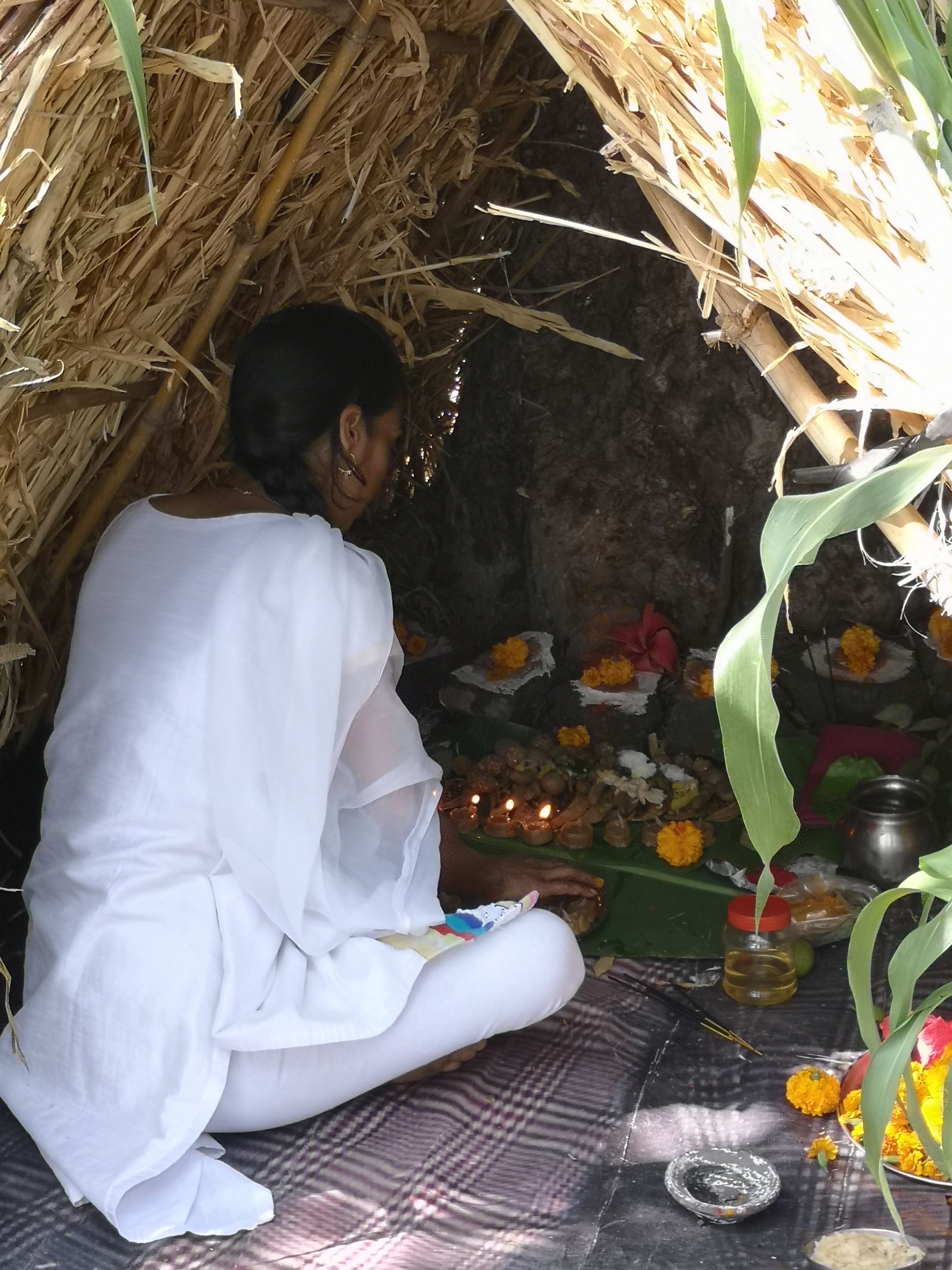
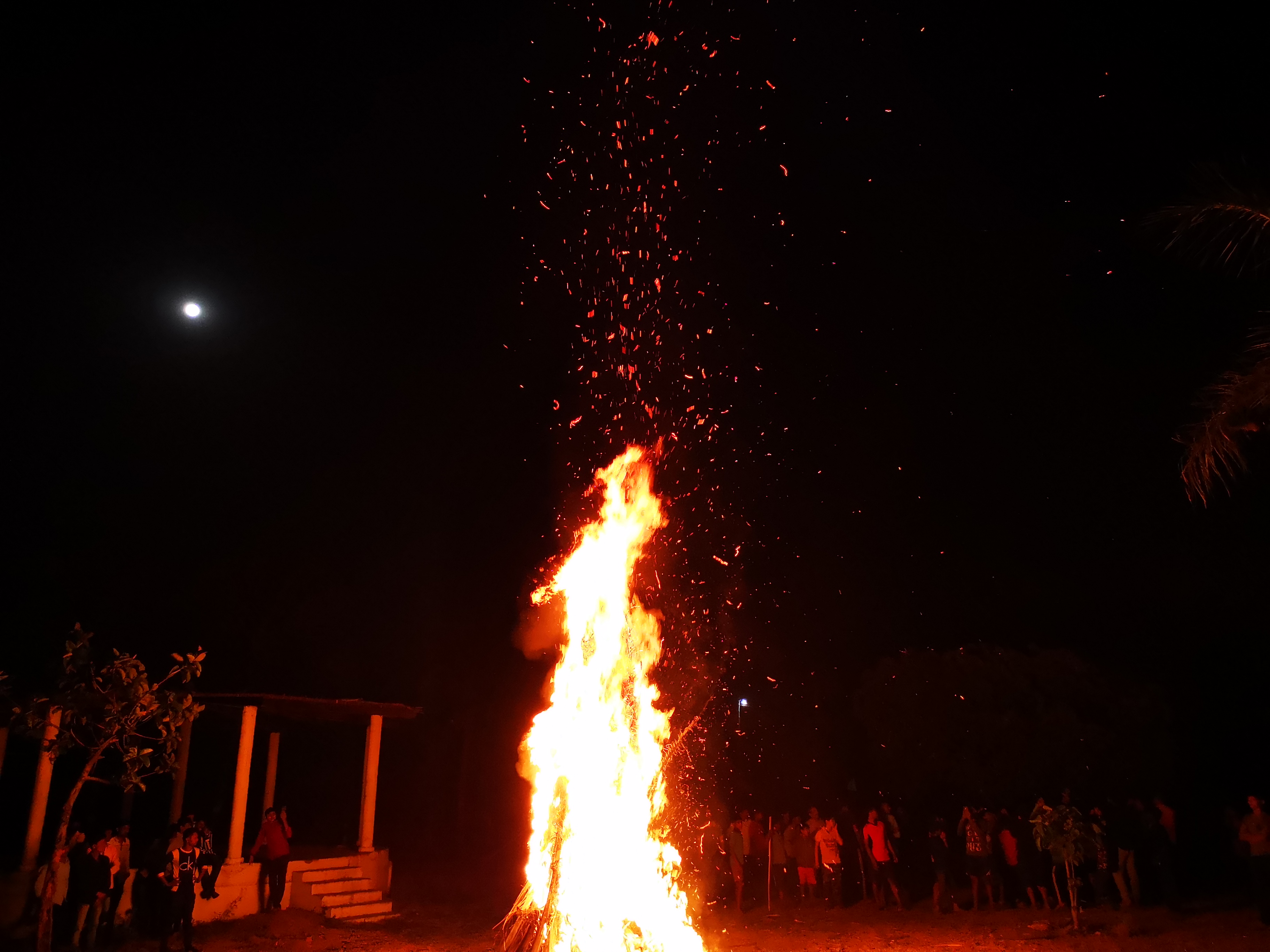
Vel amavasya is celebrated on the no moon day in the month of Margashirsh. A hut made of dried remnants of the crop is erected in the farm. Stones or mud roundels symbolising 5 pandavs and Draupadi are placed in it.
Naivedya is very specific: बाजरीचे उंडे steamed balls of millet flour, भज्जी mixed leafy veggies stew (?), गव्हाची खीर wheat pudding, दाण्याची पोळी flatbread stuffed with peanuts and jaggery. And most important आम्बिल, a refreshing drink of millet flour soaked in buttermilk, stored in an earthern pot.

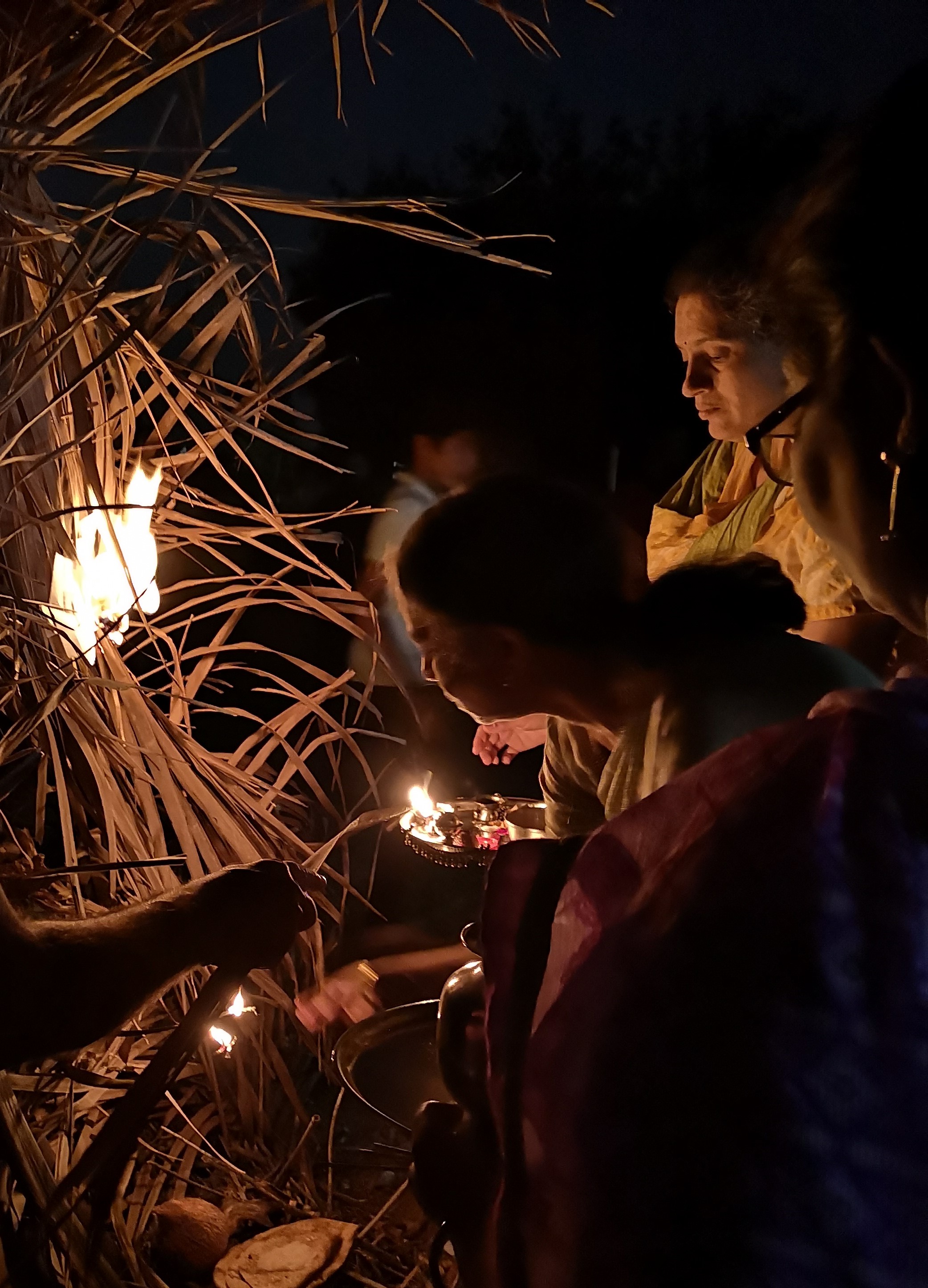
At Harali the pooja was performed by various staff members and guests by offering flowers and lighting one of the wheat flour lamps. The pooja is to ask for blessings and thanksgiving for a bountiful future harvest. As one of the team had started a new venture to lease farm equipment, the crowd suggested they ask for blessing for that as well. As various researchers stepped forward there was further banter about blessings for various research projects. Overall everybody was in a jovial upbeat mood. The holy water was sprinkled around the hut and all over to bless the farm and the people.
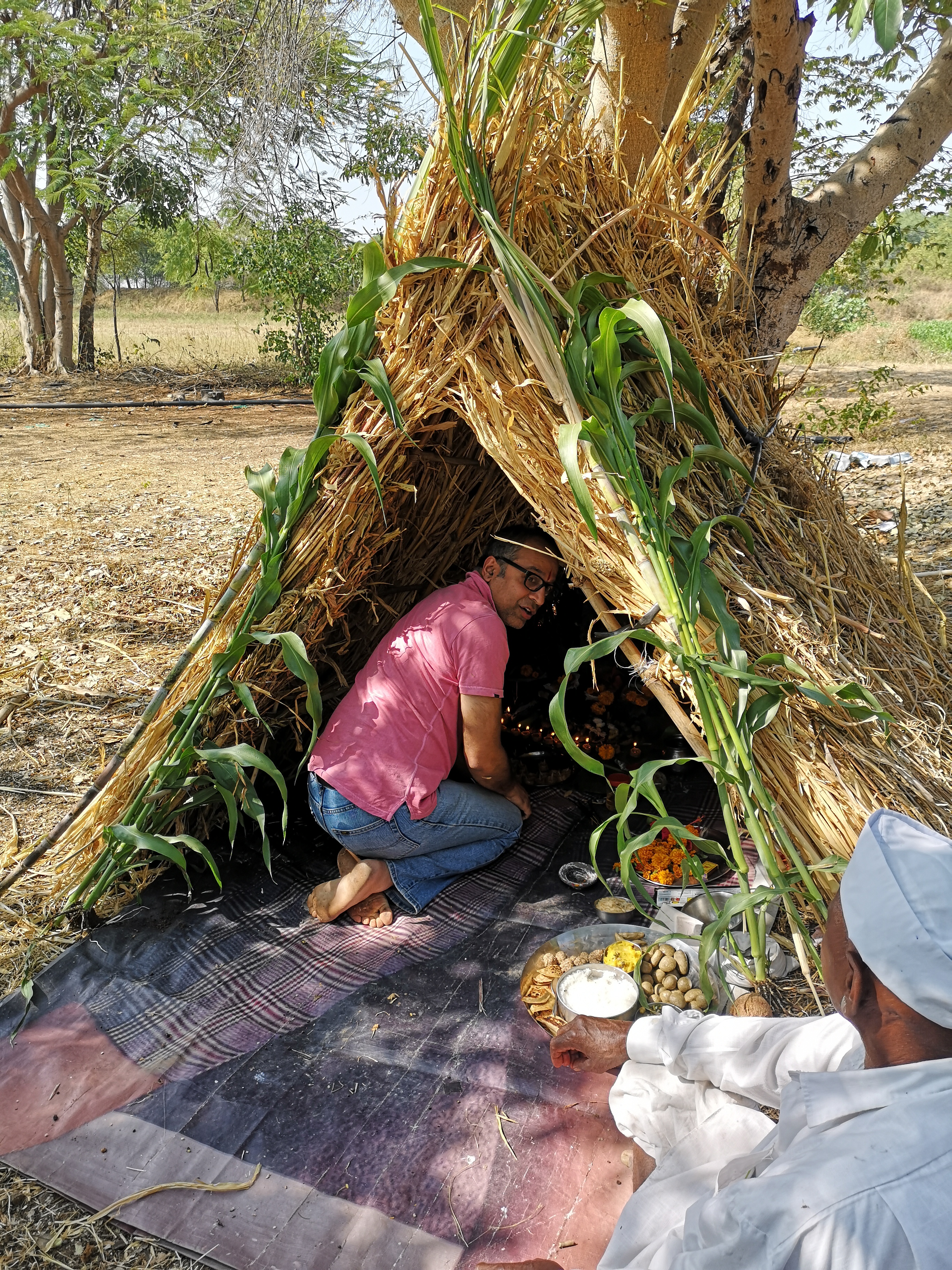


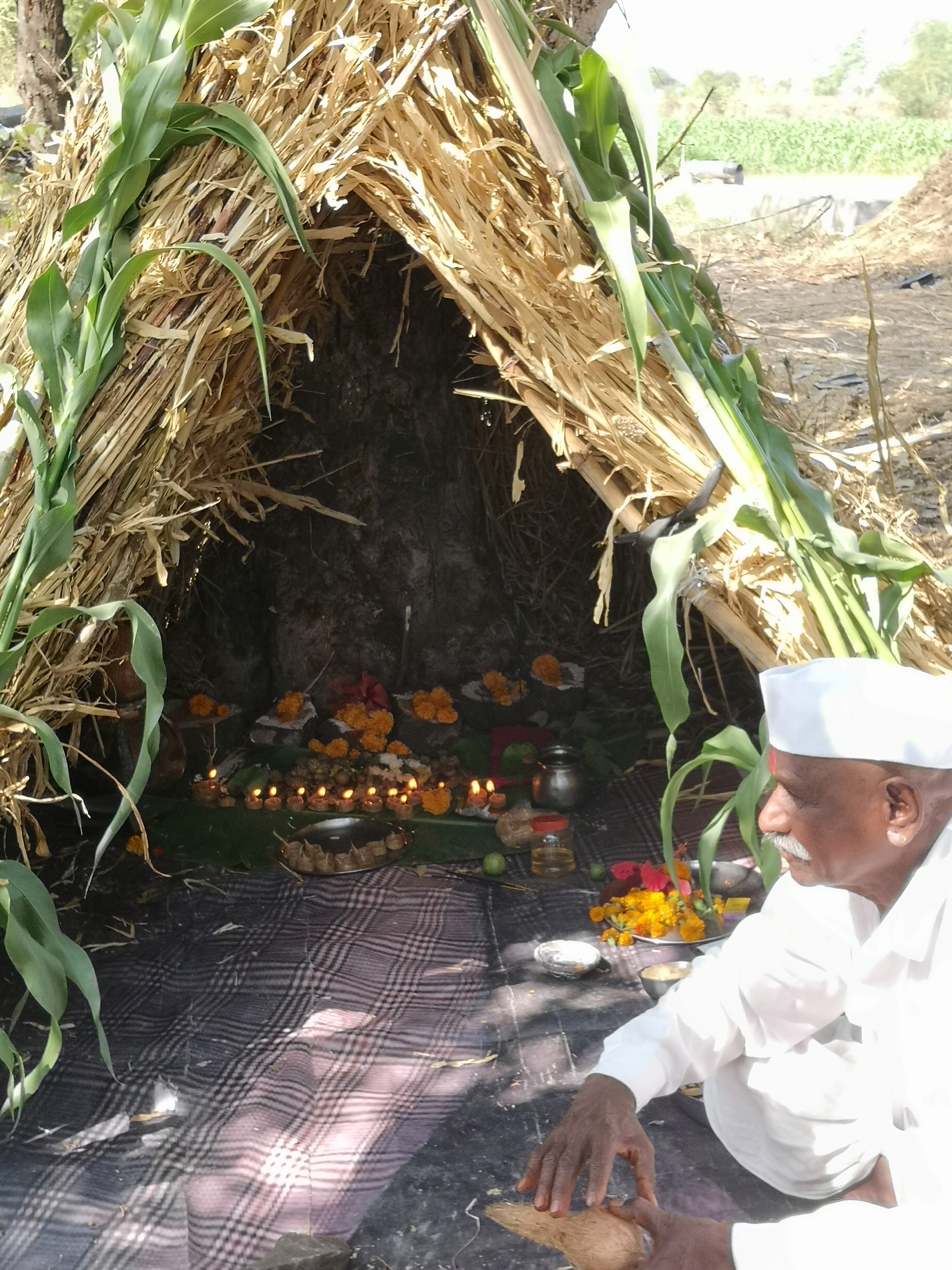
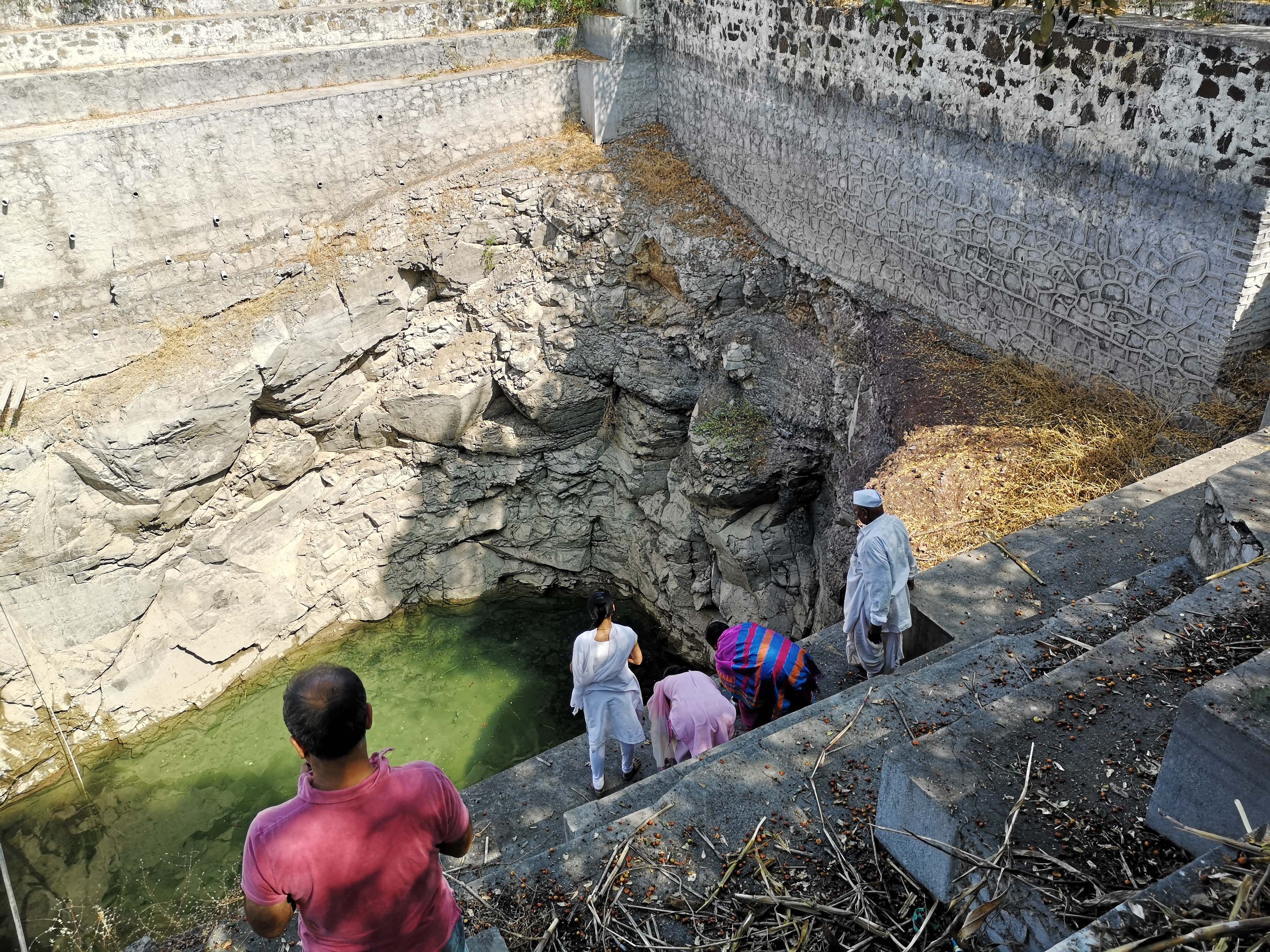
The pooja at the main location was done. Got some of the Prasad to mix it with the food being cooked in the communal kitchen. Gauri offered Prasad to the old gentleman, he received it in his cupped hands kept on his back. As he explained, ‘a blessing like that should take a bit of effort’. There are three more places the pooja is traditionally performed at JP Harali. One at the well, another in the mango orchard. Places that were once owned by other villagers. The traditional places of importance need to be honoured.
Throughout the week I received invitations from various team members to visit their farm for the special meal. I was able to manage a visit to Santosh dada’s place and had to be satisfied just to see photos sent by others. Next time need to plan in advance to spend the day visiting more people.



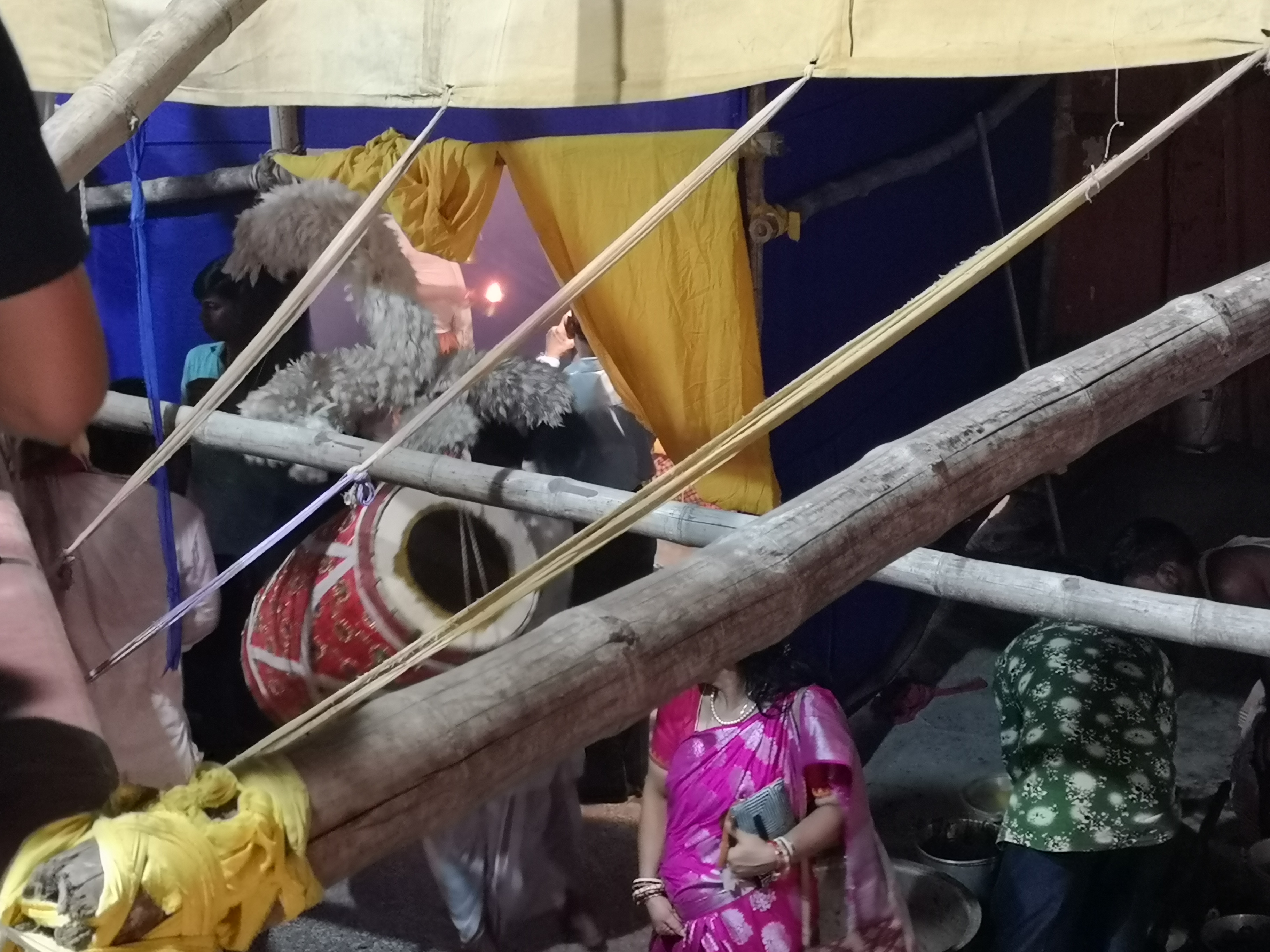

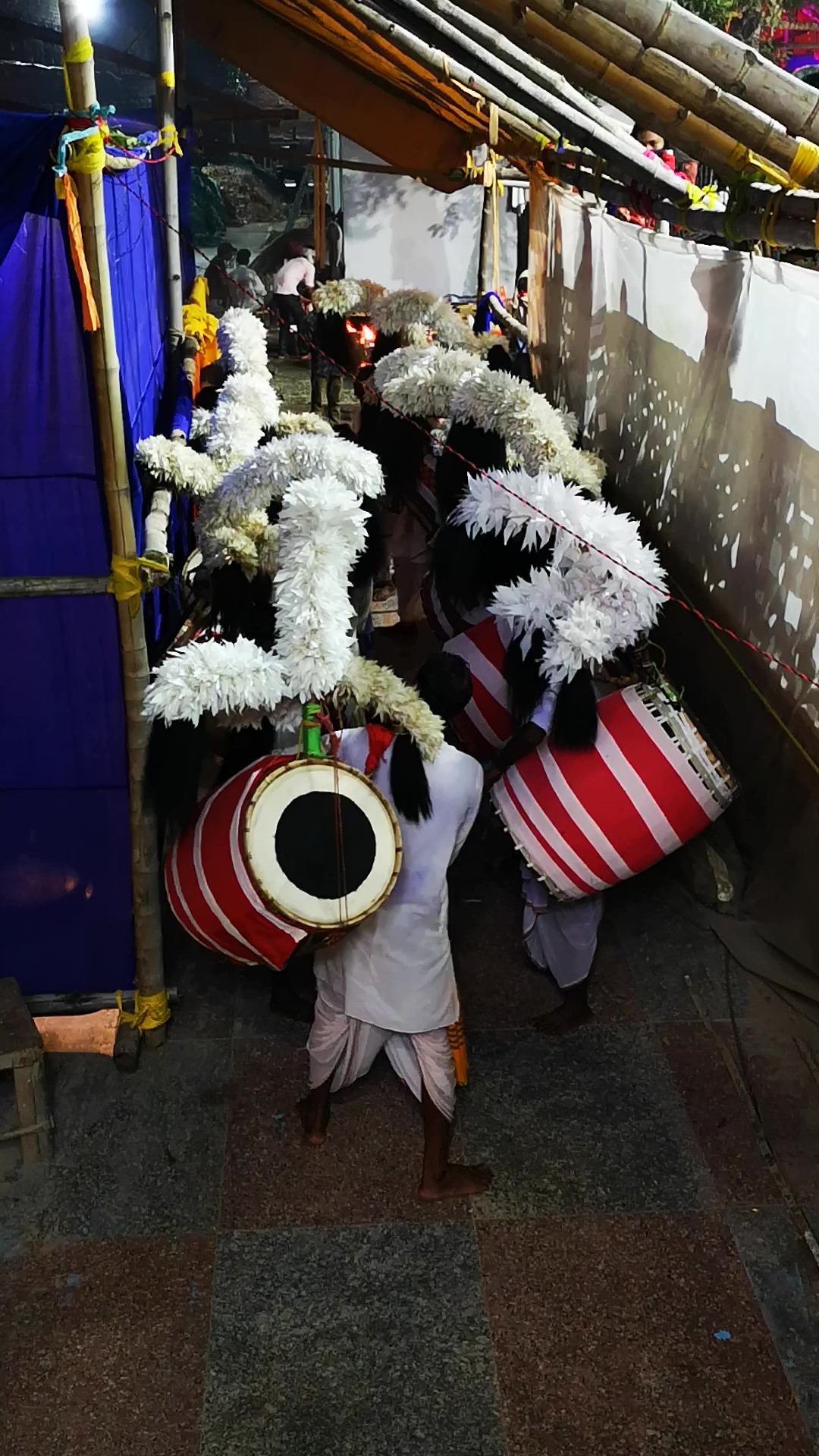








 I arrived the night before the beginning of the fair to see the procession and the first day festivities. The taxi left me half way in the bazar as the roads were blocked. The enthusiasm was overflowing, and it seemed like the entire town was in the street. I walked down the familiar road of our childhood. The Lakshmi temple, the cold-drink place where my mama once treated me with ginger soda, the Vithoba temple -our summer vacation stomping ground, surprised at the changed facades of the houses we knew so well, and then the comforting first glimpse of my grandparent’s front door and the house, unchanged. Eager hugs as I enter the house, giving each other a loving once over, barrage of questions, comments, offers of food, tea. A welcome assault on all senses after a long time away.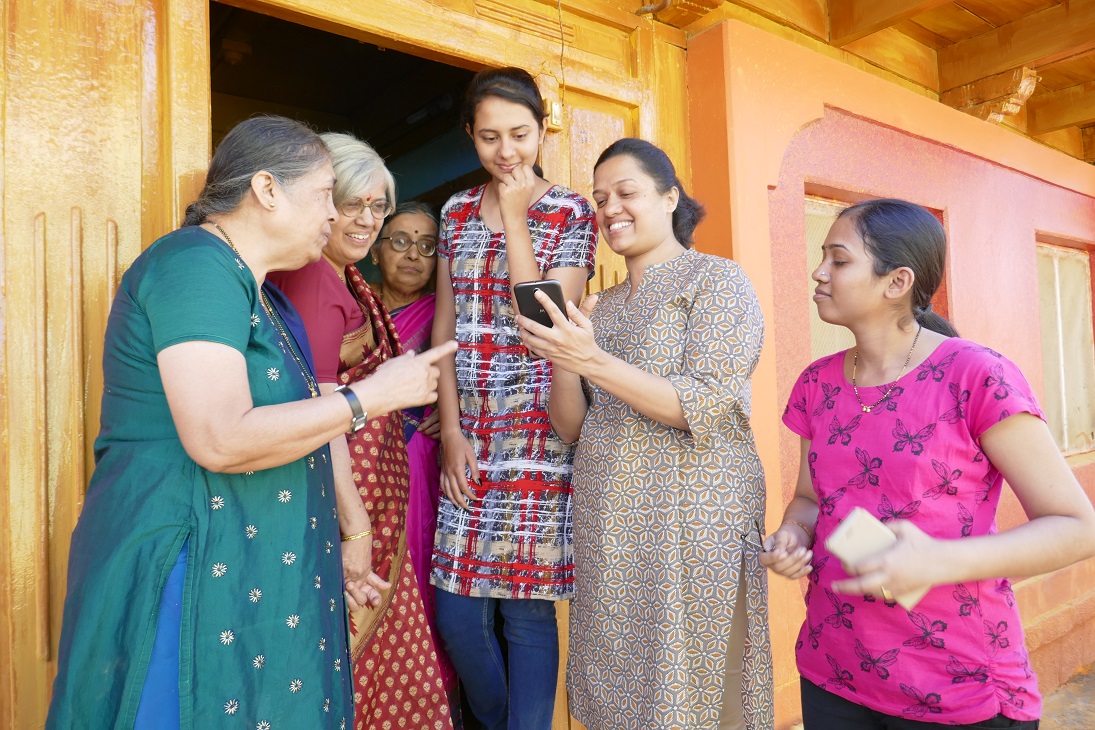


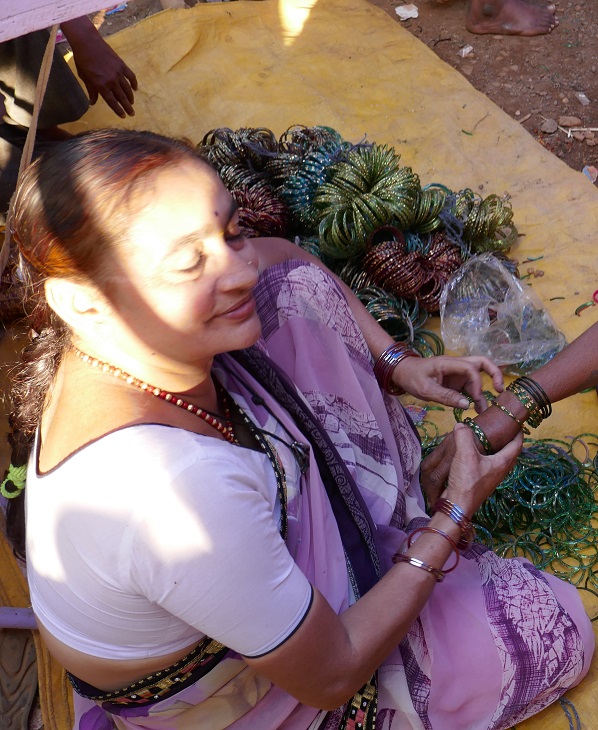


 A woman getting one prepared for her daughter’s first KarvaChauth gave me a low down on other things that will go with it as a gift inclusing diamand jewelery for daughter, gold something for the son-in-law etc with a price tag of 1 lakh. The Mathris seemed like the cheapest but traditionally most important part of the gift. I was told a Sargi or a food and puja item basket which includes mathari is sent by the mother-in-law to the daughter-in-law. Not sure if this was the same.


 devayani tirthali