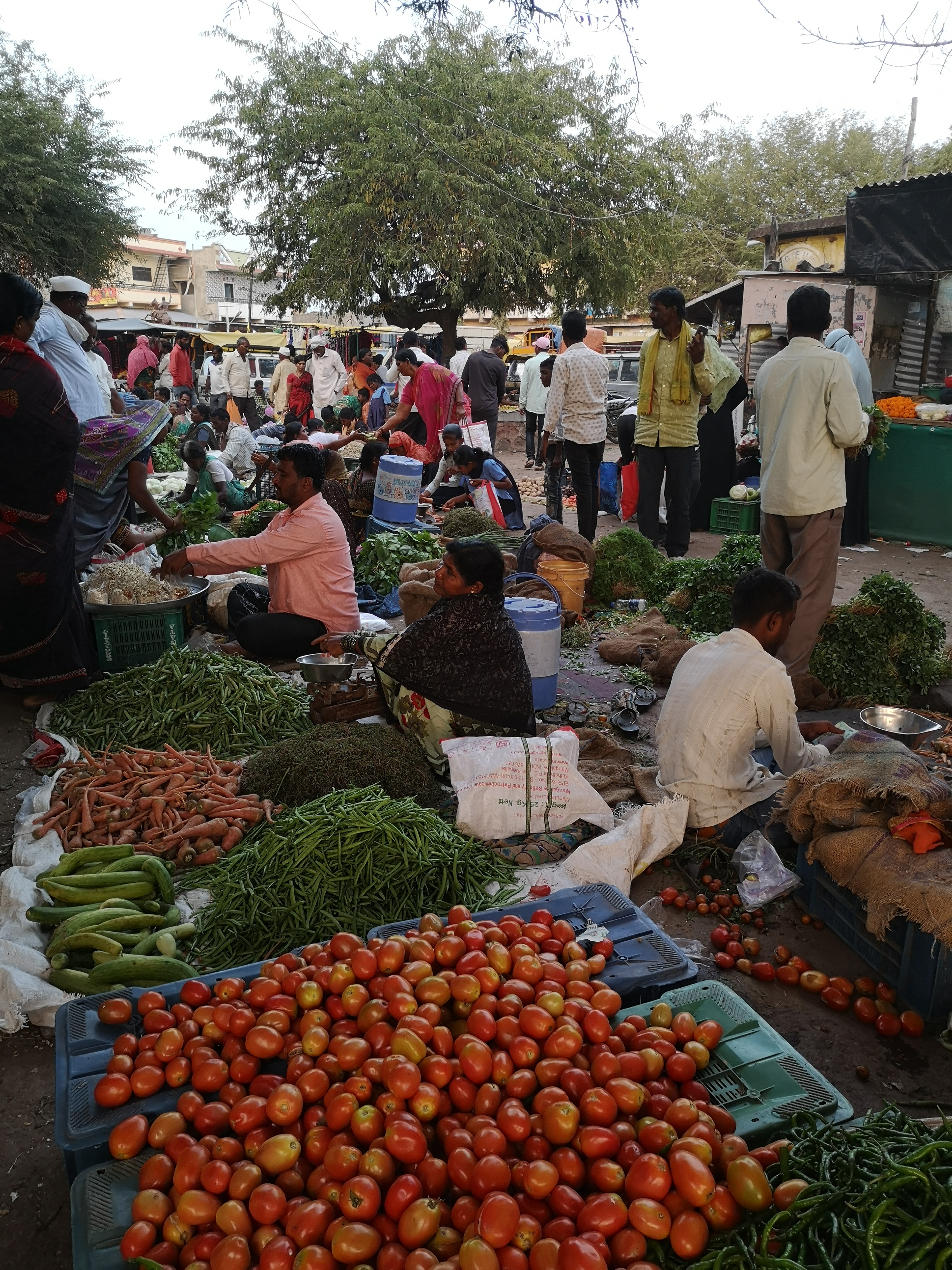
Vela Amavasya (वेळा अमावस्या or येळवस) is a major socio-religious event in Vidarbh, Marathwada region. This was my second time in Harali around this time. The excitement was palpable the whole week. The Anandshala meetings leading to it were planned keeping the event in mind. The Saturday before Vela Amavasya, the weekly meeting was wrapped up in time to visit the weekly bazar at Jalakot. In addition to the regular fare, the market was brimming with produce needed to cook the special dishes for the day.


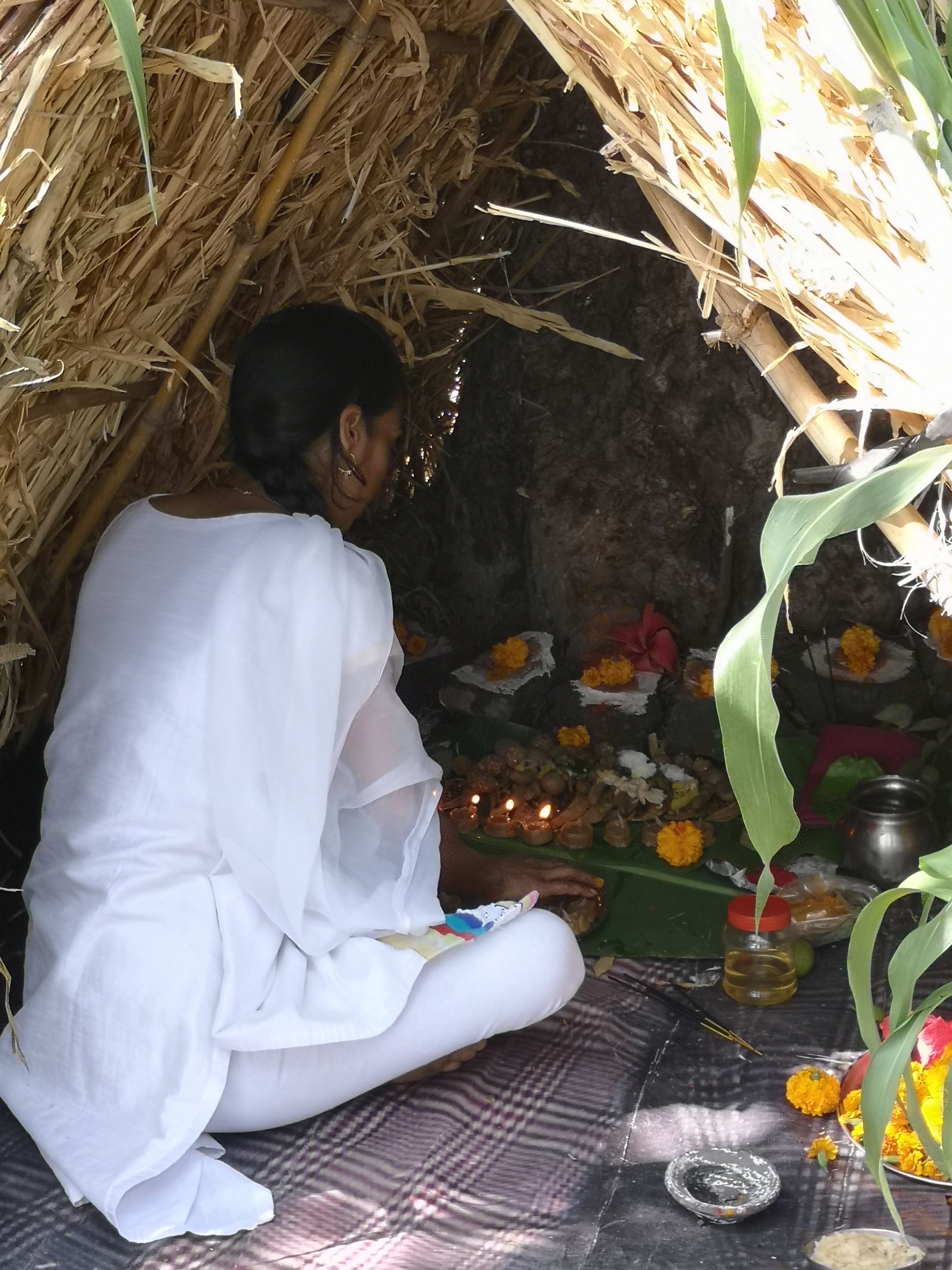
Vel amavasya is celebrated on the no moon day in the month of Margashirsh. A hut made of dried remnants of the crop is erected in the farm. Stones or mud roundels symbolising 5 pandavs and Draupadi are placed in it.
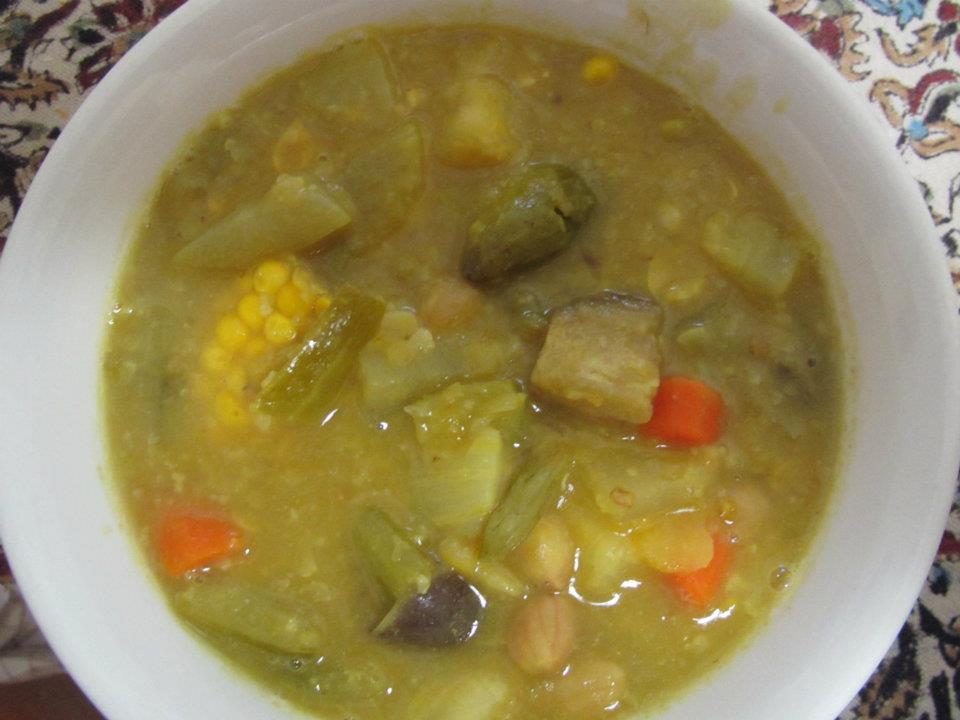
Naivedya is very specific: बाजरीचे उंडे steamed balls of millet flour, भज्जी mixed leafy veggies stew (?), गव्हाची खीर wheat pudding, दाण्याची पोळी flatbread stuffed with peanuts and jaggery. And most important आम्बिल, a refreshing drink of millet flour soaked in buttermilk, stored in an earthern pot.

At Harali the pooja was performed by various staff members and guests by offering flowers and lighting one of the wheat flour lamps. The pooja is to ask for blessings and thanksgiving for a bountiful future harvest. As one of the team had started a new venture to lease farm equipment, the crowd suggested they ask for blessing for that as well. As various researchers stepped forward there was further banter about blessings for various research projects. Overall everybody was in a jovial upbeat mood. The holy water was sprinkled around the hut and all over to bless the farm and the people.
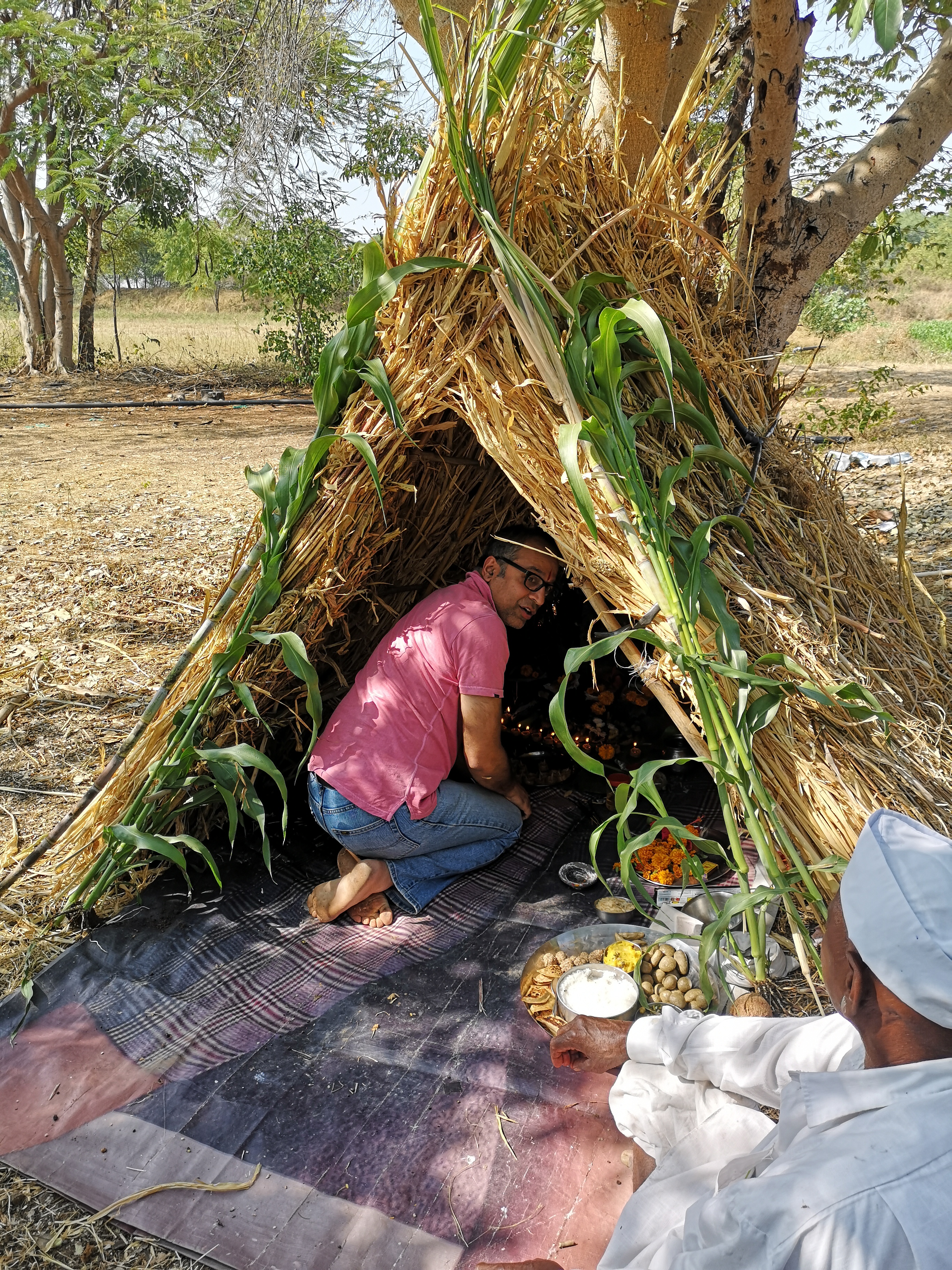


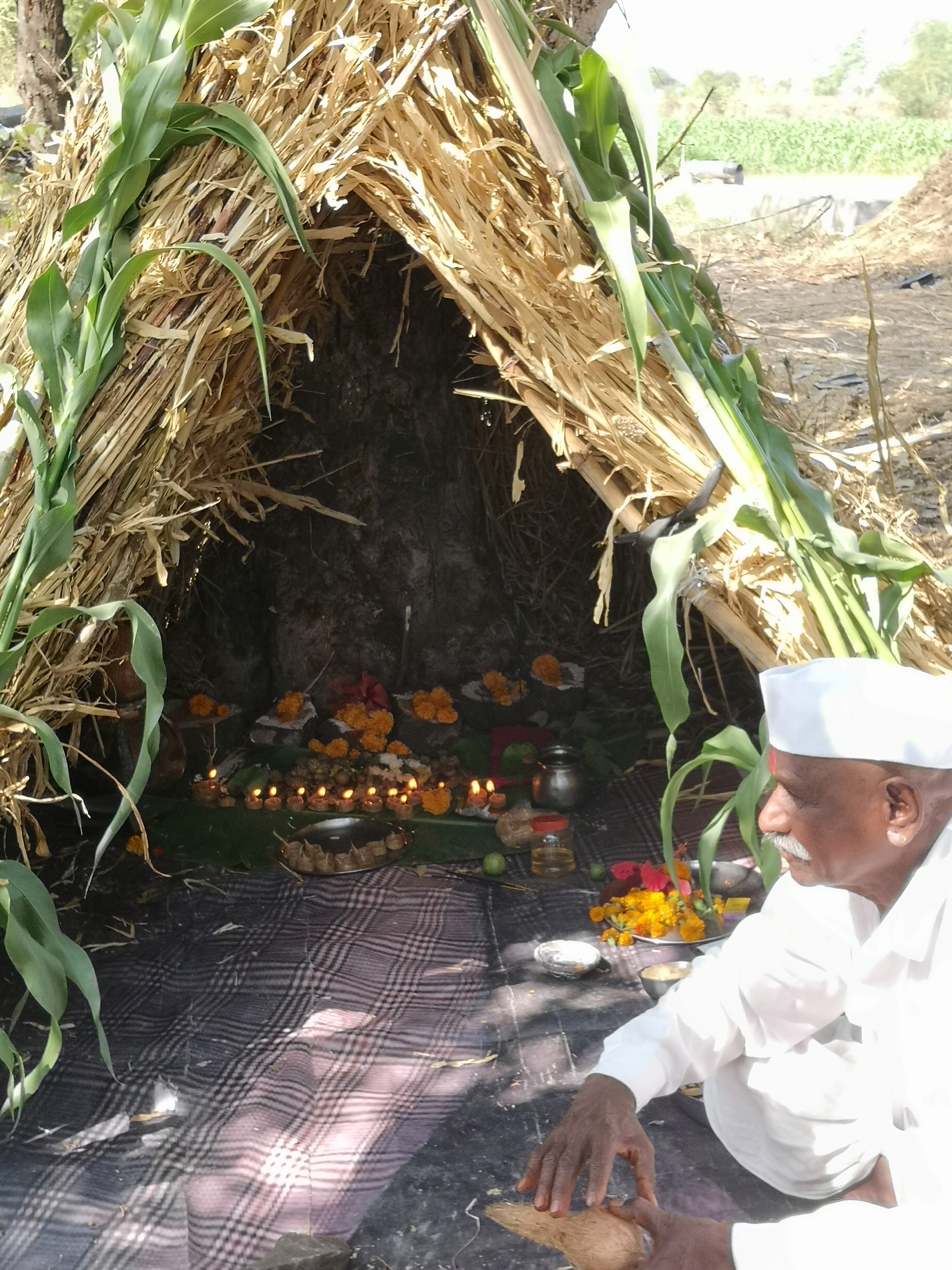
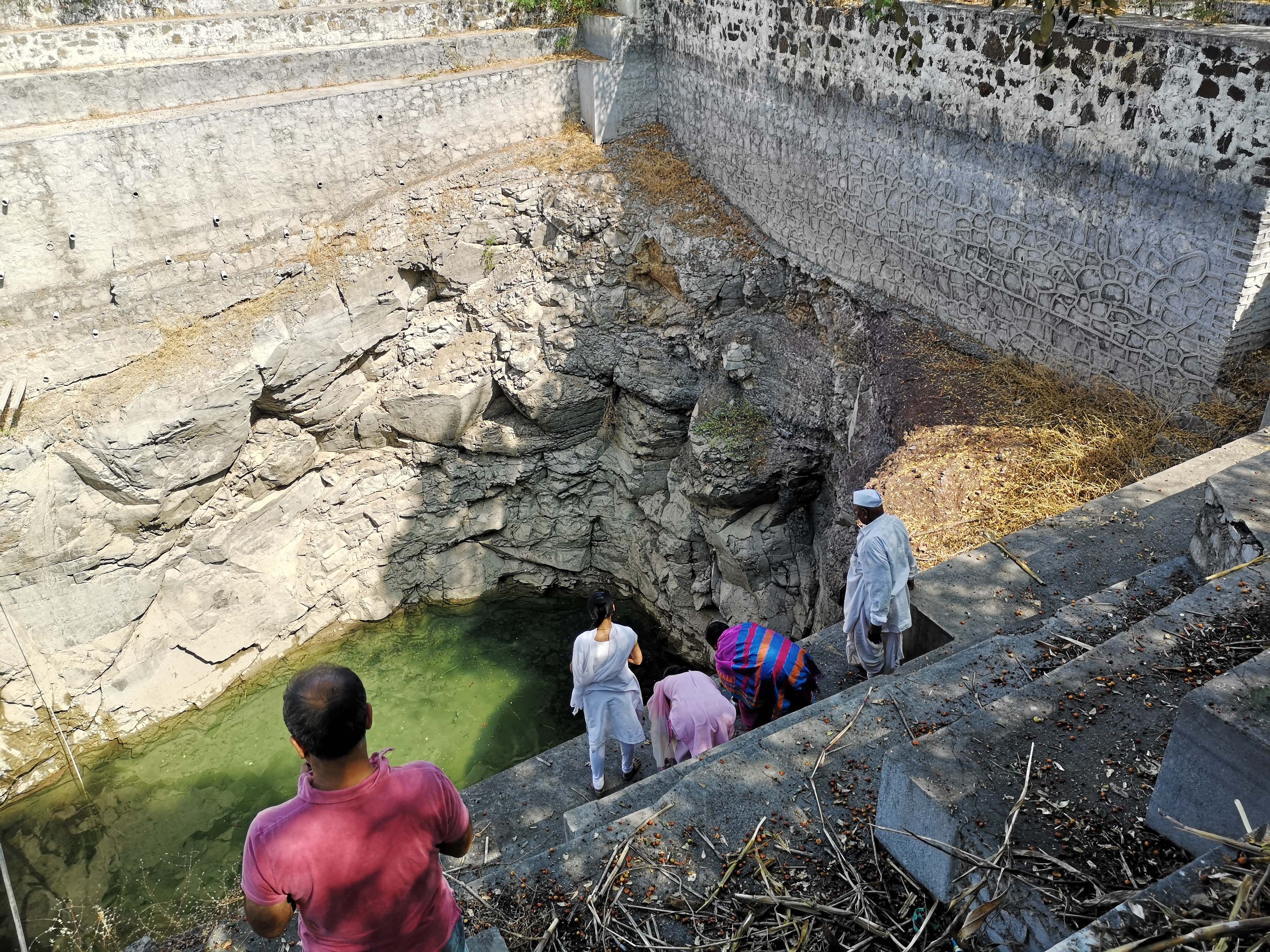
The pooja at the main location was done. Got some of the Prasad to mix it with the food being cooked in the communal kitchen. Gauri offered Prasad to the old gentleman, he received it in his cupped hands kept on his back. As he explained, ‘a blessing like that should take a bit of effort’. There are three more places the pooja is traditionally performed at JP Harali. One at the well, another in the mango orchard. Places that were once owned by other villagers. The traditional places of importance need to be honoured.
Throughout the week I received invitations from various team members to visit their farm for the special meal. I was able to manage a visit to Santosh dada’s place and had to be satisfied just to see photos sent by others. Next time need to plan in advance to spend the day visiting more people.

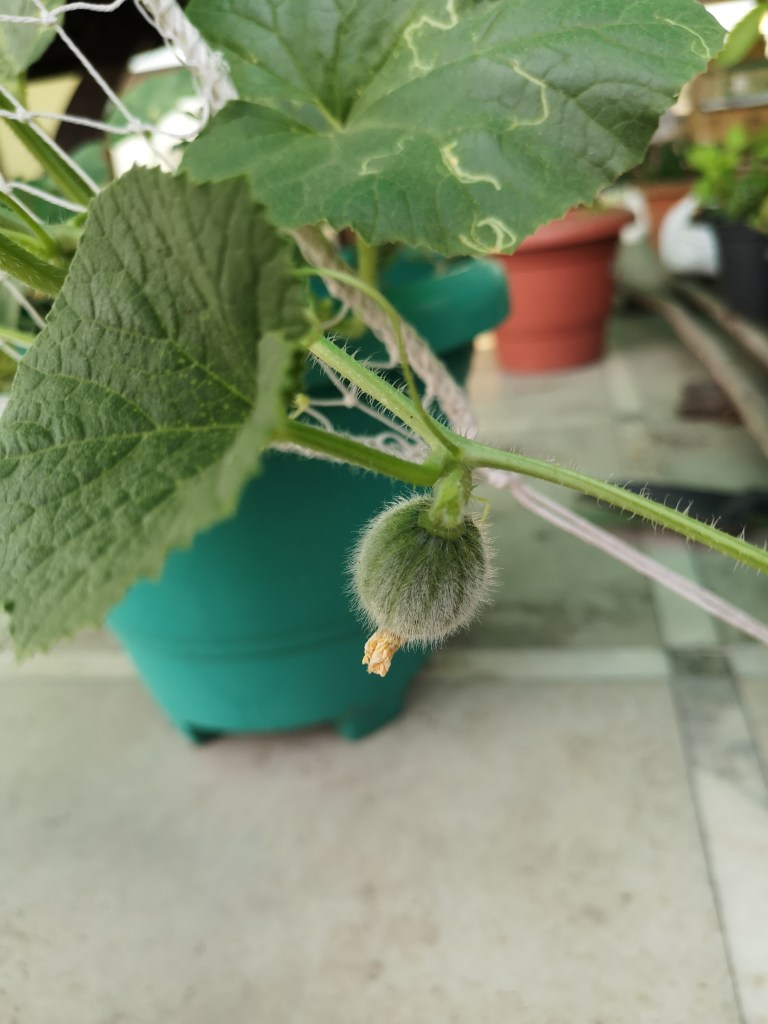

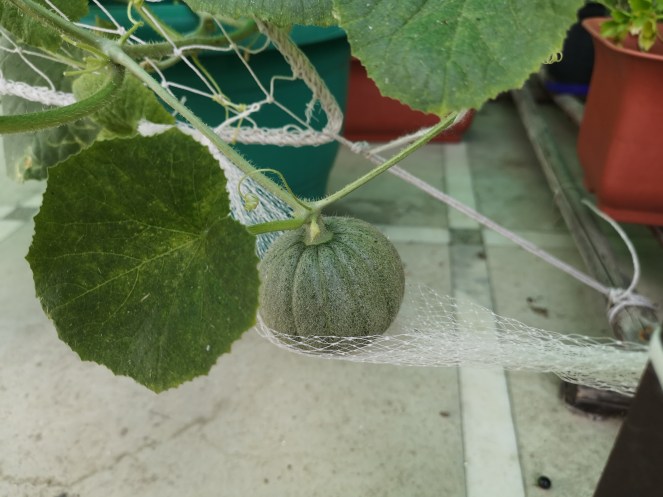

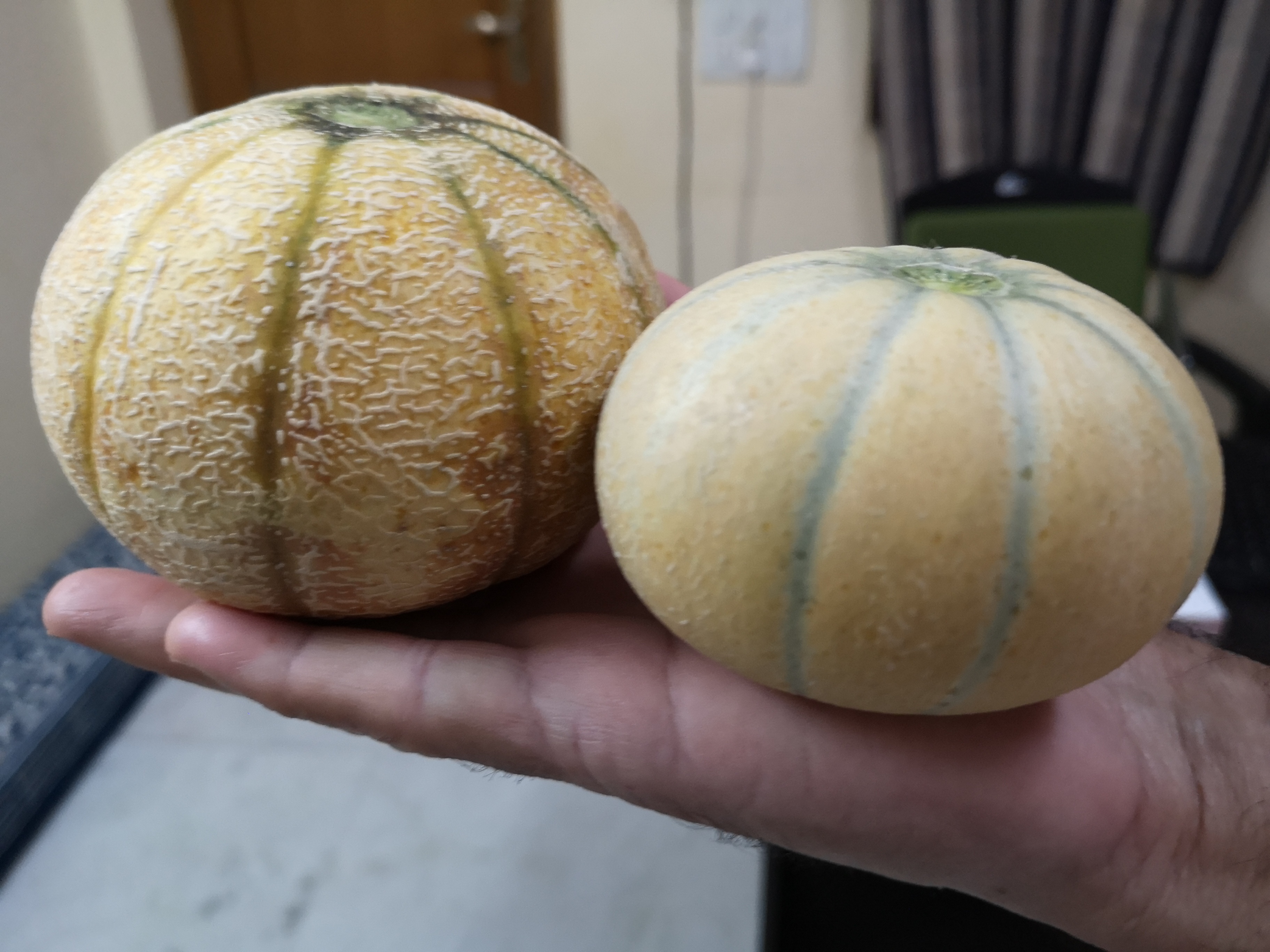

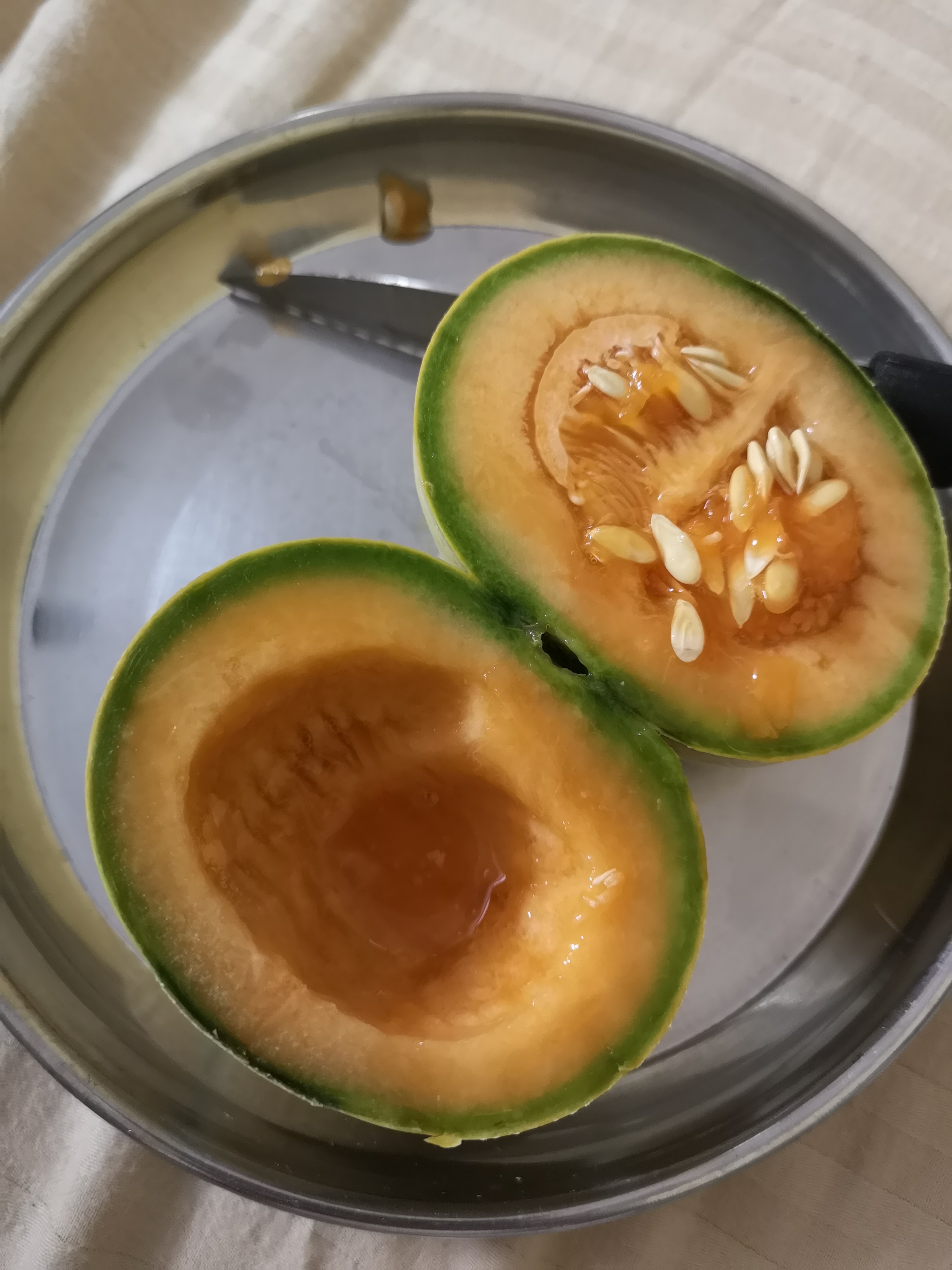
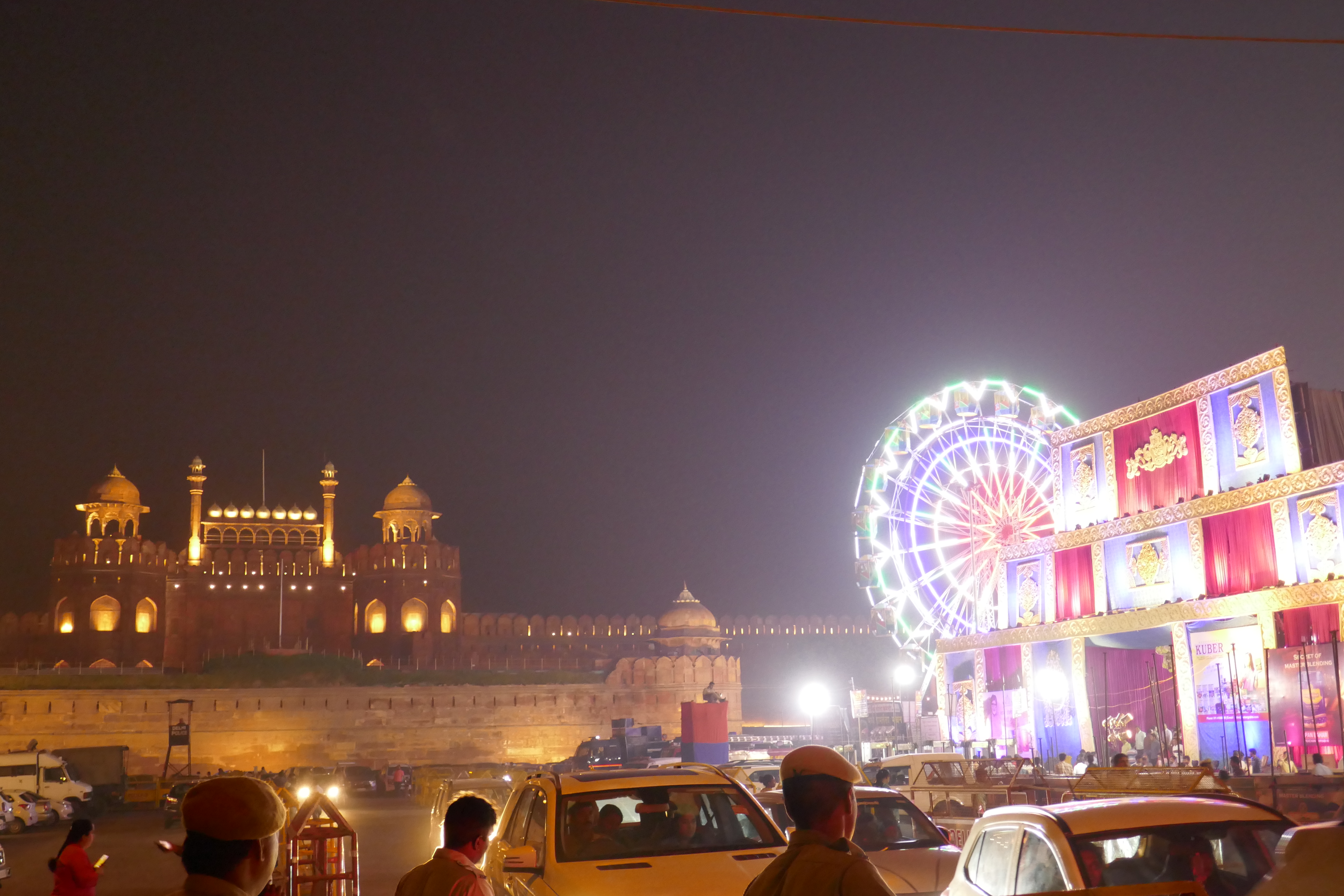
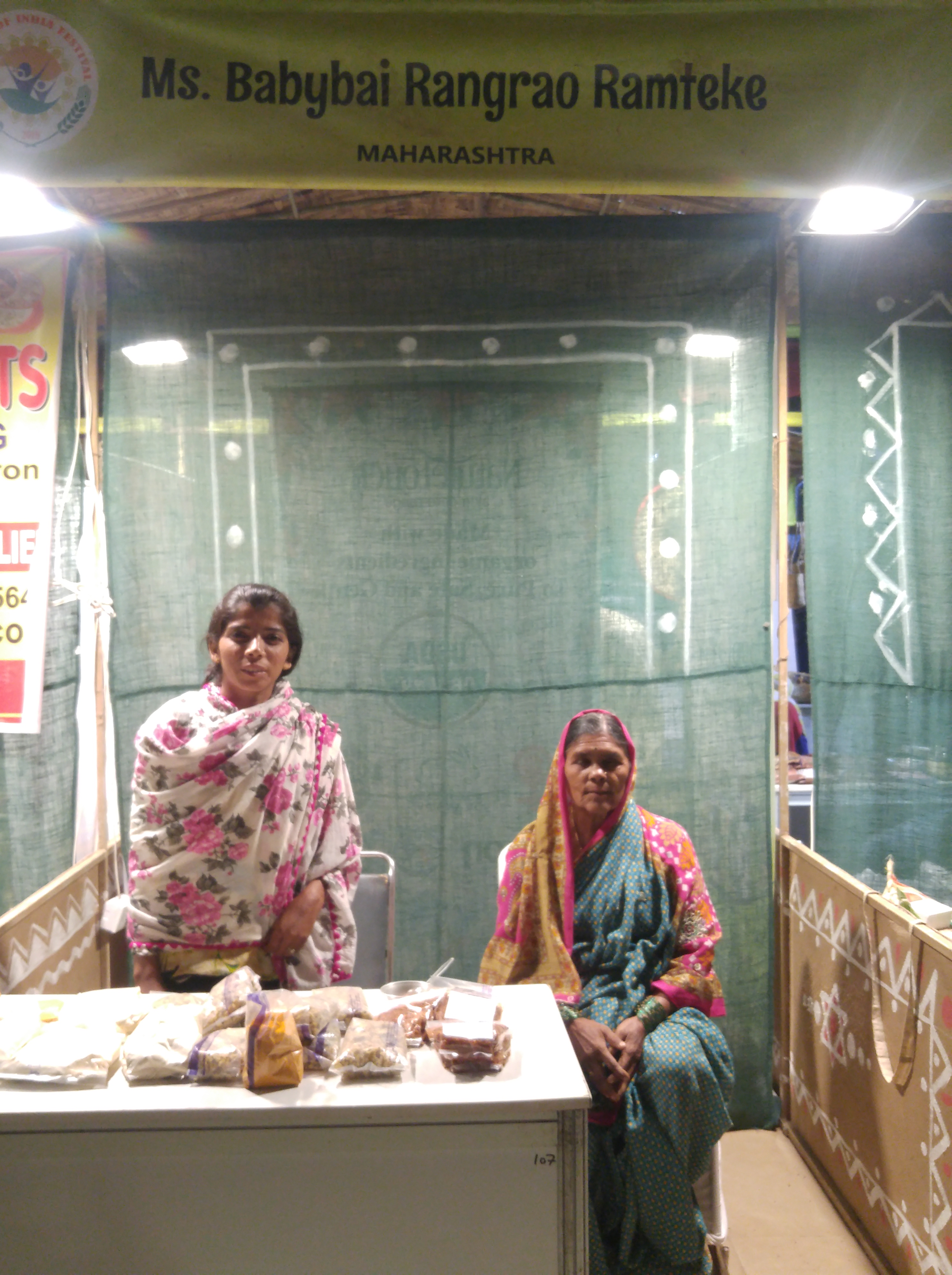 The focus was mainly on grains with a push for millets and indigenous legumes. Spices and herbs was another category. I bought some Turmeric from a farmer family from Amaravati, maharashtra. It was heart warming to have a leisurely conversation in Marathi. Found at least four more stalls of people from the general area. One of the farmers informed that he visits a farmer’s market in Mumbai every week. They were savy in dealing with non-marathi people. Unlike the Maharashtrian farmers, the couple from Tamilnadu manning an organic seeds stall was new to the Delhi crowds and managed to communicate mostly through gestures. In spite of the handicap, they were doing brisk business. After all it is planting season in Delhi finally.




 devayani tirthali