Dilli Diary

Eating out: Good, bad, ugly

1. Good: Saving condiments
Was pleasantly surprised and was really proud to see a place to deposit unused condiment sachets in a fast food restaurant. Have seen it multiple times since then at variety of places.

2. Bad: Standardized boring food
I was told that Delhi is the best place for a foodie. I have been dissapointed so far. May be it is an information asymmetry problem.
Everywhere you go it is the same old stuff – dal makhani, paneer makhanwala or variation of it with meat and veggies with the same base. I am sure there are so many interesting local dishes so why dish out the same old? Other options are MacD, sandwitches, burgers, and other standardized ‘western’ food at exhorbitant prices. I know I can go to CP for different cuisines and old delhi for local food but I am perplexed by the lack of real food in our vicinity. I miss thali in Pune or for that matter weekend Buffet at Rasoi in Providence, RI. I can’t believe I ate well in USA than in the capital of India. sigh

3. Unbelievable: Saving energy at the cost of food
We realized last week that shops just switch off the power to the freezer every few hours to save electricity cost. Thought it was a particular shop but then started looking for it and it is rampant. As it gets warmer outside (read scortching hot) the dairy products seem to have really short life, Dahi is sour. I haven’t started buying frozen meat yet and most probably I will just forget about it. I worry about medicines that need refrigeration. How are we supposed to know if the medical shops do this too? Hope it is a local problem and not a regular practice everywhere.

Musings

Reimagining Maharashtrian/Marathi Cuisine

Facebook is inundated with Diwali faral photos and recipes. First it was exciting and now I can’t stand it. So when Angat Pangat a facebook group posted its Diwali ank link I was excited. Reading Diwali ank was integral part of my Diwali holidays. I wasn’t able to keep it up after moving to NYC.

At first glance, thought this Pravaas: a Degustation by Swapneel Prabhu might be just the antidote I needed. Boy was I right. 🙂 Swapneel has taken the essence of key ingredients of different regional/ethnic Maharashtrian cuisines and presented it in surprising combinations of taste, texture, and presentation.

I was floored going through just the first two courses. The ingredients and the stories Swapneel shared reminded me of my summer and Diwali holidays at my grandparent’s place in Khanapur (Close to Belgaum) and one carefree summer spent in Savantvadi at my mavshi’s house. I can still remember the first time I saw mori masa (Shark) in the maasali baazar (fish market) and the texture of the flaky flesh in the first bite.

Varanaphala in the main course/pasta course moved me from ecstatic/nostalgic to introspective. Varanphala is a contentioys issue in our house. It is the most favorite comfort food for Parag and his family. Equally revolting for me. Swapneel’s take on it captures the essence of varanphal for Parag while giving it that suprising element of filling like a tortellini uplifiting it to something I can enjoy as well.

Many other beautifully conceptualized and plated dishes inspired by Nagapuri, Kolhapuri, and CKP cuisine. I don’t know the cuisine or do not feel passionately about these dishes so I better not comment.

Ending with kharavas and kunda crisps was a master stroke.

As I was about to post this comment I started thinking about my latest couple of posts talking about Indian food and cultural appropriation. I was aghast when I found the vanilla flavored ghee; livid when Saheli shared the Samosa Doughpods. So why is Swapneel’s “PB & J (Pavta Bharit aani Jondhala) Cornetts” inspired by bhakari, bharit, dahi and lahya were so exciting in spite of being presented in a completely alien way to the traditional items it points to?

Is it because he is Indian/Marathi (or thereabouts) and the doughpod person isn’t? How Indian or xyz ethnicity a person needs to be? I think it is more than just being Indian or having some connection to Indian. If that was the only criteria, I would not be so irritated with the Indian fusion at ‘India’ in Providence while  I still talk about Chauhan Ale House in Nashville as the best Indian food I ever had this side of the world.

Chauhan had dishes that you would never see on any Indian restaurant menu. The most memorable dish they served was fried Calamari, a staple in New England restaurants but not in India. The herbs and spices used for seasoning however captured the essence of the way I cook and the ingredients I use – like the aroma of kadhipatta crisped in the oil for chivada and the crunch of the rice flour+rava coating on a fish fry making you salivate with anticipation of the soft inside.

Question still remains: Who decides if a reimagined dish captures ‘the essence’? I am still muddling through this particular jumble of thoughts/questions. Any help/opinion/comment is appreciated.

PS: Happy Diwali
India Outside India

Indian Food gone wrong

Some WTF moments shared by my friends related to my post about flavored ‘Ghee butter’:

This DoughnutPlant abomination. Doughpods introduced August, 2016 are savory filled yeast doughnuts:
//platform.twitter.com/widgets.js

//platform.twitter.com/widgets.js

//platform.twitter.com/widgets.js
The Ghee butter conversation:

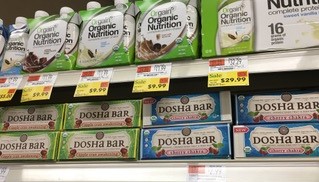
Parag’s photo share of Dosha bars at Wholefoods:

Dosha Bars at Wholefoods

Ayurveda, is the new buzzword at its peak. I have seen it used as an alternative nutrition/diet thing that everybody is following which is already disturbing. People study for 4-5 years minimum for a basic Ayurvedic Doctor degree you know and then MD etc after that. They practice with seasoned Vaidya’s before they start practicing on their own. So how about don’t use the word casually. Knowing your grandma’s herbal remedies is not Ayurvaeda either. I diagress. But you can see why my brain has gone haywire:
Dosha® Bar – Cherry Chakra (Balances Vata)
Dosha® Bar – Blueberry Balance (Balances Pitta)
Dosha® Bar – Apple Cran Awakening (Balances Kapha)
People please desist. I am fine with it being a snack bar and consumed as such. Not a ‘dosha balancing’ bar.
If it was that easy to figure out which dosha was aggrevated and then balance it with a simple snack bar who would need Vaidyas or Doctors.

//platform.twitter.com/widgets.js

India Outside India

Cultural misappropriation: Ghee butter, Chai tea,

Ghee butter? Really?
Explaining the absurdity of ‘chai tea‘ was my first pet peeve when I moved to NYC. But this tops it all.

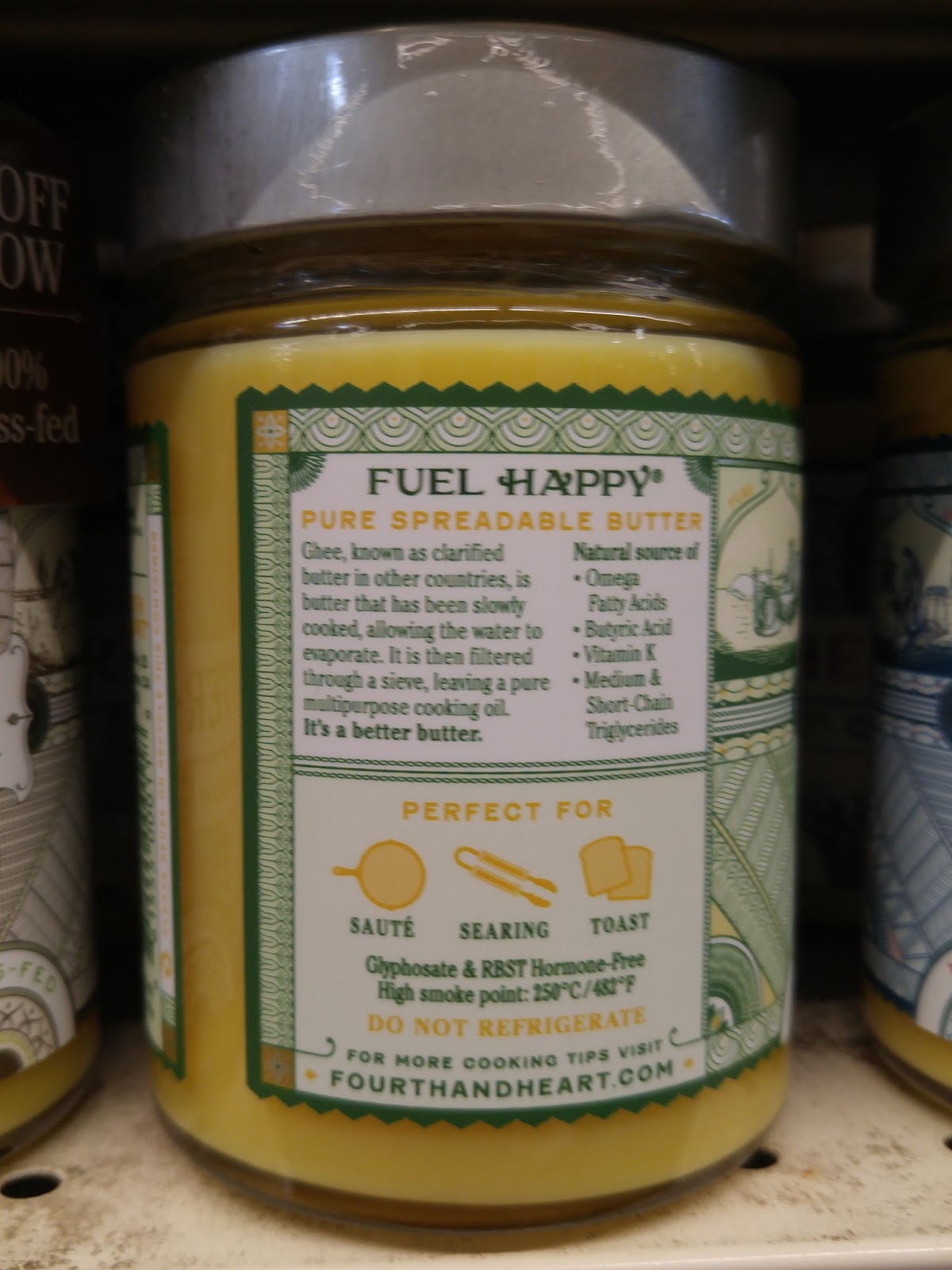
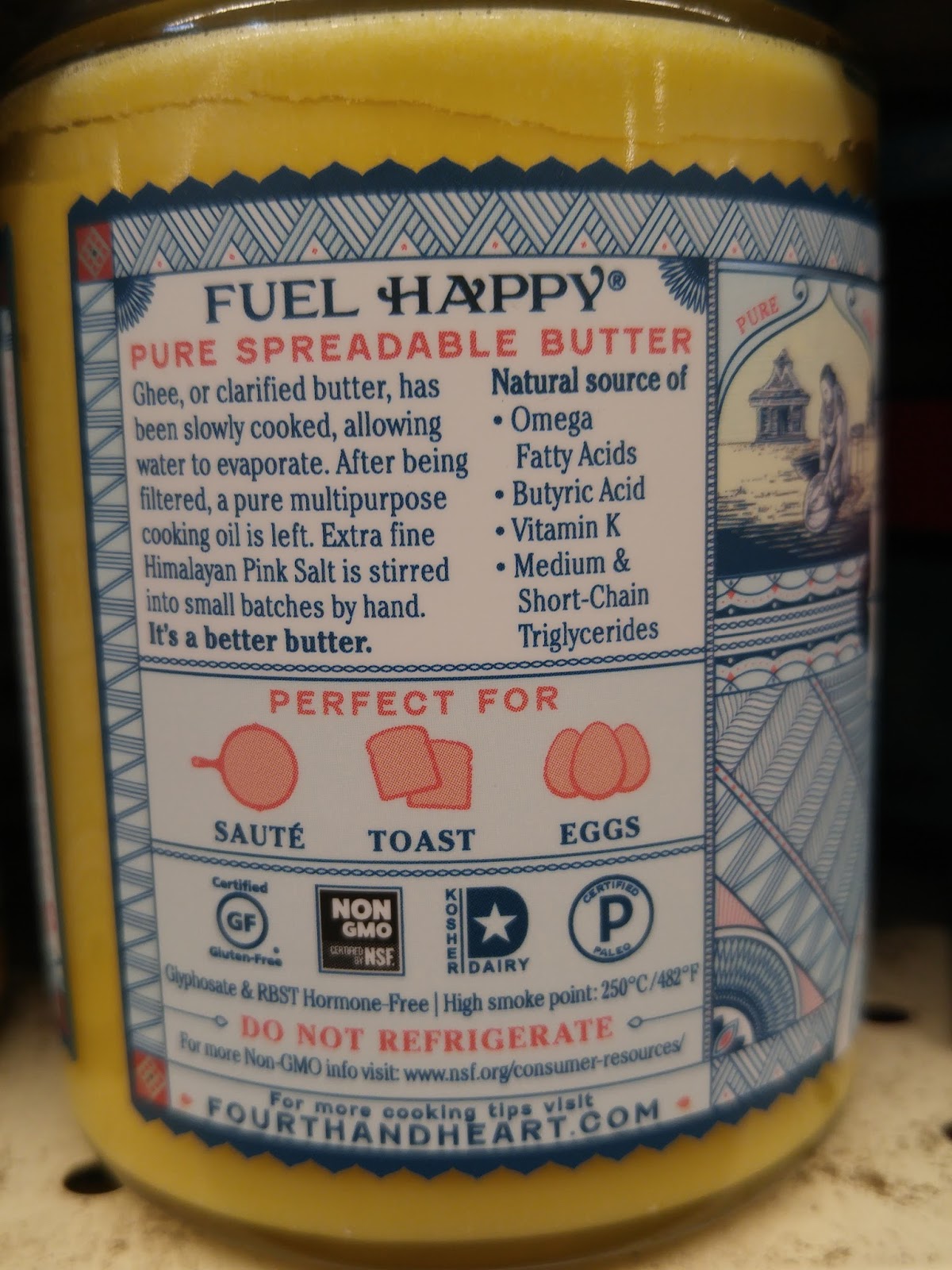
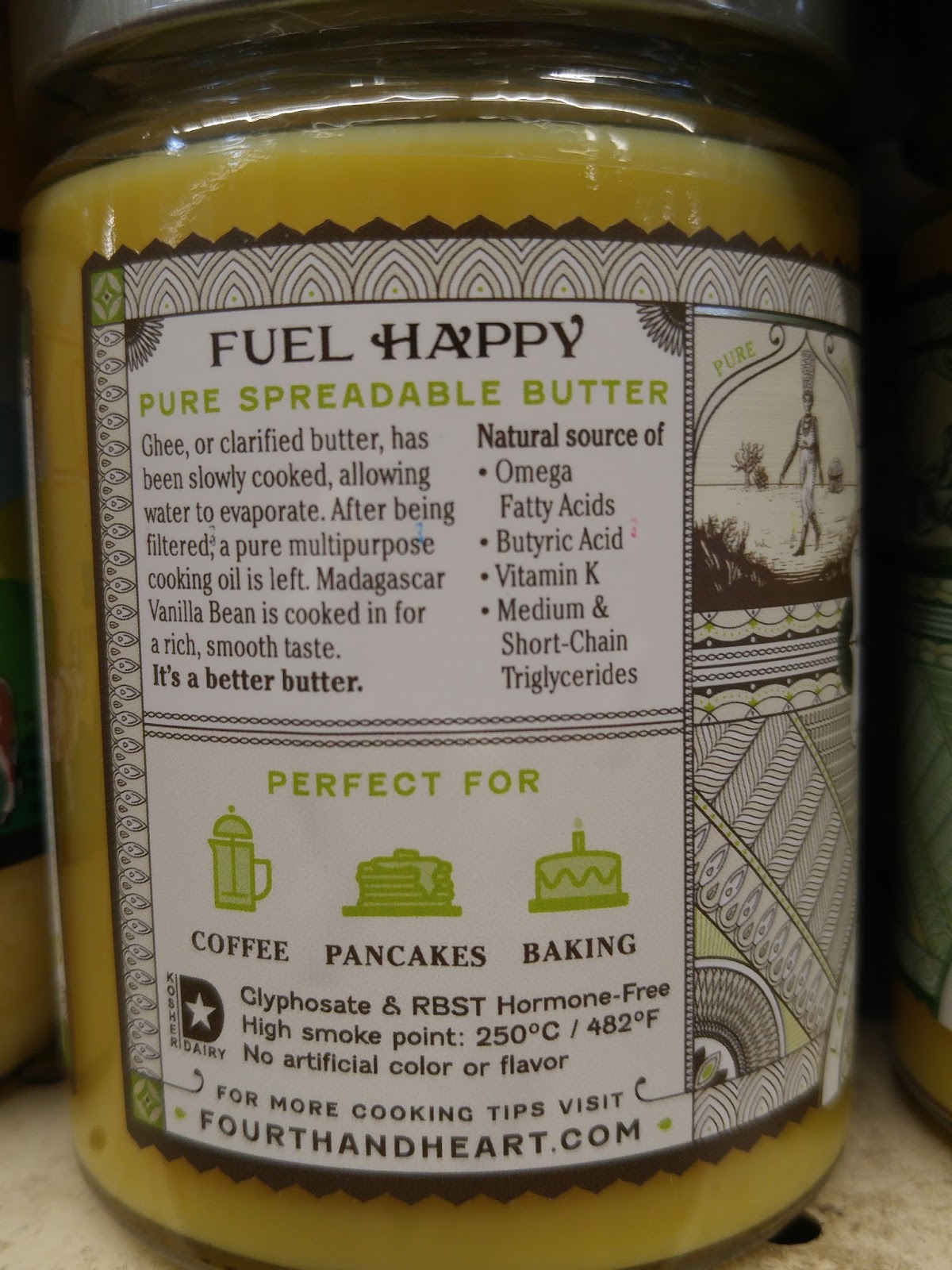
We saw ghee first in the upscale predominantly white farmer’s market on Hope street. The vendor selling ghee waxed elloquent about health benefits of ghee and offered it for tasting on a piece of bread. Unusual choice.  I wasn’t quite sure what to think about it. Then I saw a shelf full of flavoured glee bottles in Whole Foods and WTF is the only exclamation I could conjure.

The double name as usual – Naan bread, samosa potstickers, ghee butter ….
No no no! It is not spreadable butter. Ghee is not butter. That is the whole point. There were some ‘ghee oils’ in that shelf. not sure if I would rather take that than calling it butter.

Ghee has fallen victim to the health craze unfortunately and seems to have captured people’s imagination. Himalayan salt, Turmeric, and Vanilla were the offerings when I visited last week – two flavours to bring the healthy Indian to merge with the newly found health food and the vanilla to give some ‘I know this’ comfort to the regular American I guess.
(I am disturbed by vanilla chai but once again this tops it)

The bottles do not explain the method of preparing it. Is it clarified butter made of cream or butter churned from yogurt? The distinction is very important according to Ayurveda from where I am assuming the whole health food excitement is coming from.

Now to the suggestated pairings. I can live with using it to saute, sear, and bake. The vanilla ghee however is sugested to be pairied with coffee. Once again WTF

India Outside India

Trinis at Patel’s

Yesterday I was pleasantly surprised to see my colleague from Brown University in the Patel’s store. Since the opening last year we have been regular customers but never imagined meeting anybody I know professionally.

She had three big bags of dried hibiscus flowers. I have never seen dried hibiscus as food ingredient in Indian stores in USA or consumed dried hibiscus except once as part of some exautic tea. My colleague told me that Trinis make a tea with the hibiscus flowers and some spices for Christmas. I wonder if availability at Patel’s is because a lot of Trinis and Caribean customers frequent the place or I missed some Indian connection, which is quite possible given the culinary diversity of India.

India Outside India

The Turkish connection

Selen and I used to get a kick out of finding words and phrases that sounded similar in Turkish and Marathi our respective mother tongues. For example, Jalim Duniya, a phrase we use in Marathi (originali Hindi, Urdu) to dramatically convey ‘cruel world’ means exactly the same thing in Turkish just with less drama involved 😉

Not only do we have words that are similar but some words that point to India in some way, a reminder of the trade links between the regions long back.
When visiting the Spice market (Egyptian market), I saw something named Indian Saffron. After a bit of digging I realized that it was turmeric, not saffron at all. Seems that it is used as a low priced substitute food coloring for the real saffron. That made me very sad as we do grow Saffron in India. Many times it is also sold to unsuspecting European and North American buyers who do not understand the difference.

Another baffling one was ‘Hindi’, i.e. the bird Turkey. How did the bird get the name in the U.S. that points to Turkey and then in Turkey it points to India? After digging a bit for the origin of the word, the mystery deepens, the bird actually is native of the Americas so didnt really reach Europe from India via Turkey.  😮

This wikipedia article has some theories about the origin of the word. Some of it is related to Columbus. Of course, who else? 😉

Musings

Sharing food

I was writing about exploring different cultures through food in my blog post Culinary Adventures, and realized that I have never posted any photos of our food excursions or of the potlucks. So here they are. I will add photos as I find them.

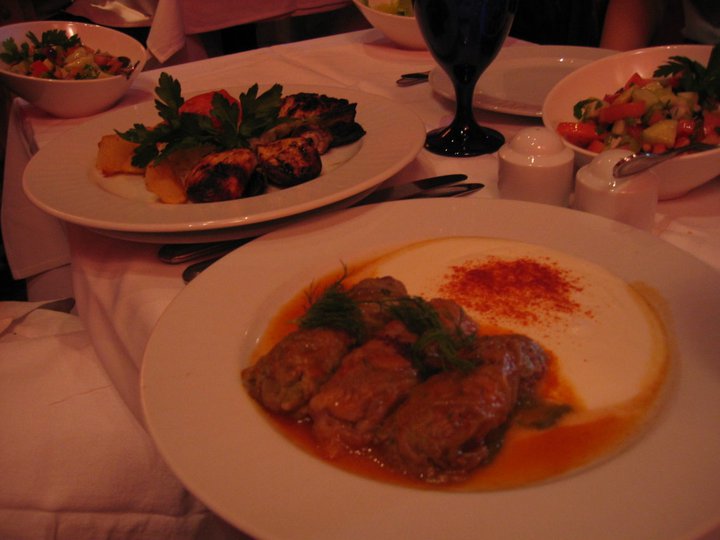
Lunch in a Turkish restaurant with Selen and her friend, Tina and Weinjing. Followed by turkish coffee and reading of fortunes 😉

Housewarming party at our home. Misal and Marcelle’s Curry
Musings

Culinary Adventures

I have been watching Anthony Bordain on Netflix, off and on this year. It is nice to experience various regions through his culinary adventures. I also like and very much appreciate the idea of knowing the culture through its food.

During my first couple of years in New York, we used to hold potlucks where everybody brought one traditional dish from their country, region or family tradition. We also planned food excursions where a group of us used to go experience a particular type of cuisine. All of it on student budget. I have been fortunate in finding a multicultural and multinational group of friends to share my food passion with.  From my South African friend’s pot of curry with star anise to my Chinese friends taking me to their favorite dumpling place, my Turkish friend introducing me to the dolma, baklava, halva, and  grape leaves,  Korean friend making a special dish of dduk bok ki and the list can go on.

The funny part is that the dduk bok ki and the potluck party around it was planned because one of our American friend craved for it. She was the one who actually introduced me to this fantastic Korean food. Similarly my Turkish friend introduced me to Sushi and sashimi. We are truly an international bunch here with transnational experiences. 

I love exploring people and cultures through food as everything is connected to food. Food opens up conversations about life experiences. Once I took my South African friend to an Indian Grocery store. She saw Maltova there and was super excited. She used to eat Maltova as a kid and her kids like it too. So I learnt the stories of her childhood and her kids growing up in SA. Sharing of Shevayachi Kheer is another such instance. She knows it as Buba (sp?). Something her Muslim neighbors and her mother’s Muslim friends shared with them on Eid. And then we talk about the friendships between various ethnic and religious groups, traditions that were borrowed and shared, the chat coming back full circle to the spices and culinary influences they have on each other and to her famous curry with star anise.

I went for a potluck dinner last night with a couple of friends welcoming parents of another friend.  We had a nice spread, Marcel’s curry, Amina’s okra, cauliflower rassa and a medley Aisha brought. The dinner was topped with Amina’s famous fruit cream and wonderful conversation. Everyone talking about their culture, customs and stories of their life.  It was nourishment for the soul. A parallel session of mendi (henna) designs helped as well to un-clutter the mind.

We haven’t been doing this as frequently as we should. Everybody busy with their research, life and all the stresses that are part of a doctoral student’s life. May be that is what I need. Another culinary adventure. Table full of food from all over the world, conversations as varied as the food.  Perfect therapy for weary soul.

India Outside India

Chai tea, Masala chai and the real Indian tea

For the longest time I felt that it was my duty to educate Americans about the wrong nomenclature for the things they were eating under the name of Indian. Curry and Chai tea are two of my pet peeves. I have told numerous people numerous times (even when they didn’t care) that there is nothing called ‘curry’ in Indian cuisine, the way it is understood by Americans, Europeans and may be the rest of the world. I also started writing a blog post about it sometime back. I should publish it one of these days.

‘Chai tea’ was an irritation for two reasons – firstly, Chai tea is like saying ‘tea tea’. Chai means tea. It is hardly an adjective for tea. Secondly, I thought the spices they added in the name of Indian chai was just wrong. Just because we use spices like pepper, cinnamon, and cloves in Indian cuisine doesn’t mean we would add it in the spiced tea.

Cafe Fresh near Columbia serves a version of this ‘Chai tea’. The only relief is that the menu lists it as ‘Masala Chai’ (spiced tea). I was so excited to read the words ‘Masala Chai’ that I started frequenting the place for a cup of chai. Funnily, I have taken to the various versions of spiced tea sold by cafes like Starbucks and Cafe Fresh as well as those sold as teabags. Even though I like these spicy versions, I have always maintained that they are not real Indian tea because of the pepper in it.

So the other day when Shraddha and I were exchanging recipes and the secrets for the fresh home specific masalas, I was shocked to hear her version of the masala for chai. The masala in her house is made of Pepper, dried ginger powder and other spices. I asked her twice if that was her own recipe and she insisted that it was a traditional recipe. So all these years when I thought it was stupid of westerners to add pepper in the Chai, seems like they were more knowledgeable about some of the Indian customs than I was.

The tea bags with black or green tea and powdered or whole spices steeped in hot water still is nowhere close to the Masala chai made in any corner of India, but I have to regrettably take back my ill feelings about pepper in tea.

I still feel the need to introduce people to the chai (simple tea), and Masala chai we make at home. Tea powder/granules (not leaves) boiled till it is strong and dark. Fresh ginger and cardamom added while boiling for warmth on a rainy day. Generous milk added to soften the taste. A couple of my friends have got hooked to it. But I remember to add that it is my /our (Maharashtrian?? Puneri??) version of the tea, rather than extrapolating my experience as an average Indian experience.