Musings · Social Media, Technology & Education

Contrasting Realities

This year again I was in Harali, working with Anandshala facilitators, when the editorial work for the Technology in Education issue of the IAFOR Journal of Education was at its peak. This year, similar to last year we had a lot of papers on AI. Some of them got through the peer review process and are published in the latest issue.

As we review various papers on AI, the discourse focuses on subjects such as evaluation challenges as AI becomes ubiquitous etc. as well as unexpected topics such as AI assisted plush toys/robots for children with autism. Here at Harali, I see student circumstances many generations behind this fast moving world. The cognitive dissonance is jarring.

Juggling the two drastically different contexts I inhabit, one with cutting edge technology and other with nomadic community in a disadvantaged district made me think of the socio-political context of educational technology. The editorial introduction this year focused on the ‘critical turn’ in educational technology is inspired by this experience.

Musings

The Need to Pass

Yesterday one of the speakers at the Vimukt Diwas conference mentioned how some Banjara (or DNT?) youth borrowed money to go to Ayodhya for the Ram mandir inauguration, while the families did not have enough money for two square meals or to continue their education. What makes people make these decisions?

There was a discussion on false consciousness and how this keeps DNT in the cycle of poverty and exploitation. The point of the conversation was that people are misled by dominant ideologies into acting against their own interests. However, instead of asking why do people act against their interests? I would like to think what kinds of recognition are made available to them, and at what cost?

I have been thinking about this for the past few years with reference to the conversations in the Anandshala project. Two conversations stand out:

When interviewing Banjara students about their language use, one student said, it is obvious that nobody would like to learn his language, it is filthy. There are swear words. Marathi is much cleaner. The remark was delivered in a matter of-fact way.

A few months back waiting for the inauguration ceremony of Anandshala container school in a vadar vasti, I was chatting with the parents and grandparents of the children. One grandma mentioned that she just dropped her grandson in a residential school. Among the two, one was very boisterous and unruly. She was worried about वाईट संगत if he stayed home. The other one was quieter, brighter. अगदी बामनावाणी बोलतो. The teacher at the residential school promised that he will straighten the boisterous one after a year, after he gives him time to settle down.

These are not isolated anecdotes. The pressure on marginalised communities to demonstrate worthiness by aligning themselves with dominant norms of speech, behaviour, belief, and discipline are evident in everyday moments as well as institutional processes. Hegemony works not through force alone, but through consent: through everyday practices of aspiration and common sense.

These three instances are examples of investments in symbolic capital. Attempts to convert marginality into recognition, however fragile that recognition may be. The problem is not that people want to pass. It is that passing has been made a prerequisite for dignity.

Musings

What does it take to pass?

One of the Anandshala facilitators during a conversation proudly shared that people say “you don’t sound Laman”. For her, not sounding x is a marker of upward movement socially. Like in Shaw’s Pygmalion or P L Deshpande’s Fulrani, what does it take for a flower girl to pass off as an elite lady?

She grew up in the district headquarter, not in the Tanda. Her Marathi is learnt as a Parisar Bhasha among various marathi speaking people, not as a language of instruction or a subject in school like her students. For a person visiting from Pune, the keeper of ‘standard Marathi’ she will sound rural or not (so called) higher caste. Markers such as न and ण would be obvious to them. Those she did not learn by osmosis in her semi-urban environment, but only in the school. When we look at language as performative in that sense – where and how one learns it makes or breaks the performance.

Why do people find the need to pass; what harm such compulsions rooted in social structures cause; and what can we do personally and as a society to not put that burden on them is a conversation for another day.

Musings

Social Memory of Separation

The Girl’s hostel at the school (in Harali) started hosting Laman Banjara girls during the pandemic. Our Anandshala program at that time catered to the children of Banjara migrant workers. Come Diwali they migrate to harvest sugarcane and are away till February/March. With the AshramShalas still closed, young kids especially girls would have migrated with parents and all the efforts to keep them in school with help of Anandshala project would have been wasted. So the school temporarily accommodated banjara students in the hostel for 3-4 months. Then many of them joined the school and stayed on for the next year.

Visiting days and times for the girl’s hostel are fixed but Banjara parents arrive to see their children at ‘random’ times. Because they missed them intensely. Or because they thought of the kid while eating mutton curry. Or because they are leaving for the harvest and do not know when they will be back. Some reasons seem somewhat logical to the school staff, some outright absurd. Some staff members felt that the parents just don’t understand or do not want to follow rules.

For the last couple of years, the school started a scholarship program for bright girls to join the school in 5th grade and stay in the hostel. Most of the girls who got the scholarship did not join. Their mothers or grandmothers got emotional with the thought of parting. They are from within a 25 km radius of the school. It is not excruciatingly difficult to travel. One of the grandmothers said “She will get married and leave, why send her away now, so soon.”

This is unfathomable for the facilitators and JPH staff who worked hard to prepare these students for the ‘opportunity’. Some of the staff are urban and some are from the villages around. But neither could relate to this angst. It comes from the history of the community as nomad traders. In olden days, when a person joined another Tanda (a caravan) or got married and moved in a different direction, the probability that they will meet again was low, given that both of them would be on the move. This separation angst from the social memory is kept alive through wedding songs describing parting and loss.

In modern times, the girls get married to somebody within the community, many times in the same Tanda or nearby. But the historical memory and separation anxiety plays up in seemingly illogical ways affecting many facets of their life. You can’t wish it away or juxtapose a structure of another system on it to keep it in check.

Unless it is acknowledged, we can’t move forward.

In Harali, this is a constant struggle. Would bussing in be better to provide opportunities for Banjara girls, acknowledging the socio-cultural milieu? How can we make rules that work with the ways of the community?

Musings · Social Media, Technology & Education

Endangered Home Languages

Working with the Laman Banjara children in Anandshala, we have been exploring various facets of the problem आपली मुलं शाळेत फुलत का नाहीत? [why don’t our children prosper in school]. A couple of years back we talked with the parents, children, and the teachers about language transition from home language to school language – their experiences, what they think works and does not work.

As educators, learning scientists, linguistic anthropologits, we think that it is important to support the home language. Use it in verbal exchange in formal and informal learning spaces; create learning material in the home language; encourage translanguaging. While parents want their children to quickly move on to Marathi and English. When asked “don’t you worry you will lose your language?” The answer was – “We talk in our language at home. It will not disappear. But the children need to learn English to get a job in the office and change their plight.”

An article on Kolami speaking community in PARI reminded me of this exchange. Kolami is named as an endangered language by UNESCO. But the speakers have more pressing issues than saving their language:

“There is no time to think about anything else [other than her farm],” she says about the status of Kolami as an endangered language. When Sunita and her community didn’t know fluent Marathi, “everyone would say ‘speak in Marathi! speak in Marathi!’” And now when the language is endangered, “everyone wants us to speak in Kolami,” she chuckles.
“We speak our language. Our children too,” she asserts. “It’s only when we go out that we speak in Marathi. When we come back home, we speak our language.”
“ Aapli bhasha aaplich rahili pahije [Our language should remain ours]. Kolami should be Kolami and Marathi should be Marathi. That is what matters.”

The Kolami Speakers of Yavatmal.

It is the exact same discourse. When there is urgent need of improving dire living situation, saving home language or the identity formation of the child in the first five school years based on home language, and all the theories of learning are not a priority.

Working with the community as a participatory practice rather than an intervention, where do we stand when our beliefs about primacy of home language butt against the basic struggle to stay alive?

Musings

निसर्गातली लगबग

रोज आंघोळ करताना खिडकीतून एक सुगरणीचं जोडपं घरटं करताना दिसतं. सुरवातीला नुसतं फांदीला लटकलेला अर्धगोल होता आता पूर्ण गोळा तयार झालाय. त्याला आत जायला जागा आणि त्याला वरून आवरण आहे. काडी काडी आणून, रोज थोड थोड करून अगदी सुबक बांधकाम झालंय.
जागोजागी शिंपी सुद्धा गवताची पाती आणून खोपच्यामध्ये घरटी बनवताहेत. एक खिडकी आणि जाळीच्या मध्ये, एक गुलाबाच्या वेलीच्या गचपणात अस जोरदार काम चालू आहे. लांब लचक गवताची पाती घेऊन उडताना हे पक्षी फारच मजेशीर वाटतात. पलिकडे शेतात लावलेली सोयाबीन आणि इतर पिकं जेमतेम दिसत होती, ती आता वाढून शेत गच्च भरल आहे.

हराळीला आलं की अशी निसर्गात चाललेली अॅक्शन बघता बघता आपोआप मन स्थिरावतं.

आज नाश्ता करायला जाताना मुंग्यांची रांग दिसली पण काहीतरी वेगळ वाटल म्हणून थांबले तर मुंग्या नाही तर termite ची लगबग चाललेली दिसली. एका बिळातून दुसऱ्या बिळात ओळीनी सर्व चालले होते. मध्येच एक काळा मोठा मुंगळा आला आणि त्यांच्यात घुसला. भोजनगृहाबाहेर मुंगळ्यांची रांग गेले 4-5 दिवस आहे. पण हा पठ्ठ्या वाट चुकून इथे अलीकडेच कुठे असा विचार करत होते तोपर्यंत तो termite च्या लायनीत घुसला आणि त्यांना खायला लागला. गौरी आणि मी आश्चर्यानी बघायला लागलो आणि तो खरतर termite सोडतोय आणि त्यांच्या पकडीत असेलेल पांढरं काहीतरी खतोय अस लक्षात आल. म्हणजे ही सगळी मंडळी बहुतेक अंडी हलवत होती असं दिसतय. मुंग्यांना अंडी हलवताना पाहिल होतं पण termite ना कधी पाहिलं नव्हत.

मुंगळ्याचा असा डल्ला मारणं सुरू होतं तोपर्यन्त termite च्या रांगेत अचानक उलट्या दिशेनी येणारे मोठया लाल डोक्याचे प्रकार दिसू लागले. त्यांच्या कडे बघत होतो तोपर्यन्त त्यांच्या फौजेपैकी काहीनी मुंगळ्याला घेरल आणि बहुतेक चावायला सुरवात केली. मुंगळ्यानी self-defence साठी स्वतःचं मुटकुळ करून घेतल. पण मुंगळा जोपर्यन्त रांगे पासून दूर जात नाही तोपर्यंत ह्या पठयानी त्याला सोडल नाही. हे विशेष फौजेतले termite चे प्रकारही मी पहिल्यांदाच पाहिले.

एक महिनाभरामध्ये जसं हळूहळू पुढे जाणारं काम, बदलत जाणारा निसर्ग पाहायला मिळतो तसं अचानक थरार नाट्य सुद्धा पाहायला मिळतं.

Social Media, Technology & Education

Making sense of it all

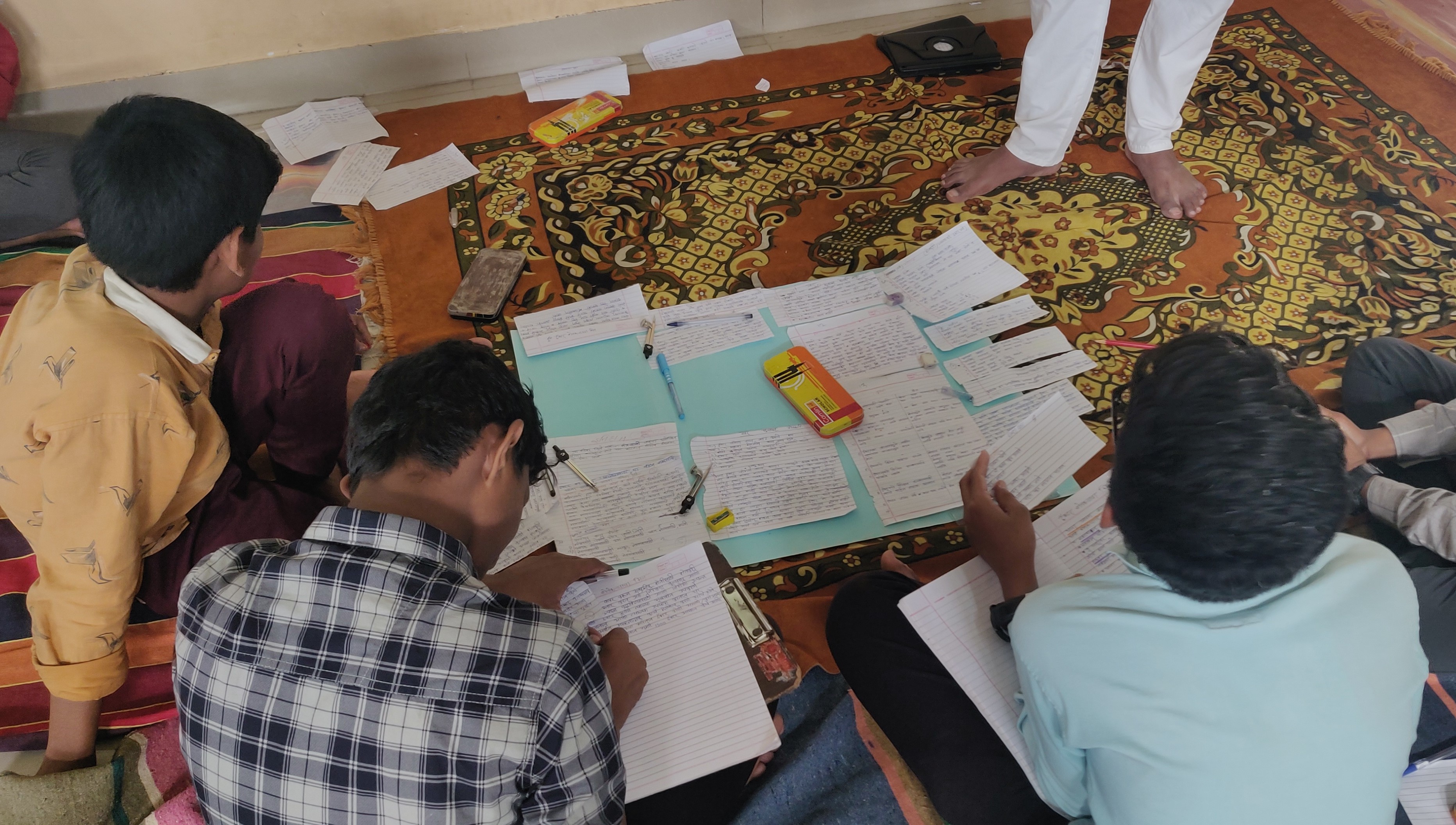
Physically moving pieces of written text to understand how they fit together for their group authored article. This is from one of the sessions with students at Harali in their Science Journalism project. The articles they wrote can be seen here.

Reminded me of the old days when we had post-it notes or actually cut out pieces of interview transcripts while conducting analysis without QDAS.

Musings

येळवस

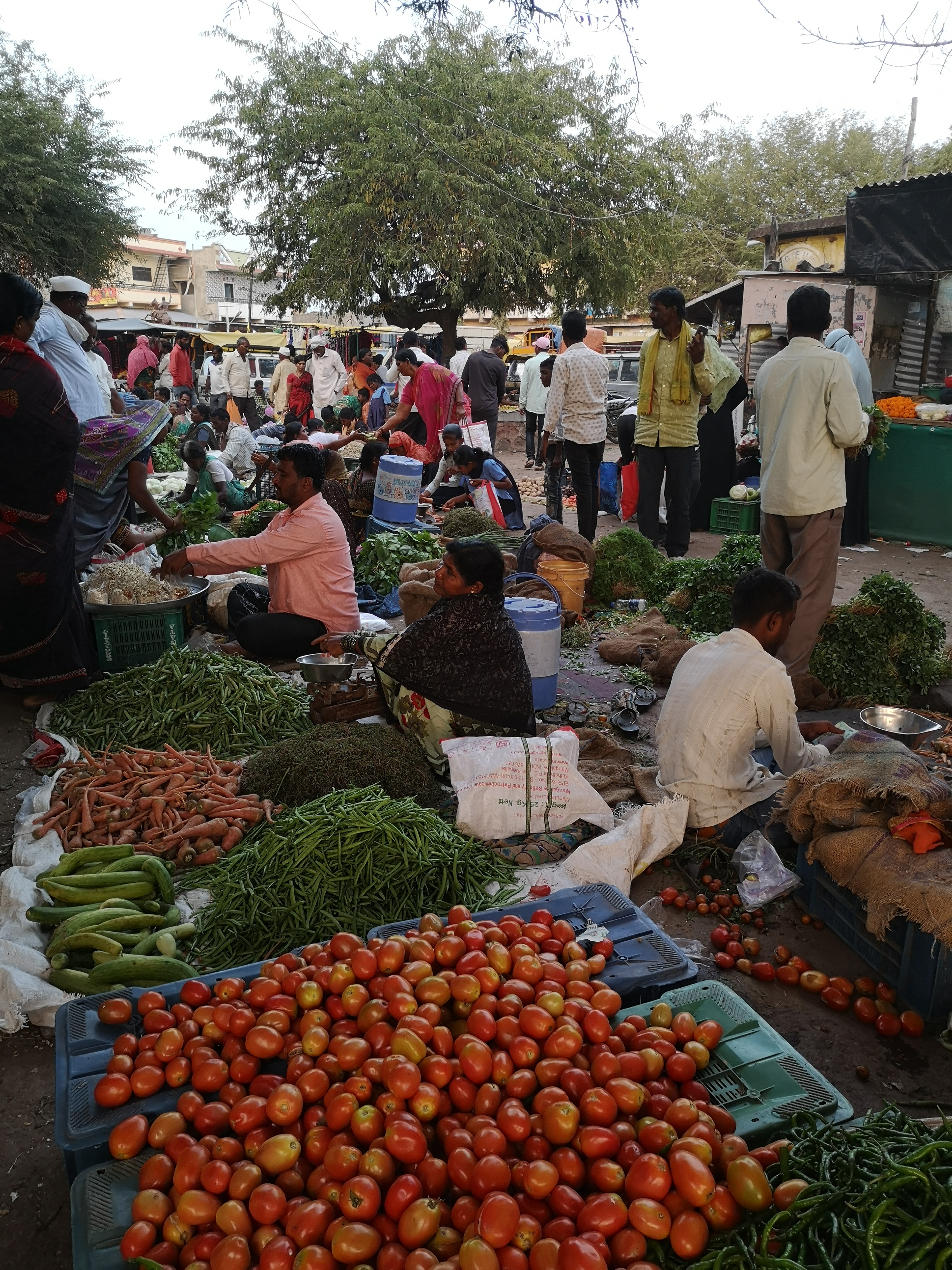
Vela Amavasya (वेळा अमावस्या or येळवस) is a major socio-religious event in Vidarbh, Marathwada region. This was my second time in Harali around this time. The excitement was palpable the whole week. The Anandshala meetings leading to it were planned keeping the event in mind. The Saturday before Vela Amavasya, the weekly meeting was wrapped up in time to visit the weekly bazar at Jalakot. In addition to the regular fare, the market was brimming with produce needed to cook the special dishes for the day.

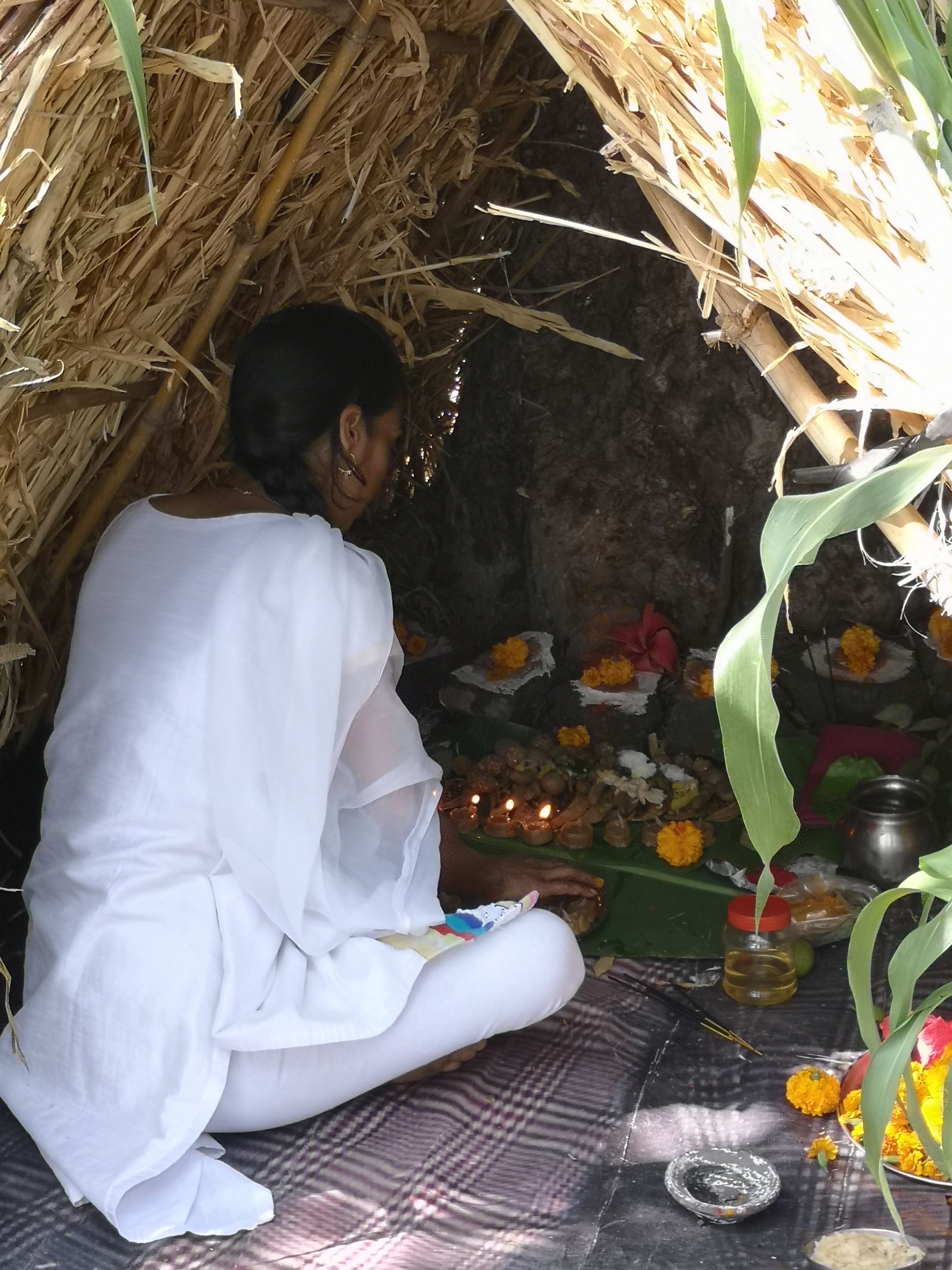
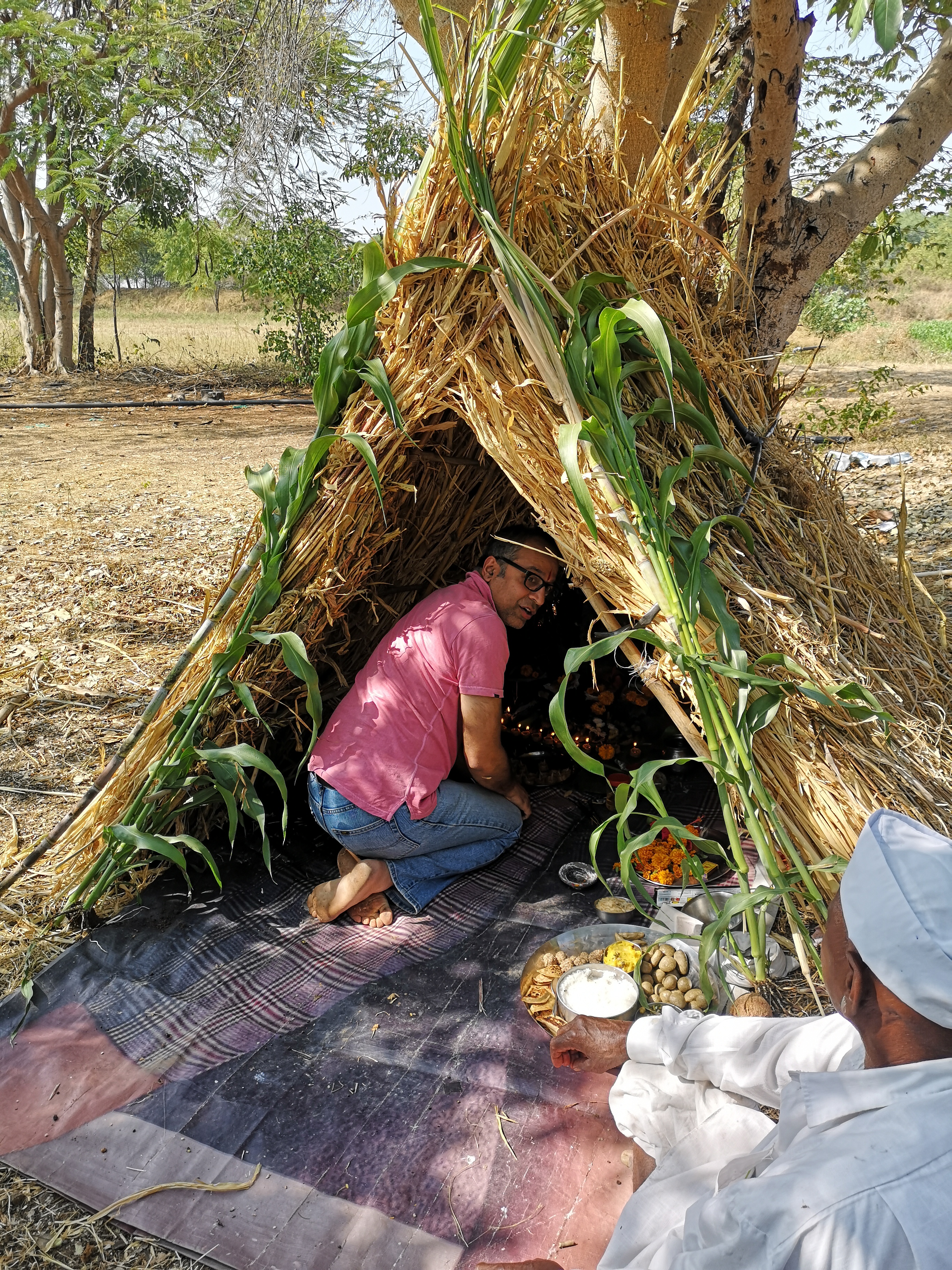
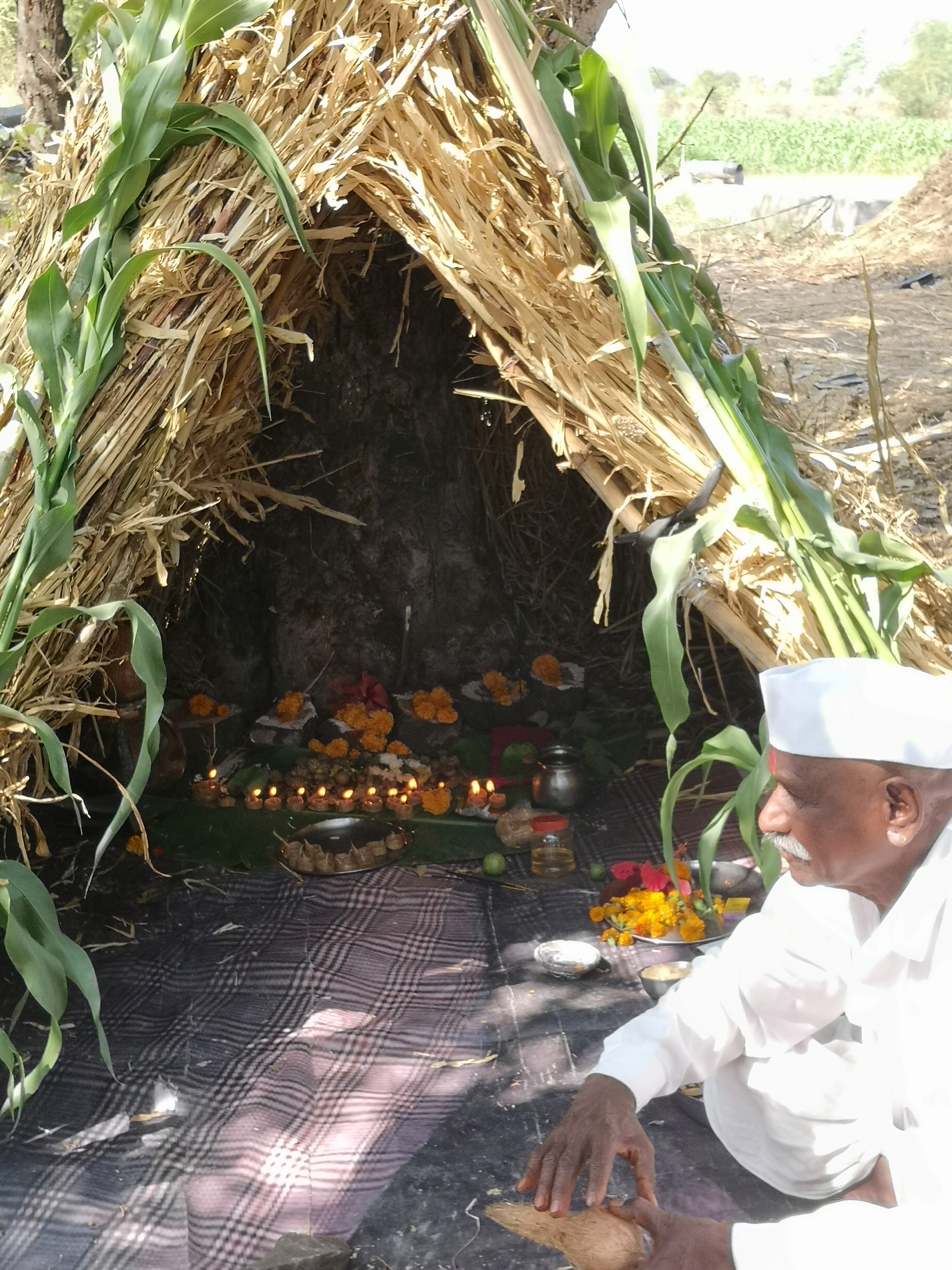
Vel amavasya is celebrated on the no moon day in the month of Margashirsh. A hut made of dried remnants of the crop is erected in the farm. Stones or mud roundels symbolising 5 pandavs and Draupadi are placed in it.

Naivedya is very specific: बाजरीचे उंडे steamed balls of millet flour, भज्जी mixed leafy veggies stew (?), गव्हाची खीर wheat pudding, दाण्याची पोळी flatbread stuffed with peanuts and jaggery. And most important आम्बिल, a refreshing drink of millet flour soaked in buttermilk, stored in an earthern pot.

At Harali the pooja was performed by various staff members and guests by offering flowers and lighting one of the wheat flour lamps. The pooja is to ask for blessings and thanksgiving for a bountiful future harvest. As one of the team had started a new venture to lease farm equipment, the crowd suggested they ask for blessing for that as well. As various researchers stepped forward there was further banter about blessings for various research projects. Overall everybody was in a jovial upbeat mood. The holy water was sprinkled around the hut and all over to bless the farm and the people.

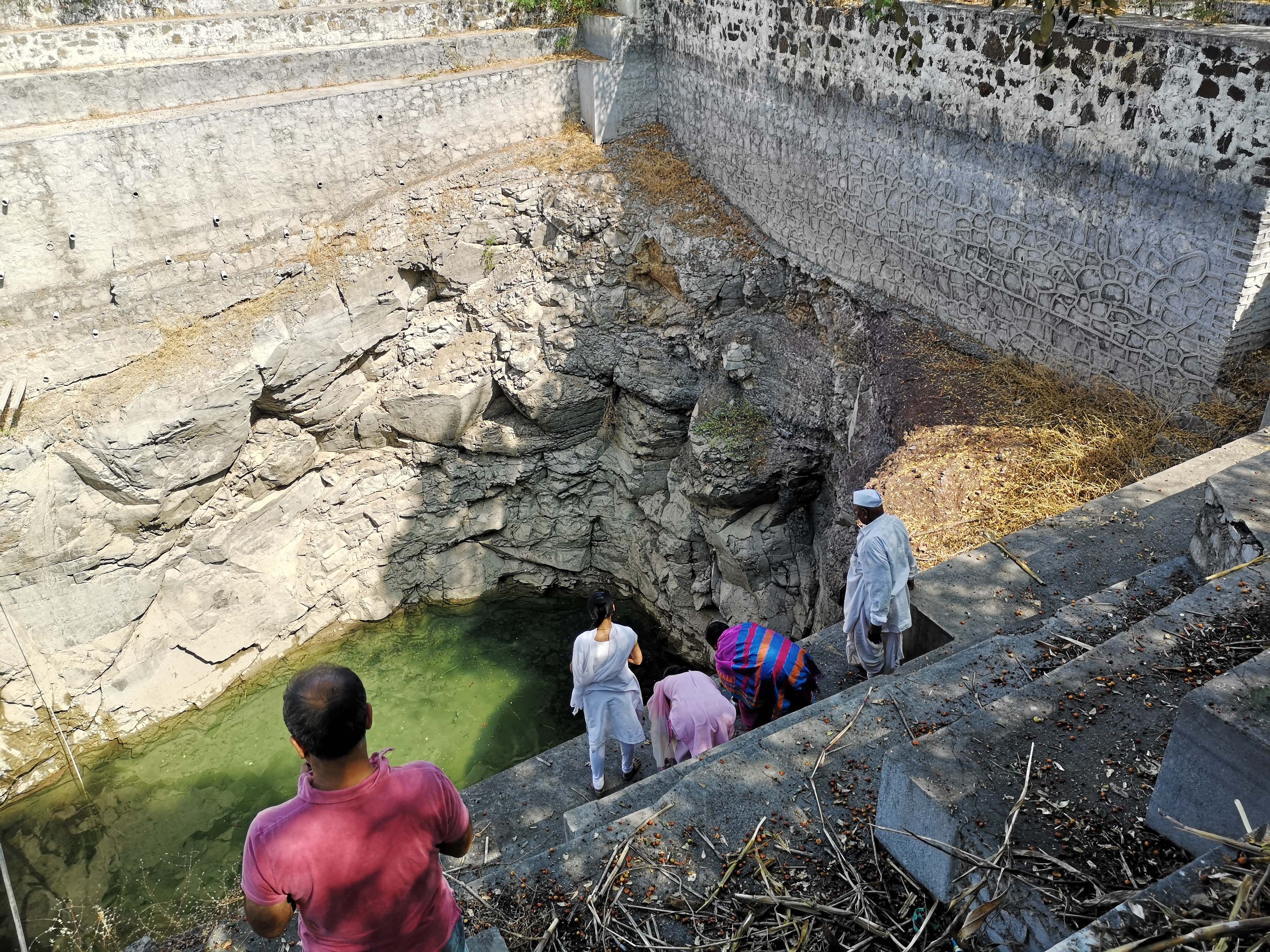
The pooja at the main location was done. Got some of the Prasad to mix it with the food being cooked in the communal kitchen. Gauri offered Prasad to the old gentleman, he received it in his cupped hands kept on his back. As he explained, ‘a blessing like that should take a bit of effort’. There are three more places the pooja is traditionally performed at JP Harali. One at the well, another in the mango orchard. Places that were once owned by other villagers. The traditional places of importance need to be honoured.

Throughout the week I received invitations from various team members to visit their farm for the special meal. I was able to manage a visit to Santosh dada’s place and had to be satisfied just to see photos sent by others. Next time need to plan in advance to spend the day visiting more people.

Musings

Why do we test?

Excerpt from a lecture about Participatory practice in Anandshala (An out of school educational initiative with Laman Banjara community in Osmanabad district):

For 5-7th graders we used – Quest’s सक्षम बनूया Marathi and Math series specifically created for students in 5-7th grade who are not at their grade level. There are 3 workbooks each for Marathi and Math. The series came with a baseline test that was supposed to place students at the 3 levels. At first glance the tests looked like they might need localisation or at least simplification of language.

For example, the long prompts in the Math test were difficult to read. र ट फ करून वाचताना  प्रश्न काय होता ते मुलांना विसरायला होईल अस वाटलं. भाषा थोडि सोपी करायच काम मी केल आणि मग tests घेऊन तीन  तांड्यामद्धे गेलो. ह्या तांडयामध्ये मागच्या वर्षी पासून काम चालू होतं, त्यामुळे facilitators ना मुलांचा अंदाज होता. 2 facilitator ना test ठीक आहेत अस वाटल. गणिती भाषा मुलांना यायलाच पाहिजे त्यामुळे भाषा बदलू नये अस त्यांच म्हणण पडल.  दोघेही डी एड झालेले त्यामुळे शिक्षक, शिकवणं, टेस्ट याकडे बघण्याचा दृष्टीकोण थोडा फिक्स झालेला. तिसरा तांडा थोडासा इतरांपेक्षा मागे पडलेला आणि नुकताच कॉलेज ला जाणारा facilitator. त्याच्या मुलांना भाषा जड जाईल अस त्याला वाटल.

मग आपण नक्की काय टेस्ट करतो आहे यावर चर्चा झाली. गणित करता येतं का मराठी वाचता येत याची परीक्षा होणार आहे असा उलट सुलट विचार झाला. सर्व प्रश्न गोरमाटी मध्ये translate करायचा प्रयत्न चालू झाला. पुनः थांबून खरंच हे पूर्ण गोरमटी पाहिजे का? मुलांना देवनागरी मध्ये लिहिलेल गोरमटीत वाचता येईल का असा ऊहापोह झाला. मग एक 8 वीतला  मुलगा तिथून जात होता त्याला बोलावल आणि विचारल – तुझ्या 5-7 वी तल्या मित्रांना हा पेपर दिला तर यातल कुठे अडेल? 

Instead of taking standardised test as they were we started asking the question ‘what do we want to know?’, when we got stuck at localizing the tests we looked for ‘local experts’, rethinking ‘who knows what we want to know’ instead of going to the obvious options of trained teachers from the community. We found diverse voices.

When conducting the baseline evaluation, instead of a timed test we decided to give the students as much time as they needed. The test was portrayed as a mirror for themselves. A tool that will tell them where they need help and ask for it from the facilitators. Instead of worrying about standardized scores we gave importance to maintaining student’s confidence while getting the information we want to place them at the appropriate level.

In the math test the facilitators explained the questions in Gormati if somebody asked for it. If a student couldn’t read fast enough to understand the question, we read it out to them without any further explanation. Timed tests make sure that the student is fluent, so to understand the level of fluency we marked the time the test was returned. The score and the time were used together to understand the student’s skillset.

The testscores were aggregated for each student as well as for a Tanda for each question or set of questions. This gave us a general idea of where the group stood in terms of skills. For example, 50% of students in X tanda cannot do multiplications. 80% can do addition, subtraction but only 70% can do हच्याची वजाबाकी. So the facilitators got a more actionable input about their students about specific areas, rather than a score.

We had decided to start from the 1st book in the series. The scores were used to divide students into 3 groups green, pink, and blue according to their ability. The idea was that blue group would be able to go through the workbook on their own. दृढिकरण was the purpose. The pink was the middle section, the instruction, speed was planned keeping them in mind. The hirva needed more attention. The facilitator could do that when the gulabi group was solving their workbook as well as ask nila group students to help-out if they were stuck. Given the environment of the classroom, students felt at ease to help their peers. Rather it was encouraged, in contrast to the individual focused tests and activities in school.

Initially I provided the list of students for each group, and explained how I arrived at it. The facilitators later adjusted by moving some students between the groups when they realized they were getting stuck or were faster than expected. They also felt confident enough to assign a new student to a group, observe and move them to the appropriate group. The weekly facilitator meeting was a place to discuss such tweaks.

The collective reflection was an important aspect of the success of this phase. In addition to observing their students and their own practice, the deliberations of these observations helped some reflect on their beliefs and assumptions. For example, an interesting conversation among two facilitators verbalised their cognitive dissonance about हुशार कोण. Surprised at seeing names of some of their students in the Green group, the group of students that were lagging the most: 
They write so well. It is clean and beautiful.”, said Sunita
I felt the same way when I got my list, but if you see their test papers, you can see they couldn’t do it.” Pranita responded.
Let’s see, said Sunita, When they start with the workbook I can move them if needed” 
There was an epiphany that, beautiful handwriting does not mean the student comprehends what they are reading or writing. Writing can be just like copying a drawing.

Not everybody started with questioning the lists. Initially, it was considered as given. Highlighting my position of power as an educationist, the primacy of tests and numbers over the facilitators’ knowledge of their students. However, in 2-3 weeks, most were able to judge ability of newly arriving students without a baseline test and moved students between groups as they progressed at a slower or faster pace than others. By the midterm in October and the post-test at the end of the year, facilitators had a better understanding of what their students can and cannot do, where they trip when solving math problems or completing language tasks in the workbook. The trust in the tests was still intact but there was more openness to question the things that did not work.
Musings

आमची भाषा Our Language

When listening to Prof. Wei’s speech yesterday, his use of the phrase ‘named languages’ really resonated with me. It reminded me of multiple instances and observations over the couple of years interacting with ‘Gormati’ speaking people. Prof. Wei was talking about Translanguaging for inclusion and social justice.

The second year of working with the Laman Banjara people, some of the students from Anandshala came to stay at Harali temporarily while their parents were away for sugarcane harvest season. Hematai was working on creating an English-Gormati bilingual picture book with them. She had worked with students at Harali before, to create an English storybook with visuals. The students themselves came up with the story and had drawn visuals themselves. Similar to the previous project, we started with some storytelling sessions.

In the first session, students were asked to narrate Gormati stories that could inspire a narrative for the book. A girl next to me asked another: “कांइ बोले छ?” (What are they talking about?)
“म्हन्जे हापल्या भाषेत बोलाच” (That means we speak in our language”).
Did that mean not everybody refers to the language as Gormati? So I asked the students afterwards – what do you call the language you speak in?
There was a confused pause. आमची भाषा? (Our language?)
There had not been a need to name the language they spoke. There was no situation where they had to talk about their language as a thing. They interacted amongst themselves a certain way and in school they had to learn Marathi, a named language and a subject of study. We had created the need to name by asking questions about their non-Marathi practice.

“Named languages are abstractions from social activity of languaging. It is the linguists who socially constructed languages and gave them names.”

– Prof Lee Wei, February 2023

When interviewing parents last summer about language practices, we saw the same thing. After the experience with the students I had started asking questions with the phrase ‘घरची भाषा’ (home language). It worked well as we were talking about how their children transitioned from home language to language of instruction in school. If I didn’t use the word Gormati then most referred to it as आमची भाषा (our language).

In other instances, when asked to speak in Gormati, a couple of facilitators and students who had lived outside the Tanda for an extended period, were anxious. They claimed they could not speak in Gormati. However, observing their natural languaging practice I realised that they go in and out of Gormati and versions of Marathi (peppered with everday English words) when at home or speaking with their peers. Naming their languaging practice probably pushed them to acknowledge their practice as different from ‘standard’ Gormati, whatever that meant for them.

Naming the language in this way created these abstract buckets of Gormati and Marathi as if these were distinct parallel monolingual practices. The biggest struggle moving forward for us at Anandshala is going to be acknoweldging the translanguaging practices, working on the perceptions all of us have about language practice and related power equations, and figuring out what it means for classroom/languaging practice in Anandshala and Anandghar space.