खेळ आणि मित्र मैत्रिणीं बरोबर शिकायचं म्हणजे नक्की काय याचं एक छान उदाहरण सेवालाल नगरच्या आनंदशाळेत गेलेले असताना दिसलं. एका तासाला विकासदादानी सर्व मुलांना दोन गटात विभागलं. एका गटानी गणित घालायच आणि ते दुसऱ्या गटानी वहीत न लिहिता मनात सोडवून उत्तर द्यायचं. पहिल्या गटानी उत्तर बरोबर आहे का हे सांगायचं असे खेळाचे नियम ठरले. जोरदार स्पर्धा सुरू झाली. वेगानी आकडे येऊ लागले. काही मुलांना विचार करायला वेळच मिळेना मग विकासदादा मध्ये पडले आणि उत्तर न देणाऱ्या मुलांना वेळ आणि संधि मिळेल असं पाहू लागले.
एका मुलीनी मग उत्साहानी गणित घातलं. दादानी मागे बसलेल्या एका मुलाला उत्तर सांगायला सांगितलं. उत्तर बरोबर आहे का हे मुलीला सांगता येईना. गणित घालायच्या उत्साहात ती ते सोडवायचं विसरली होती. इतर मुली तिच्या मदतीला आल्या आणि उत्तर बरोबर आहे असं सांगितलं. आणखीन एका राऊंड मध्ये पहिल्या गटातल्या एका मुलानी सांगितलेलं उत्तर दूसऱ्या गटानी चूक आहे म्हटलं. मुलानी पुनः सोडवून पाहिल आणि तेच उत्तर दिलं. पुन्हा गट अडून बसला उत्तर चुकलं म्हणून. दादा शांतपणे उत्तर न सांगता, मुलं काय करतात ते पहात होते. शेवटी वहीत करून पहा अस दुसऱ्या गटानी सुचवलं. वहीत मांडल्यावर त्याला त्याची चूक लक्षात आली. खेळ पुढे सरकला.
खेळा मुळे संचारलेल्या उत्साहामुळे मागे बसणारी आणि मागे राहणारी मुले सुद्धा हिरीरीने भाग घेऊ लागली. गणित आपणही घालू शकतो, चूक-बरोबर आपणही ठरवू शकतो ह्या नव्या अनुभवामुळे सर्वच मुलांचा आनंद, उत्साह, आणि प्रामुख्याने आत्मविश्वास झपाट्याने वाढला.
बाहेरच्या एखाद्याला हा गोंधळ, गडबड, आणि मुलांचा आवाज ऐकून, मुलांवर शिक्षकांचं नियंत्रण नाही अस वाटणं साहजिकच आहे. पण ह्या खेळाचं एक विशिष्ट उद्दिष्ट आहे – सराव आणि प्रवाहीपणा (fluency) – जेणेकरून पुढची गणिती प्रक्रिया शिकण्यासाठी पाया पक्का व्हावा. इतरांना गोंधळ वाटला तरीही दादांचं मुलांवर बारीक लक्ष होतं. गरज लागेल तेंव्हा मध्ये पडून आणि इतर वेळी मुलांना पूर्ण स्वातंत्र्य देत ते त्यांनी साध्य केलं. अशा खेळातून शिकण्यातून केवळ विषयाचं प्रभूत्वच नाही तर इतर अध्ययन कौशल्यही मुलांपर्यंत पोहचवता येतात. स्वतःच्या कामाचा विचार करणे, चिंतन (reflection), आपली एखादी गोष्ट चुकली हे समजणे, ते मान्य करणे; आपल्याला एखादी गोष्ट येत नाही हे समजणे आणि ती शिकण्याची इच्छा असणे ही metacognitive skills तयार होण्याची महत्वाची पायरी आहे.
आपल्या पारंपारिक/पठडीबाज शाळांमध्ये शिक्षक ज्ञानाचे खजिनदार असतात. चूक का बरोबर हे ठरवण्याचा अधिकार ही त्यांच्याकडेच असतो. अशा परिस्थितीत मुलांना स्वतंत्रपणे विचार करण्याची आणि स्वअभ्यासाची कौशल्ये आत्मसात करण्याची संधीच मिळत नाही. शिकायला आनंद वाटेल अशी पद्धत आणि facilitator असलेले ताई/दादा यामुळे शिक्षणाची जबाबदारी मुलांना पुन्हा आपल्या हातात घेणं शक्य झालं.
करोना काळात शाळा बंद होत्या तेंव्हा, शिकवण्याच्या विविध पद्धती, असलेल्या परिस्थितीतून शिक्षकांनी काढलेले मार्ग याचा बराच ऊहापोह झाला परंतु तो ऑनलाइन शिक्षणापुरता मर्यादित होता. ऑनलाइन शिवाय इतर पद्धतीं मध्ये अशा छोट्या छोट्या neighbourhood schools चा विचारही करायला हरकत नाही. त्या यशस्वी होण्यासाठी काय करावं लागेल याचं हे एक उदाहरण.
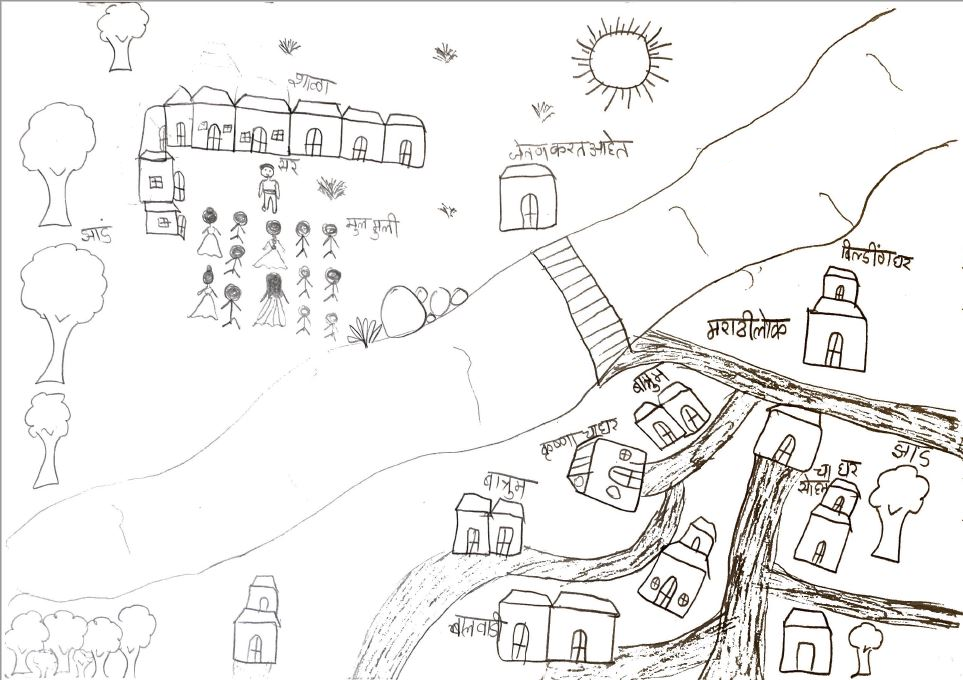
The activity to create language maps with the girls staying at Harali was an interesting experience. It is Jessica’s method to understand how people experience, perceive language use in their surroundings. Jessica is a linguistic anthropologist visiting Harali to work with us and see if we can get some insight to move the work forward with the Laman Banjara community.
The girls were bored in the afternoon. It was their day off. I had been busy visiting Tandas with Jessica and interviewing parents and teachers about language use in schooling so hadn’t found time to interact with them. With supplies spread out in their hostel wing everybody started drawing the space, people, and languages. I was a bit unsure if the task was too abstract for them but it was surprising to see the variety of ways they drew the maps.
Some potrayed places or distance, mostly from Harali, their current location. Some portrayed it as information about places neatly divided according to some theme. Others focused closer to home. Instead of different villages and Tandas they zoomed in to showcase details of spaces in and around their Tanda – temple, lavatory, school etc.
The second year of working with the Laman Banjara people, some of the students from Anandshala came to stay at Harali temporarily while their parents were away during the sugarcane harvest season. Hematai was working on creating an English-Gormati bilingual picture book with them. She had worked with students at Harali School before to create an English storybook with visuals. The students themselves came up with the story and had hand-drawn visuals. Similar to the previous project, we started with storytelling sessions. Students were asked to narrate Gormati stories that could inspire a narrative for the book.
We sat in a big circle. There was a lot of excitement and a buzz of students talking amongst themselves to figure out which story was worth sharing. A few students came forward to stand in the middle and tell a story. All of them chose to tell the story in Marathi. Most of the stories could be readily identified as the ones read or narrated in Anandshala. Hematai wanted to get to the traditional stories, that they heard from their grandparents. Stories that were specific to their people.
The next instruction was to write stories with an emphasis again on Gormati stories. The next session started with some more stories in Marathi, again mostly from the Anandshala repertoire. Hematai asked if anybody had a Gormati story. A cheeky student got up and started reading from his notebook. I had seen his writing before, so seemed like he was reading his story written in Marathi and translating in Gormati on the spot. The point of getting to the ‘traditional stories’ was lost.
Next session was about seeing different storybooks for inspiration and telling/writing new stories they had never heard of. Something that they created themselves. One student came forward with a story of a mother elephant and a baby elephant. The story was a reflection of his home life combined with the story books he looked at for inspiration – animals in the forest. The story started with the mother elephant going to work leaving the baby elephant alone, the dangers involved, the hunger, the loneliness, animals tht helped and animals who wanted to ause harm. It took myriad paths settling down at some point on how with all the money that the mother earned, they were able to build a 3 storey house full of all the amenities. In short the reality of his life, the inner struggle, and his aspirations described through the elephant family.
Being part of these storytelling sessions was instructive. There was a specific expectation in the objective of getting to the Gormati stories. The expectation was that it will extract the ‘traditional’ stories. The assumptions about traditional stories probably coming from the discourse of a grandma telling stories specific to the community; or the Panchatantra as the proxy for the oral tradition of fables, stories told in guise of interactions of animals, to teach moral lessons; or the mythological stories of Ramayan, Mahabharat, or Puranas.
Is that an assumption based in specific space (urban-rural, home-school) and people? Did these children grew up listening to bedtime stories from their parents or grandparents? Or did they read a story in this particular format only in school? In regular interactions or even in purposeful interactions like interviews, I have heard both children and adults express their opinions, experiences and such in a narrative form rather than a statements. What does that say about storytelling in this community? What about the songs for various occasions? They are mostly stories of past and future anxieties or aspirations. For example, a women’s (mother’s??) song after a wedding describes in detail how the mother-son relationship was before and how it will change after the wife is part of the picture. What other interactions are we missing, that we need to see? What questions can we ask, what spaces can we inhabit to see these practices?
If we are trying to acknowledge / bring in the stories of the student’s specific communities in an effort for inclusion, or to make space, can we bring in these practices and help students express their stories in the formats ingrained in their regular practice, in addition to introducing the formats and ethos of the Panchatantra stories?
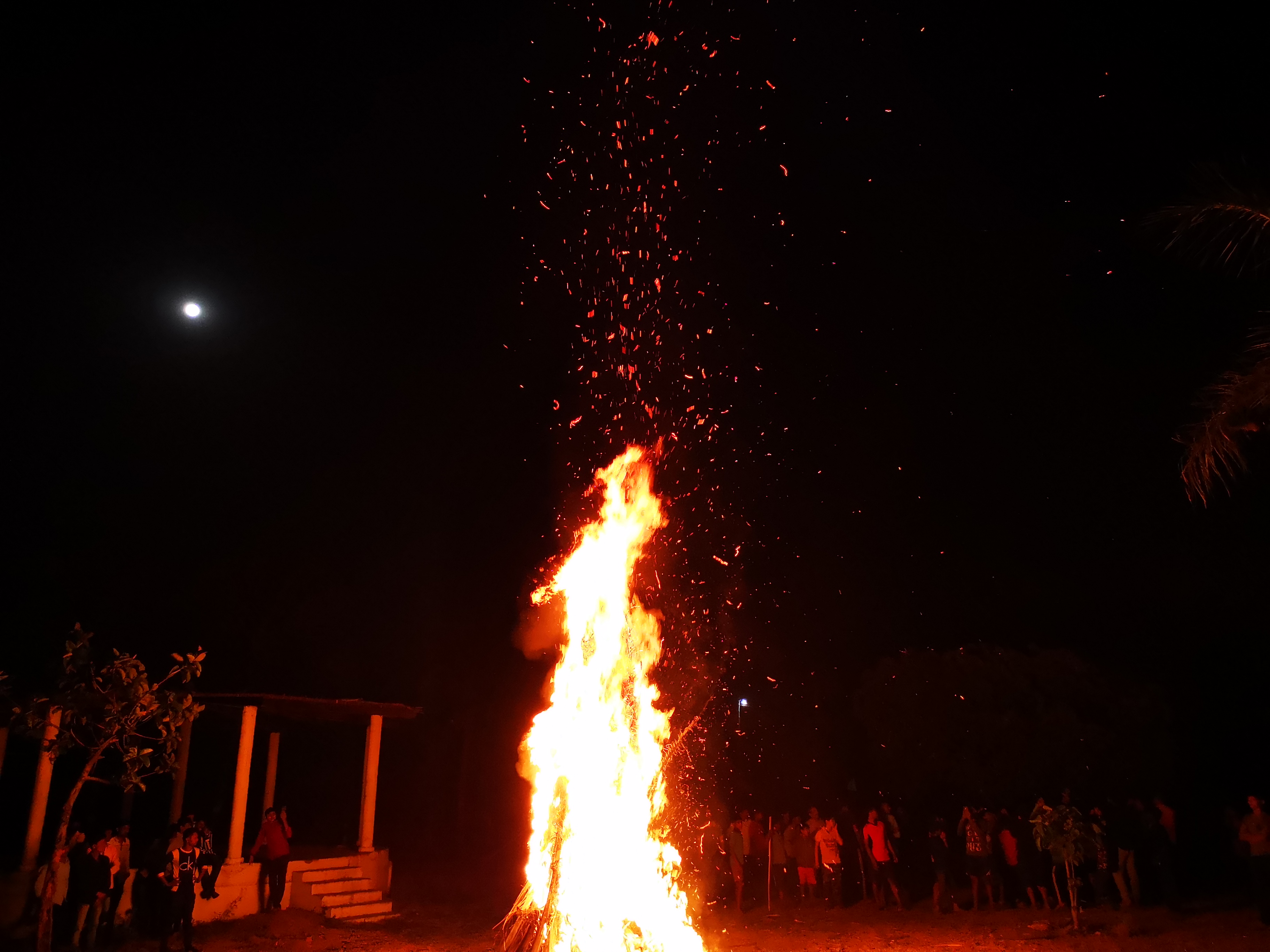
After a long time I found myself at a Holi celebration in Maharashtra. At Harali, it is a grand affair.
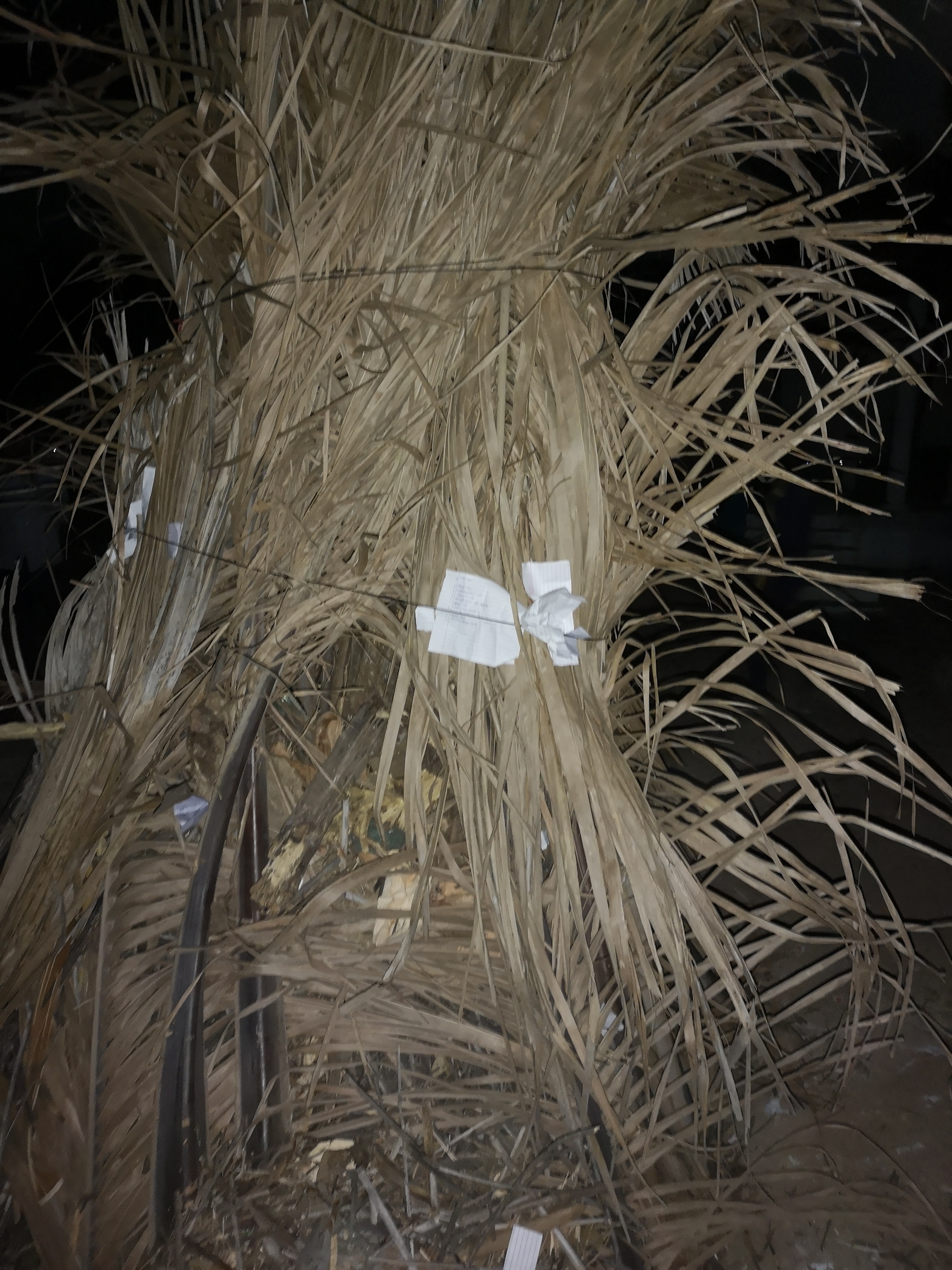
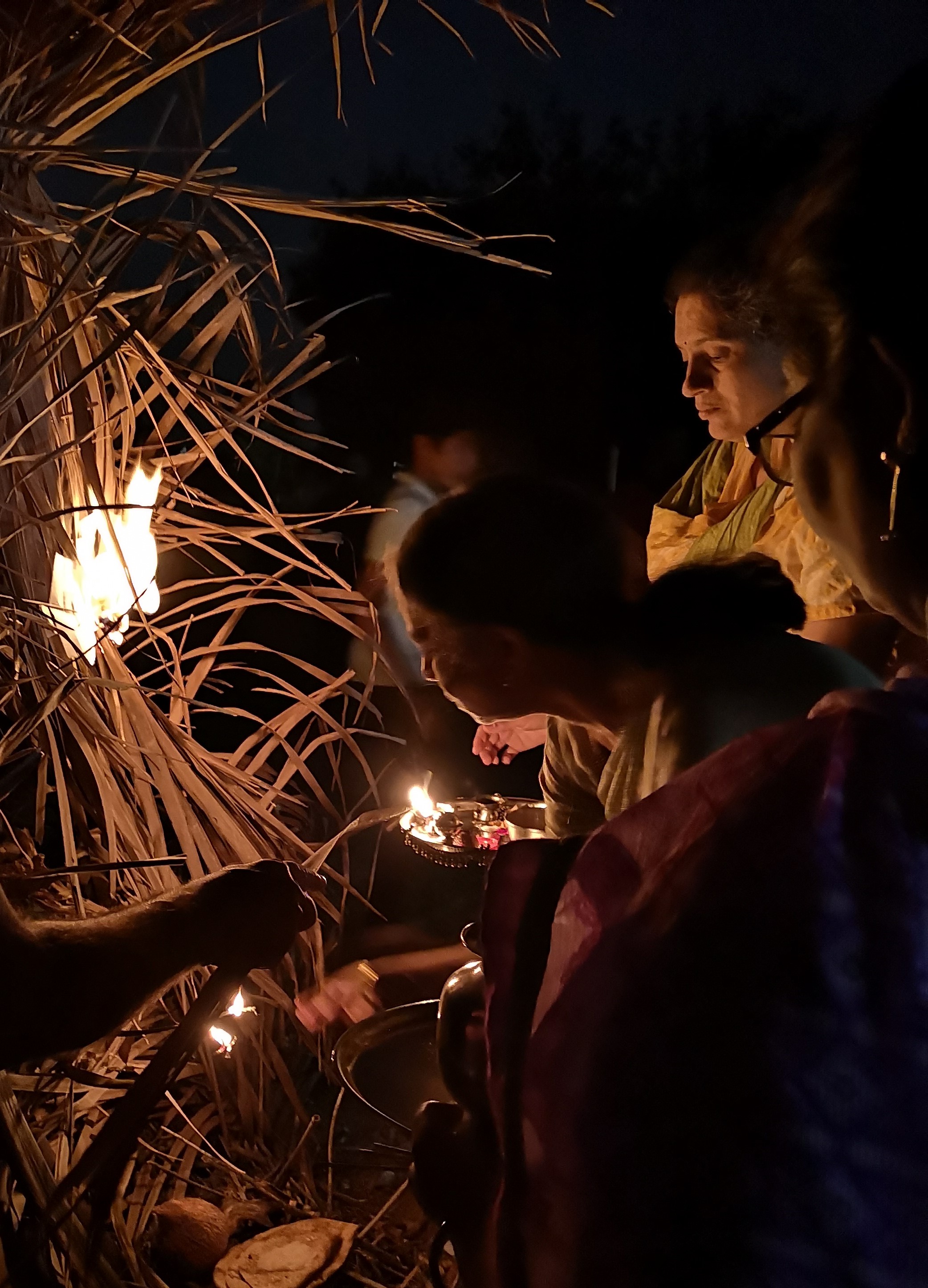
A big pyre made with firewood and dried coconut branches was ready. It was lit after performing a Puja. After a minute or so the dry coconut branches ignited sending spectacular sparks in the night sky. Boys ran around the fire screaming traditional couplets in a call and response format, using pent up energy and venting their frustration.
The Anandshala students staying at Harali, on a piece of paper wrote down feelings, memories, habits or anything they wanted to discard, things that did not serve them anymore. These were attached to the pyre before the ritual. The girls fixatadely looked at the pyre and saw the discards burn away.
I wonder what they wrote. Whatever it was, I hope it was a cathartic experience.
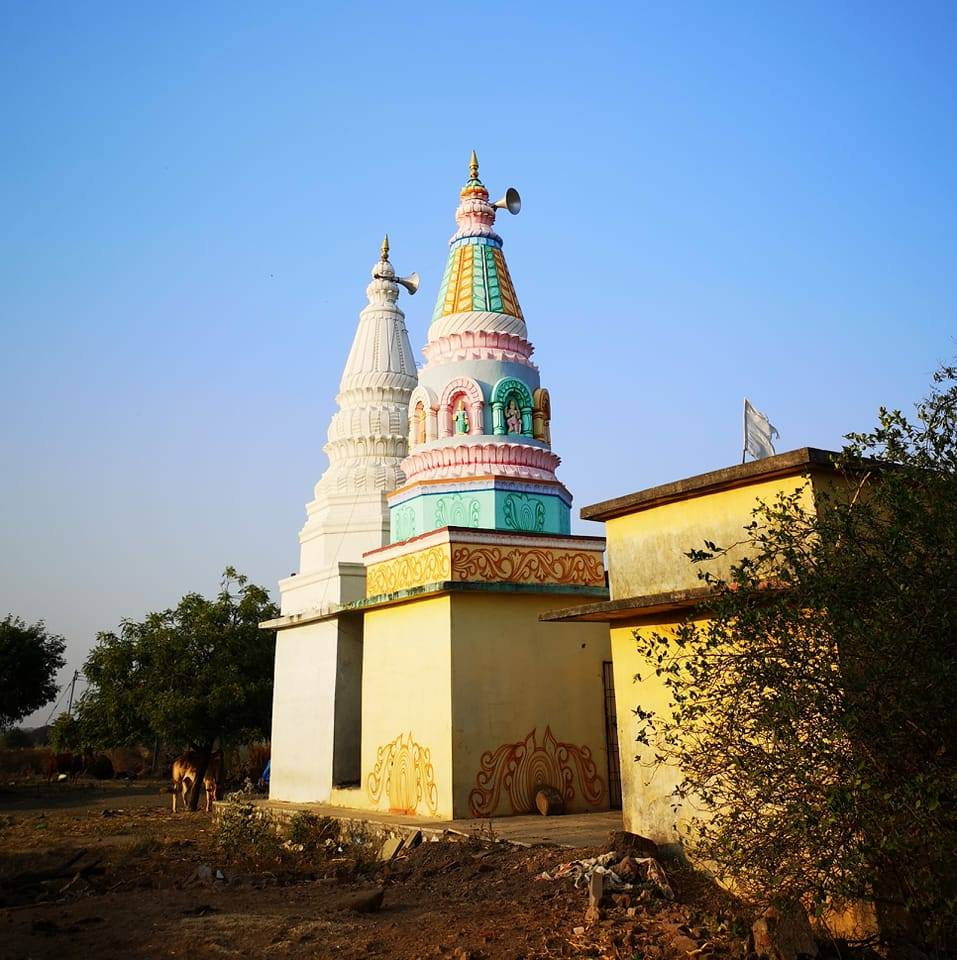
जिथे दोन कळस तो तांडा. अस कोणीतरी म्हटलं आणि मग एक पांढरा शुभ्र आणि एक रंगवलेला अशी जोडी लांबूनच दिसायला लागली कुठेही कामासाठी फिरताना. पांढरा कळस सेवालाल महाराजांच्या मंदिराचा. रंगीत जगदंबा मंदिराचा. ही रुद्रवाडी. शेजारच शिखर नसलेलं समाज मंदिर. तिथे आनंदशाळा चालते.
A Banjara Tanda always has two spires, I am told. The white one denotes the temple of Sevalal Maharaj and the colourful one of goddess Jagadamba. The one without a spire here is the Samaj Mandir or community hall where Anandshala is conducted.
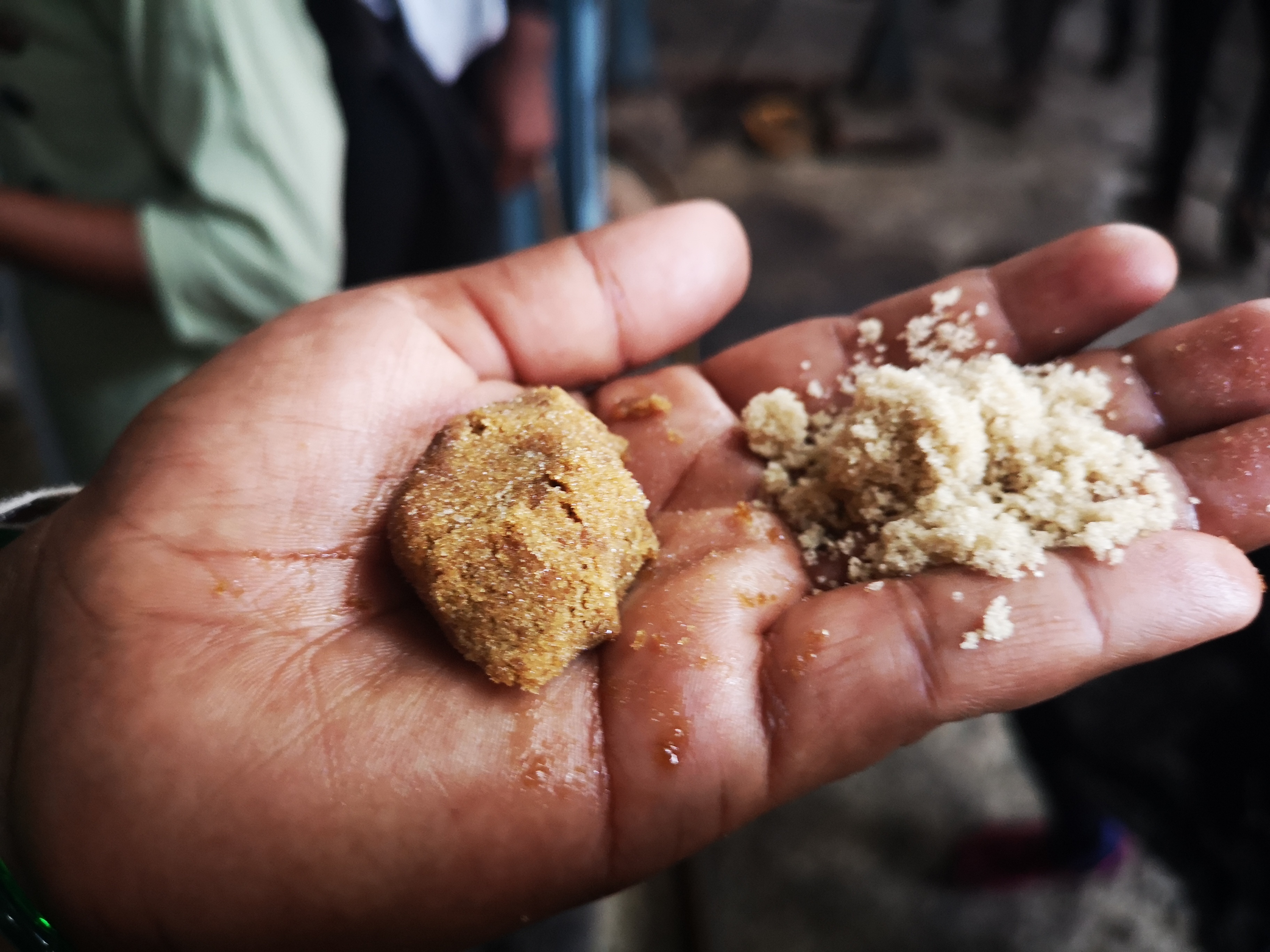
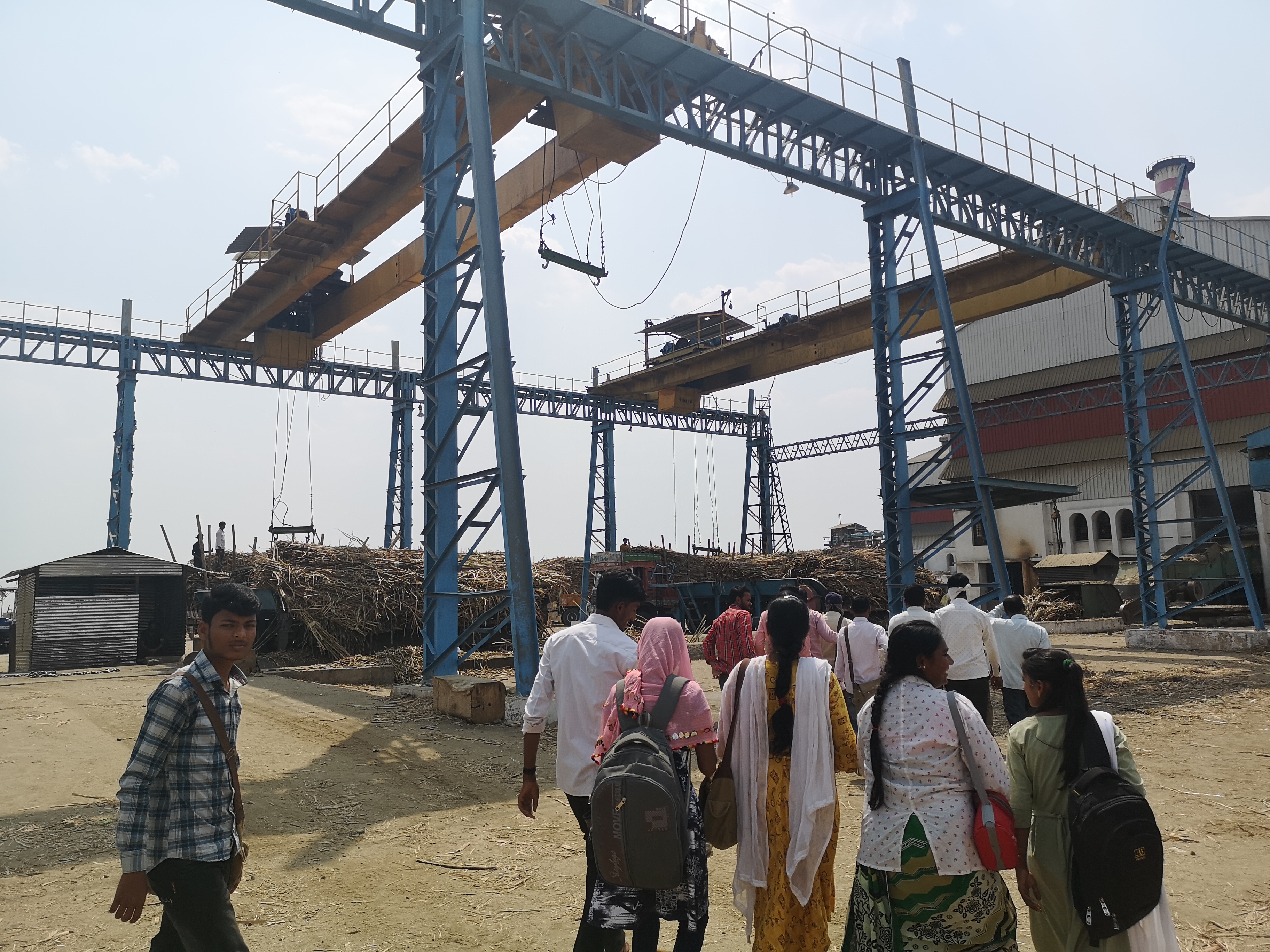
People from the Laman Banjara community visit a sugarcane factory as part of their teacher training workshop. Some of them who have worked as labourers during sugarcane harvest season in harsh conditions, have never been inside a sugar mill they work for.
Coming back to Delhi, there were two kids on the plane, probably flying for the first time. They thoroughly enjoyed every bit of the experience and I enjoyed listening to their reactions. Started with shrieks during take off and then commentary on everything they could see from the window and inside the plane. Reminded me of a conversation with the girls from Anandshala staying at Harali. They were super excited to learn about what it means to fly, when they realized I was travelling to Delhi in a plane. A snippet from that conversation:
“ढग कसे दिसतात?” “कापसा सारखे” “ताई हात लावून बघा जाताना आणि सांगा कापसासारखेच लागतात का हाताला” “हात बाहेर काढता येत नाही.” (I explain in detail about air pressure, pressurized cabin etc.) “फोटो काढ मग ढगाच्या वर गेल्यावर” “अगं विमान बंद असतं सांगितलं ना ताईनी, फोटो कसा काढणार.” “ए, काच असते म्हणली ना डोक्याएव्हढी गोल.” (a quick retort followed by a hopeful glance at me) “येतं ना ताई काढता फोटो?” “हो येतो. मी फोटो आणि व्हिडिओ काढून वनिताताईला पाठवून देईन.” “नको ताई, तुमीच घेऊन या. मग गोष्ट सांगा “
English translation: “What do clouds look like?” “Like spun cotton” “Tai, touch them when you fly next time, and tell us if they feel like a cotton ball?” “Can’t take out your hand when flying” (I explain in detail about air pressure, pressurized cabin etc.) “Take a photo when you are above the clouds then.” “Didn’t Tai tell us the plane is closed, how is she going to take a photo?” “hey, she said there is a glass window, the size of a head” (a quick retort followed by a hopeful glance at me) “you can take a photo, right?” “Yes, I can take a photo. I will take photos and videos and send it to Vanitatai” “No, tai. Bring it next time with you and tell us a story”
This was an interesting eye-opener about how the discourse of learning-loss with respect to students feeds into the deficit mindset.
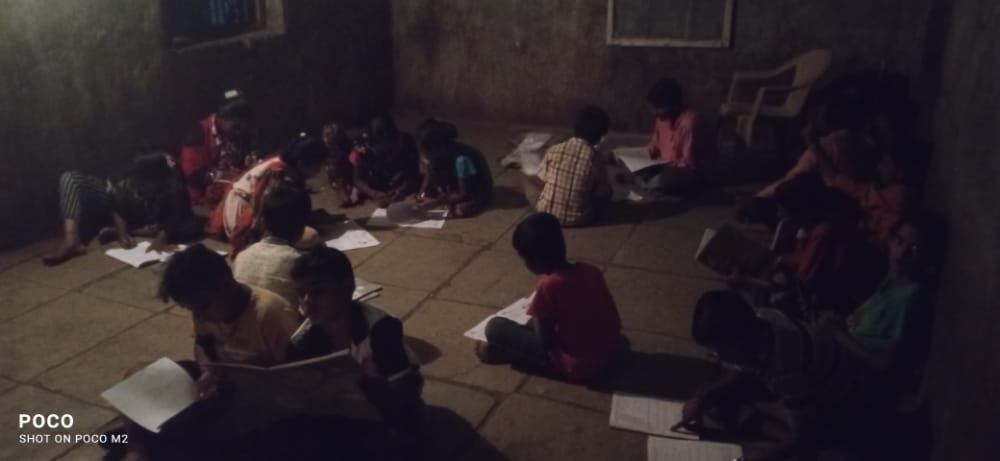
The middle school boys from Bhosga last year who took harvest contracts and earned money during the pandemic, we see you. We see that you are doing your best to learn from life and thrive in the present circumstances. We see you now coming in for the Anandshala everyday late at night after a days work. Especially the girls who have the added responsibility of the household chores. Prithvi, we see you, working the whole day and then teaching the kids in the evening with so much enthusiasm. Managing in a room without a door, taking the light bulb with you every night so that vandalism would not affect the learning on the next day. We acknowledge you attending the facilitator’s meeting on the phone while you were harvesting soyabean.
Although the video referes to the American educational system, the discourse is no different in India. The rhetoric of skill-loss or learning-loss is all pervasive with the AP report and a variety of education experts commenting on it primarily as they build an argument for schools to open again.
I am not against schools opening. It is necessary in most places. However, focusing on the skill loss puts us (teachers, policy makers, administrators, education experts) on the defensive. Can we acknowledge that the children lived through a pandemic just like we did. They learned to live in a pandemic, they survived. Can we plan teaching and learning acknowledging the fact that each child brings something to the table? It is not just the teachers or the people who design the curriculum that have things worth giving.
Schools are not the only places learning happens. Children coming back to school are not leaky buckets left half empty that teachers now have to fill upto capacity with herculean efforts. Pandemic did not freeze them in place. Just like all of us adults, they lived through it. Lets try to connect back with that experience in mind.
This article reminded me of a conversation on one of my research sites. A group of facilitators were discussing challenges teaching children of migrant workers in the week before. Someone says, children from other age groups are also arriving for the sessions. Many echo the same problem. The solution provided is: Patiently clarify the time assigned for their age group. Some facilitators then mention how older children come with their younger siblings. This includes older siblings as young as 3rd-4th grade and their siblings who are toddlers. The solution provided is to send them back and tell their parents to not send the toddler or both are not allowed. This is necessary to keep the quality of learning/focus during the 2 hour session. The facilitatators ask: What if the parents don’t send the child back? The answer is: that is their problem. They need their child to learn so they have to deal with it.
The realities of life for some families in this way are completely written off. As the parents and everybody of working age goes to the field, the 3rd grader has the responsibility to tend for the toddler. An urban middle class family can afford to/takes it for granted that school aged children will live their lives unencumbered by chores. In schooling this reality is taken as a given. The systems are set up with that assumption. Children are expected to be ‘care-free’. But is that really the gold standard?
Wendy Luttrell similarly talks about children of working class Americans, the expectation of school aged children to be ‘un-burdened’ by care and the reality of their perception of care duties. In a project where the children were given a camera to capture their daily lives, they captured their and others’ care work. For them it is much more than duty or obligation.
When we imagine care duties like cooking, cleaning, babysitting, taking siblings to school, looking after elderly or unwell family members, we think of it as an adult responsibility or work to be transfered to others for pay. Children are expected to be ‘care-free’. Luttrell comments that freedom thus is about not having to care. On the other hand, the children from working class families she followed, thought of “care as a concerted, collective effort that enables their own and others’ participation, learning, and sense of belonging at home and in schools”
Depending on the hamlet they lived in (the overall afluence), the children at my research site, fetched water for the use of the household, cooked, cleaned, looked after siblings, looked after domestic animals. Older children in grade 7 or so also helped their parents in the field or in the shop. Can we reimagine our learning systems to work around these tasks that are inherent part of their lives? Can we imagine a way to design the learning process that acknowledges these parts of their lives – a math problem that builds on these experiences, for example, rather than an antiseptic problem of a tap and a leaky drum?
Many non-Marathi people asked if I could share a summary of the webinar or the survey report. To start with here are some points I jotted down as I was listening. Will share the report/paper when available. The webinar is also available on Youtube if you missed it yesterday. Starts with the survey report and secon half is panel discussion. You can watch two short video clips of participants at 49:35 or so. In Gormati.
What is going on with the education of children of migrant workers in the Covid times? The families move to the SugarCane fields in Oct-Nov and come back in May after the end of season. Historically, their children dropped out for this period and found it difficult to go back to school.
Jnana Prabodhini started साखर शाळा (SakharShala), short term (100 days) schools attached to sugar mills. In 2008, after the Right to Education (RTE) act it became legally mandatory for the children to be enrolled in AshramShala, residential schools or SakharShala at the premises of the sugar mills. During Covid lockdown, the AshramShalas closed down. No other educational activities were available for these children. Various waves of unlock has opened the work spaces but not the education spaces. It is time for the workers to migrate. As the AshramShala is not open yet, the children will go with their parents and will not return to school till May next year, effectively losing an entire school year.
JPP Harali center was working with AshramShala students focusing on specific aspects of development before the Pandemic. The insistance on expression in student’s own language made these programs very successful. After the lockdown in March 2020 students returned home and have been out of school. The survey was an effort to understand the current situation. The survey focused on basic information of each migrant hamlet, specific information about the families, and understanding educational needs of 10-12th grade students. With the survey questionaire, the exercise was also used to have candid conversations with people of all ages. The survey was conducted in 30 hamlets in 3 Districts of Usmanabad, MH – Lohara, Tulajapur, Umarga.
Some findings: – Afraid of school although also reverance. School loved for playing games. Afraid as they have not got the educational materials and have not done the exercises received on mobile phones. – Overall, fathers were indifferent while mothers were more worried/passionate about lost education. Older people acknowledged that it was the first generation that had managed to stay in school and school shutdown has reversed the situation. – If something is not done sooner, students will not return to school. Students have forgotten what they learnt and joined parents in the fields. – Gender specific – Girl students will be married off while young boys will join the labour force. – Online education is an alien concept. Most do not have mobiles. 77% have been completely out of touch with their school education. 10% received books but no instruction or visits. 12% have managed some education through mobile or TV. – 48% families will take the kids with them when they migrate, out of which 14% will take some kids and leave some kids back with elders. Even if schools start later, the children will not be around to go to school. However, If school starts in Dec-Jan, 78% families are ready to send their children back. – Reasons to take children with them: 59% families do not have elders/relatives who will stay back to take care of children left behind. 19% families expect their grown up children to work with them in the field.
Panel Discussion: Abhijit Kapre: Education (or lack thereof) of children of sugarcane migrant workers is not a new problem. Many organizations are working on it. How has Covid affected/exacerbated the situation. Note: following are some interesting points from the panel discussion. not a summary.
Pravin Mahajan: Covid has not changed the situation much for this population. Migration is not going to stop. In the last decade their is recognition that this situation exists. Instead of thinking of stopping it, it is necessary to build systems acknowledging it. Children should not be separated from parents till 8 yrs of age. It is not advisable to stop children from going with their parents. The problem is not migration but lack of resources at the site of migration.
Nutan Baghade: Brought up other facets of keeping children in school – need to work with parents and not just students. Gave examples of variety of schemes that stopped migration. Gender issues – early marriage is a major issue in Marathwada. Need concerted effort on village level. Need for dialogue with parents of girls around 8th grade. Ensuring safe spaces. Parents do not want girls to go far from home so distance from home becomes a major variable for dropouts. Need to work with boys to make spaces safe for girls. Note: YoungLives working paper based on study of schools in Andhra Pradesh has identified Distance from school as a significant factor in school dropouts at secondary level “more dropouts are observed before completing secondary education in communities where a public high school is more than 5 km away (36.4 per cent), compared to communities where the school was closer (23 per cent).”
Prakash Ranavare: Residential schools at the sugar mill with parents visiting on the weekly breaks did not work. Parents did not trust/like to keep younger kids away from them even during week days. Suggested schools midway from two mills and students travelling to school every day. Following the migrant group and educators meeting them where they are, has worked in some places (Theur??) but do not have enough people to do it in other places.
Pravin: Should not worry too much about गुणवत्तापूर्ण शिक्षण. Children who are 4-5th generation students vs students who are 1st or 2nd generation unfortunately have the same syllabus. It is not useful for either. Need to rethink what is quality (गुणवत्तापूर्ण) education for 1st generation children. If they stay with education and enjoy it, you can say it is quality. सर्वांगीण विकास – all round development is the key. Note: I agree with the all round development but expecting less from 1st generation students is a slippery slope/recipe for widening the gap. This kind of low expectation bias is what did in the black students.





 devayani tirthali