Musings

The Hindi Belt

All the newspapers today including the e-news I read highlighted BJP’s loss in the ‘hindi belt’ or the ‘hindi heartland’. The election results were from Rajasthan, Chhattisgarh, and Madhya Pradesh.

These three states are not a cohesive, monolith as the nomenclature ‘hindi belt’ suggests. Chhattisgarh was created by separating 10 Chhattisgarhi speaking districts and 6 Gondi speaking districts from Madhya Pradesh. Rajasthan in itself is a culturally and liguistically diverse state. Definitely not a Hindi monolith.

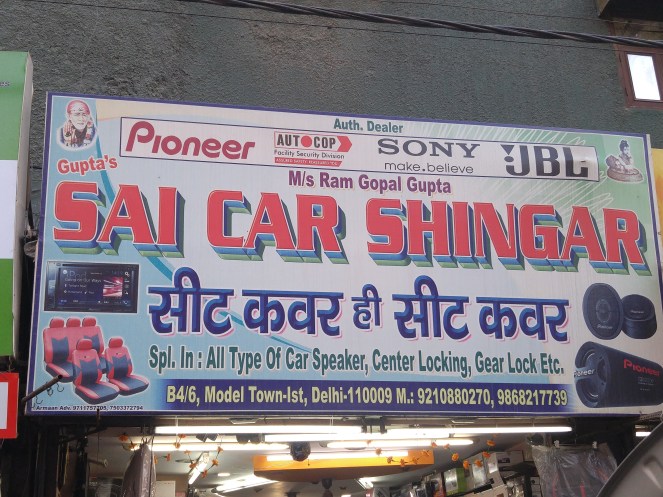
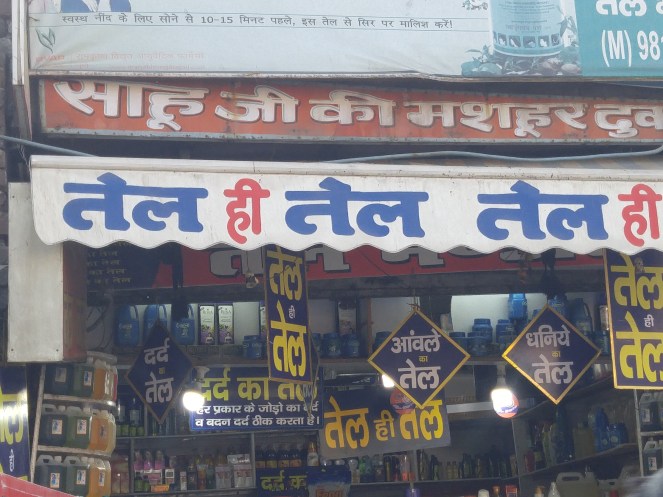
When we visited Bharatpur, we realized the local language of the area is Braj shared with the Mathura, Agra region in Uttar Pradesh. On the west the Marwar region’s main language is Marwari. Marwari including other languages such as Harauti, Dhundhari, Mewari, Shekhawati, Bagri etc. spoken in the state are mostly referred to as Rajasthani dialects. To add to insult, all these languages are lumped under the Hindi umbrella in the census. In Madhya Pradesh, even after the separation of Chhattisgarh, there are still Malvi, Nimadi, Bundeli. These again are considered by some as dialects of Hindi.

The interesting part about defining languages and dialect is that it is not a science. It mostly comes down to power and geopolitical history. Due to quirks of the census more and more people are pushed under the Hindi umbrella. It doesn’t help that the language of the state government in these states is Hindi. That makes Hindi the coveted language and other native tongues in some people’s mind a sign of backward unsofistication. It is high time we acknowledge and celebrate the diversity in the northern region instead of painting it in broad strokes.
Musings · Social Media, Technology & Education

Hindi Hain Hum: language skirmishes continue

I try to avoid commenting on language skirmishes on twitter but yesterday some statistics shared in a tweet war peaked my interest. It all started from a Kannadiga receiving entry-pass in Hindi which is unreadable for him. The expectation was that it should be in Kannada the local language or at least there could have been an option to select the language of the pass. The rebuttal was that Hindi is the majority language (41% speaker) and for practical purposes it should be accepted as The language.

There are multiple problems in that discourse. Firstly, the assumption that a nation needs one language, one identity to gather behind is not an indisputable fact. I have already discussed that here so I will skip that. The detail that pushed me down the rabit hole was the figure 41%.

I was quite surprised to see the original census data. This percentage quoted comes from the 2001 census. The numbers aggregate speakers of 49 languages including Hindi, excluding the category ‘Other’. This includes prominent and widely spoken languages like Bhojpuri, speakers of which are fighting to get a separate language status. One of the oft repeated complaint under #StopHindiImposition is how Hindi belt or the Central Government is silencing the voice of South Indians and Bengalis by forcing Hindi instead of local languages. I wonder if we are aware that we do the same as we paint a lively and diverse language landscape from Rajasthan to Bihar and Uttaranchal to madhyapradesh in a broad brush stroke of ‘the Hindi belt’.

The latest census data is from 2011. The percentage of Hindi speakers has increased over the decade to 44% but so has the number of languages combined under the heading Hindi.  To make sense of this data better I am trying to create a data visualization – a language map of what the Hindi belt looks like in its different hues. Please suggest any tools, code or any ideas you may have for map based visualization in the comments below.

The census data, the attached documents and summaries are a gold mine to understand the language landscape as well as the politics behind the data. Stay tuned to see more historical data, comparisons over the year and the socio-economical, political variables that decide the status and spread of a language.

Musings

Language and National Identity

The language skirmishes keep errupting on twitter with #StopHindiImposition, #StopHindiImperialism, …. trending everytime somebody shares another incident of local languages or English being substituted with Hindi.

Most of the times the immediate response from Hindi speakers is that Hindi is the national language (which is quickly striken down as a falsehood), followed by claim that we need one language for the unity or existance of the country, English being the language of the colonizers is not acceptable, thus Hindi is the only option.

The fundamental question to be asked with respect to this discourse is do we need one language to form a nation state. Some may point to the European example of nation states, each with its own language. Billig in his book Banal Natinalism (1995) questions this basic assumption of the need of one language to base a nation on. “Nationalist in attempting to create a separate nation, often will create a language as a distinct language, although they might claim to be creating the nation on the basis of the language, as if the latter were an ancient ‘natural’ fact”

His assertion is followed by multiple examples from Europe where languages are labelled as a particular language as part of the formation of the nation state rather than  on clear cut linguistic demarcation. He rightly points out that spoken languages in practice most of the times were a continuam as we moved from point A to B rather than regions with language A ending at one point and language B starting in the adjucent village.   One of his example is about languages spoken on the French and Italian borders where same/similar language is considered dialect of French while across the border it is considered as dialect of Italian.

“a dialect is frequently a language which did not succeed politically.”

This reminds me of Kokani, Varadhi, and other forms of Marathi and the Kokani struggle to be acknowledged as a separate language.  Similarly Bhojpuri, Maithili, Braj and other languages that are considered dialects of Hindi and consumed by it creating the ‘Hindi Belt’ in the minds of all the ‘south Indians’ tweeting about #StopHindiImpostion.

Hindi similarly is pushed again and again as the National language from the seat of power. Keeping the pride alive in regional languages thus is not just about the language and culture but about not letting go of the political clout. Unity under the banner of one language thus is marginalization of everybody else not speaking that languge.

Reference:

Billig, Michael (1995). Banal Nationalism, SAGE

India Outside India

The Turkish connection

Selen and I used to get a kick out of finding words and phrases that sounded similar in Turkish and Marathi our respective mother tongues. For example, Jalim Duniya, a phrase we use in Marathi (originali Hindi, Urdu) to dramatically convey ‘cruel world’ means exactly the same thing in Turkish just with less drama involved 😉

Not only do we have words that are similar but some words that point to India in some way, a reminder of the trade links between the regions long back.
When visiting the Spice market (Egyptian market), I saw something named Indian Saffron. After a bit of digging I realized that it was turmeric, not saffron at all. Seems that it is used as a low priced substitute food coloring for the real saffron. That made me very sad as we do grow Saffron in India. Many times it is also sold to unsuspecting European and North American buyers who do not understand the difference.

Another baffling one was ‘Hindi’, i.e. the bird Turkey. How did the bird get the name in the U.S. that points to Turkey and then in Turkey it points to India? After digging a bit for the origin of the word, the mystery deepens, the bird actually is native of the Americas so didnt really reach Europe from India via Turkey.  😮

This wikipedia article has some theories about the origin of the word. Some of it is related to Columbus. Of course, who else? 😉

India Outside India

Chai tea, Masala chai and the real Indian tea

For the longest time I felt that it was my duty to educate Americans about the wrong nomenclature for the things they were eating under the name of Indian. Curry and Chai tea are two of my pet peeves. I have told numerous people numerous times (even when they didn’t care) that there is nothing called ‘curry’ in Indian cuisine, the way it is understood by Americans, Europeans and may be the rest of the world. I also started writing a blog post about it sometime back. I should publish it one of these days.

‘Chai tea’ was an irritation for two reasons – firstly, Chai tea is like saying ‘tea tea’. Chai means tea. It is hardly an adjective for tea. Secondly, I thought the spices they added in the name of Indian chai was just wrong. Just because we use spices like pepper, cinnamon, and cloves in Indian cuisine doesn’t mean we would add it in the spiced tea.

Cafe Fresh near Columbia serves a version of this ‘Chai tea’. The only relief is that the menu lists it as ‘Masala Chai’ (spiced tea). I was so excited to read the words ‘Masala Chai’ that I started frequenting the place for a cup of chai. Funnily, I have taken to the various versions of spiced tea sold by cafes like Starbucks and Cafe Fresh as well as those sold as teabags. Even though I like these spicy versions, I have always maintained that they are not real Indian tea because of the pepper in it.

So the other day when Shraddha and I were exchanging recipes and the secrets for the fresh home specific masalas, I was shocked to hear her version of the masala for chai. The masala in her house is made of Pepper, dried ginger powder and other spices. I asked her twice if that was her own recipe and she insisted that it was a traditional recipe. So all these years when I thought it was stupid of westerners to add pepper in the Chai, seems like they were more knowledgeable about some of the Indian customs than I was.

The tea bags with black or green tea and powdered or whole spices steeped in hot water still is nowhere close to the Masala chai made in any corner of India, but I have to regrettably take back my ill feelings about pepper in tea.

I still feel the need to introduce people to the chai (simple tea), and Masala chai we make at home. Tea powder/granules (not leaves) boiled till it is strong and dark. Fresh ginger and cardamom added while boiling for warmth on a rainy day. Generous milk added to soften the taste. A couple of my friends have got hooked to it. But I remember to add that it is my /our (Maharashtrian?? Puneri??) version of the tea, rather than extrapolating my experience as an average Indian experience.