Musings

Back to school

This was an interesting eye-opener about how the discourse of learning-loss with respect to students feeds into the deficit mindset.

The middle school boys from Bhosga last year who took harvest contracts and earned money during the pandemic, we see you. We see that you are doing your best to learn from life and thrive in the present circumstances.
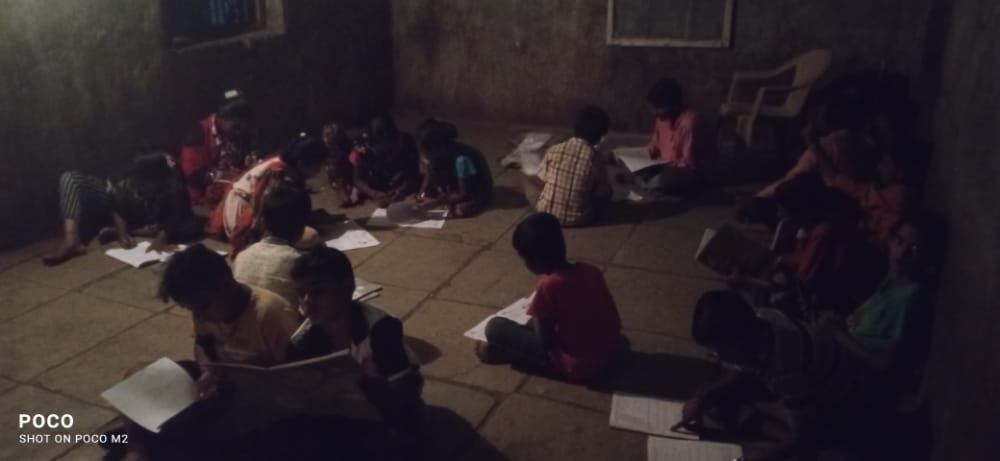
We see you now coming in for the Anandshala everyday late at night after a days work. Especially the girls who have the added responsibility of the household chores. Prithvi, we see you, working the whole day and then teaching the kids in the evening with so much enthusiasm. Managing in a room without a door, taking the light bulb with you every night so that vandalism would not affect the learning on the next day. We acknowledge you attending the facilitator’s meeting on the phone while you were harvesting soyabean.

Although the video referes to the American educational system, the discourse is no different in India. The rhetoric of skill-loss or learning-loss is all pervasive with the AP report and a variety of education experts commenting on it primarily as they build an argument for schools to open again.

I am not against schools opening. It is necessary in most places. However, focusing on the skill loss puts us (teachers, policy makers, administrators, education experts) on the defensive. Can we acknowledge that the children lived through a pandemic just like we did. They learned to live in a pandemic, they survived. Can we plan teaching and learning acknowledging the fact that each child brings something to the table? It is not just the teachers or the people who design the curriculum that have things worth giving.

Schools are not the only places learning happens. Children coming back to school are not leaky buckets left half empty that teachers now have to fill upto capacity with herculean efforts. Pandemic did not freeze them in place. Just like all of us adults, they lived through it. Lets try to connect back with that experience in mind.

Musings

Covid Diary: I can’t smell

Everything went quiet. I did not realize till now how much of the experience of life was smell. It was a meditative silence at times turning eerie. I talked about the especially unsettling eeriness during the lockdown. Now I wonder if part of it was not feeling the nature and people around me through smell. 

The aromatic herbs we eat, how much of the taste is actually smell? The Lucknow Saunf I so love has a beautiful sweet taste that is not much affected by lack of smell. Pudina however lost its personality. The taste doesn’t seem to be its key strength. The gaminess of meat is a lot about smell, I knew that, but experiencing it was a revelation. Without the overpowering smell, I experienced the nuance of texture and tastes more deeply. Lack of smell accentuated feeling of other senses.

My strong sense of smell is not just my own, it is an asset for my household. We realized that as we keep adding to the pile of burnt vessels every day. Over the years, we have been depending on my nose to tell us when the milk is boiled; when the butter is clarified; when the khichadi is about to burn and needs water. Without my nose we need to have other processes like standing there and visual inspection to manage these tasks.

My sense of smell is waking up again. I got a whiff of a strong-smelling ointment as if it was the light aroma of Jai Jui from the neighbours’ garden on a summer breeze. You feel it for a split second and it is gone before you can acknowledge it to yourself. It is the most pleasing sensation. Whiff of eggplant roasting was like heaven. I would have been fine without the whiff of open sewers but even that was mesmerizing. As if I am waking up from a deep sleep.

Dilli Diary

Eerie quiet

This is the second week in Delhi lockdown. The second wave or whichever wave it is, has been quite deadly and devastating. The appeals for oxygen, hospital beds on twitter, WhatsApp are heartbreaking. We are thankful to just be out of lozenges and other medicines that have substitutes.

The most surprising part has been the pindrop silence on the weekend it started. Generally, there are kids flouting the curfew. People walking. Vehicles passing by. This time it feels different. The air is thick with foreboding. I realized it a bit late in the week as we were struggling with health ourselves.

Then I start hearing reports of people from our 4 household building. An elderly neighbour is unwell and being treated at home with oxygen as there are no beds available. Another family in isolation. So 3 out of 4 down. And it dawns on me that each and every building around the neighbourhood garden in front of us must have covid positive cases. Delhiites otherwise do not let go of their daily rhythms for pesky rules and shutdowns.

Social Media, Technology & Education

Teaching in Covid times

The UGC timeline of August 1st week to start the academic year for already registered students is now upon us. It is quite clear, at least in places like Delhi where I live, that university campuses cannot/will not open for face-to-face instruction. I hope Universities have planned before hand for this eventuality.

In the winter semester, campuses closing suddenly meant, the classroom instruction was moved to online as an emergency measure. There was no time to learn or follow best practices. No time for preparation of online resources or setting up processes for clear communication. We survived through that. However, the August 1 starting is not sudden, we know we will have to teach online so there is no excuse for just copying classroom practices to online and hope or pretend that it will work. These two are completely different spaces with their own strong and weak points. Replicating the face-to-face experience online in the name of not lowering /keeping standards will be a huge mistake.

Here are some areas in which teachers and administrators need to think differently to achieve best outcomes. These are based on decades of research in online and distance teaching and learning:
Classroom time together
The best part of face-to-face instruction is constant feedback for the teacher; quality time with the teacher and peers for the student. However, it is not translated well at all in synchronous online teaching. An online lecture due to its lack of non-verbal feedback is one of the least productive teaching strategies. The best part of ‘online’ is the flexibility of not being present physically. By asking students to attend lectures in real time fails to capitalize on the best that online can offer.

Instead, teachers need to plan for recorded lectures for basic content, and a follow up session every week to check in with students, address queries, expand on the material already provided. This takes care of practical difficulties students face such as – lack of stable connection, lack of space to study, lack of individual resources (computer, mobile, internet connection) for each person in the house to use at the same time. This also gives students time to mull over the material and apply the concepts so that they are much more prepared in the weekly check in session. Overall, a much more productive use of resources and the synchronous teaching time.

When creating rules about contact hours, the important point for administrators would be to think about total hours spent in synchronous and asynchronous contact rather than being hung up on replicating the twice or thrice a week timed lecture in the classroom, in an online setting.

Grading for attendance
As we shift from the weekly timed lectures to a mix of synchronous and asynchronous teaching, we also need to rethink the participation grade. Many teachers, use attendance in face-to-face classroom (and may be being vocal in that space) as a proxy for participation. Colleges also have policies about attendance. In the changed circumstances it will be punitive for the most underserved students unless the colleges can provide a dedicated computer, internet connection, and space where they can attend the synchronous online sessions.

Instead think of activities that can be completed asynchronously, such as discussion forums, regular ungraded homework assignments that can tell you if a student is participating. If colleges have a generic classroom attendance policy, administrators need to change it to participation policy to keep up with the times.

Planning for an hour-long lecture vs planning for a unit
In a face-to-face setting, our syllabus/ instructional planning is generally based on the number of hour-long lectures we have in a semester and the content to be covered. With the focus shifted to a mix of synchronous and asynchronous, the time together cannot be the central unit of planning anymore.

Instead plan based on a unit focused on subtopics you want to introduce. Best practice is to think of a subtopic that can be handled as a weekly unit. The unit can have recorded lectures, readings, activities that scaffold learning with the material provided, and a culminating synchronous session. The recorded lectures further need to be thought out as small subtopics that can be explained in bite sized short 10-minute videos. Depending on the complexity of ideas, each video or a group of videos can end into a self-study question. Such possibilities of self-check peppered throughout the unit keep students on task, provide feedback to the teacher, and creates basis for the participation grade.

Administrators need to offer workshops and/or ongoing consultations from a specialist to help teachers plan for the online settings. They also need to provide technology support and consultation so that teachers can prepare quality online content.

These are just a few places where we need to make a thoughtful shift. I will write in more detail about assessments and grading in the next post. Now that we are not available physically during our assigned lecture hours, clear communication and managing expectations is also going to be an important aspect. I guess another post on that is in order as well.
Dilli Diary

Lock down diary

As the lock down progresses, our understanding of what is most important keeps changing. Most important ‘thing’ that we are afraid we cannot procure. If you were thinking about a philosophical reading about importance of family, love, acceptance etc, this is not the post. 😉

I started on March 3 thinking about the dry groceries we needed to stock up on. I had just finished the proposal for AoIR so now I was fully focused on preparing for Covid19. Nobody around me thought it was necessary, so started the uphill battle to convince my spouse and my mother that we need to stock up. Lists were made, groceries and medicines were bought. It was beginning of the month so it wasn’t an odd exercise. It was just a bit more methodical.

Next was a trip to Barafkhana for seeds and saplings. In spite of the slight panic about stocking groceries, the trip for Spring gardening supplies didn’t feel like an emergency. I did not buy a single thing at the garden show on Feb 28 because I thought there was still time. First week of March, we ventured out and got some seedlings and vermicompost. The stock wasn’t that great and I thought I will make it back some other day. Things moved way to fast after that to risk an outing in a tuktuk to get seedlings so now we have to make do with whatever seeds are available in the kitchen.

The panic slowly moved to availability of milk and veggies. BigBasket distribution was disrupted and walking down to the dairy for milk every other day became problematic. The online delivery of milk and the occasional veggie vendor making the rounds fixed much of that.

As we approached April, it suddenly started heating up. I patted my back for getting the ACs serviced in March. Way too early than our regular schedule. As the temperature soared, so did the mosquitoes. Swarms are now attacking every evening. The prized possession of the day is the mosquito bat. haha

कुणाच काय तर कुणाच काय

Musings

A moment of peace

I was surprised to wake up from my nap thinking about my dream. Looking at myself as the gawky school girl in JPP. Looking down from the 4th floor into the central courtyard of the building. Wearing the blue dress with white Salwar. I was surprised how it felt so real and how I missed or longed for that moment or may be the feeling in time just for a split second.

I am used to sudden appearances of such vivid memories of past places and experiences but they have all been from Providence or NYC. After we moved to Dehi these images, or more so the feelings of experiencing a particular moment have been off and on my companions. A lazy peaceful moment sitting on the couch looking out the window at the Spring unfolding; Sip of the seafood soup at the eatery outside Columbia or Pho in Providence; walking down Broadway; getting down 231st street station as the aroma of Popeys chicken brushes by. I decided it must be a way for me to re-adjust to the new place and the new reality. But this memory from so far away in time took me by surprise.

The reminiscing about life in the past few years hasn’t been bitter sweet, as I am happy with my decision. Not a single time have I second guessed our decision to move to India or been sad to not be in NYC. So is the childhood memory. I don’t find the need to relive the childhood days. I don’t pine to be the kid with no adult responsibilities. I am enjoying my adulthood as much as I did my childhood. And still my mind has thrown at me this vivid memory of standing in the school verandah looking down. A peaceful moment just observing the world unfolding around me.

This Pandemic is bringing up the most surprising things to the surface.

Musings

Pandemic Diary

I woke up from a nap in the afternoon. I had nodded off readings something. For a second it felt like any other hot afternoon that is blissful after an unintended nap. After a second my brain woke up to today. Acknowledging the lock down. The constant unercurrent of realization that we are in the midst of a history making event. The world is going to be so very different as we come out the other end.

As I write this I remember being in NYC when Obama was elected president. I faintly remember the electrified air around the campus. Result viewing parties at Teacher College. Crowds gathered at Harlem. Dancing on the streets. Much much before that, Obama’s question on YahooAnswers about democracy. My inner voice saying this seems to be the beginning of something. Need to keep rack of it. Then the swelling of discourse of hope, winning primary. Some professors taking sabbatical to join the electiona campaign. I was right in the middle of it as it built up. Afterwords, I wished I had written down my impressions as things unfolded. Only a few memories remain.

As this pandemic event progresses I keep thinking I need to pen down impressions, emotions, happenings. But so far I haven’t really done anything. May this quick note be the starting of recording history in the making.

Social Media, Technology & Education

Corona: fake news galore

I have received two completly misleading posts about Coronavirus so far.
One said you get it in 10 mins if you have dry throat. Avoid fried food and cold drinks and going out in crowded spaces till March 2020. This is just a summary of the post I received on WhatsApp. There is much more baseless nothing about how to avoid it.
The second one I saw as a video, a mother was showing to her kids in the Metro. The video showed, a doctor removing some kind of bug from under a nail or lip or from some wound. It was a super closeup shot. The shocking part was when she said to her kids – this is caronavirus. It has come from China. It catches you if you have coldrinks, icecream, and processed food – Pizza, chowmin etc. I thought she was just trying to scare them before they could ask for all the junk food on their outing but when I looked at it later, there is actually a video circulating and all these fake facts about how to catch it.
It is apalling that such information is circulating instead of the correct information. I can’t wrap my head around the fact that somebody is actually creating these posts. I can’t imagine what might be the motivation.