Dilli Diary

Lock down diary

As the lock down progresses, our understanding of what is most important keeps changing. Most important ‘thing’ that we are afraid we cannot procure. If you were thinking about a philosophical reading about importance of family, love, acceptance etc, this is not the post. 😉

I started on March 3 thinking about the dry groceries we needed to stock up on. I had just finished the proposal for AoIR so now I was fully focused on preparing for Covid19. Nobody around me thought it was necessary, so started the uphill battle to convince my spouse and my mother that we need to stock up. Lists were made, groceries and medicines were bought. It was beginning of the month so it wasn’t an odd exercise. It was just a bit more methodical.

Next was a trip to Barafkhana for seeds and saplings. In spite of the slight panic about stocking groceries, the trip for Spring gardening supplies didn’t feel like an emergency. I did not buy a single thing at the garden show on Feb 28 because I thought there was still time. First week of March, we ventured out and got some seedlings and vermicompost. The stock wasn’t that great and I thought I will make it back some other day. Things moved way to fast after that to risk an outing in a tuktuk to get seedlings so now we have to make do with whatever seeds are available in the kitchen.

The panic slowly moved to availability of milk and veggies. BigBasket distribution was disrupted and walking down to the dairy for milk every other day became problematic. The online delivery of milk and the occasional veggie vendor making the rounds fixed much of that.

As we approached April, it suddenly started heating up. I patted my back for getting the ACs serviced in March. Way too early than our regular schedule. As the temperature soared, so did the mosquitoes. Swarms are now attacking every evening. The prized possession of the day is the mosquito bat. haha

कुणाच काय तर कुणाच काय

Musings

A moment of peace

I was surprised to wake up from my nap thinking about my dream. Looking at myself as the gawky school girl in JPP. Looking down from the 4th floor into the central courtyard of the building. Wearing the blue dress with white Salwar. I was surprised how it felt so real and how I missed or longed for that moment or may be the feeling in time just for a split second.

I am used to sudden appearances of such vivid memories of past places and experiences but they have all been from Providence or NYC. After we moved to Dehi these images, or more so the feelings of experiencing a particular moment have been off and on my companions. A lazy peaceful moment sitting on the couch looking out the window at the Spring unfolding; Sip of the seafood soup at the eatery outside Columbia or Pho in Providence; walking down Broadway; getting down 231st street station as the aroma of Popeys chicken brushes by. I decided it must be a way for me to re-adjust to the new place and the new reality. But this memory from so far away in time took me by surprise.

The reminiscing about life in the past few years hasn’t been bitter sweet, as I am happy with my decision. Not a single time have I second guessed our decision to move to India or been sad to not be in NYC. So is the childhood memory. I don’t find the need to relive the childhood days. I don’t pine to be the kid with no adult responsibilities. I am enjoying my adulthood as much as I did my childhood. And still my mind has thrown at me this vivid memory of standing in the school verandah looking down. A peaceful moment just observing the world unfolding around me.

This Pandemic is bringing up the most surprising things to the surface.

Musings

Pandemic Diary

I woke up from a nap in the afternoon. I had nodded off readings something. For a second it felt like any other hot afternoon that is blissful after an unintended nap. After a second my brain woke up to today. Acknowledging the lock down. The constant unercurrent of realization that we are in the midst of a history making event. The world is going to be so very different as we come out the other end.

As I write this I remember being in NYC when Obama was elected president. I faintly remember the electrified air around the campus. Result viewing parties at Teacher College. Crowds gathered at Harlem. Dancing on the streets. Much much before that, Obama’s question on YahooAnswers about democracy. My inner voice saying this seems to be the beginning of something. Need to keep rack of it. Then the swelling of discourse of hope, winning primary. Some professors taking sabbatical to join the electiona campaign. I was right in the middle of it as it built up. Afterwords, I wished I had written down my impressions as things unfolded. Only a few memories remain.

As this pandemic event progresses I keep thinking I need to pen down impressions, emotions, happenings. But so far I haven’t really done anything. May this quick note be the starting of recording history in the making.

Dilli Diary

Basant at Nizamuddin

We had visited the dargah once during a heritage walk of the Nizamuddin Basti organized by the group Sair e Nizamuddin. I had heard about the Basant Panchami celebrations at that time. I finally made it yesterday to see what it was all about.

The story goes like this: Hazrat Nizamuddin was sad after he lost his nephew, who was like a son to him. One day Khusro saw some women decked up in yellow saris, holding mustard flowers, and singing songs. He asked them where they were going. They were going to the temple for Basant Panchami day. He asked if it will make their god happy. They said yes. This gave him an idea. Khusro, decked up in yellow sari and mustard flowers went to see Hazrat Nizamuddin and sang Basant songs to him. This brought a smile on the auliya’s face. Since then Basant is celebrated at the dargah with Khusro’s songs. You can read more about the story and history of Basant at Nizamuddin in this article on Scroll from 2016.

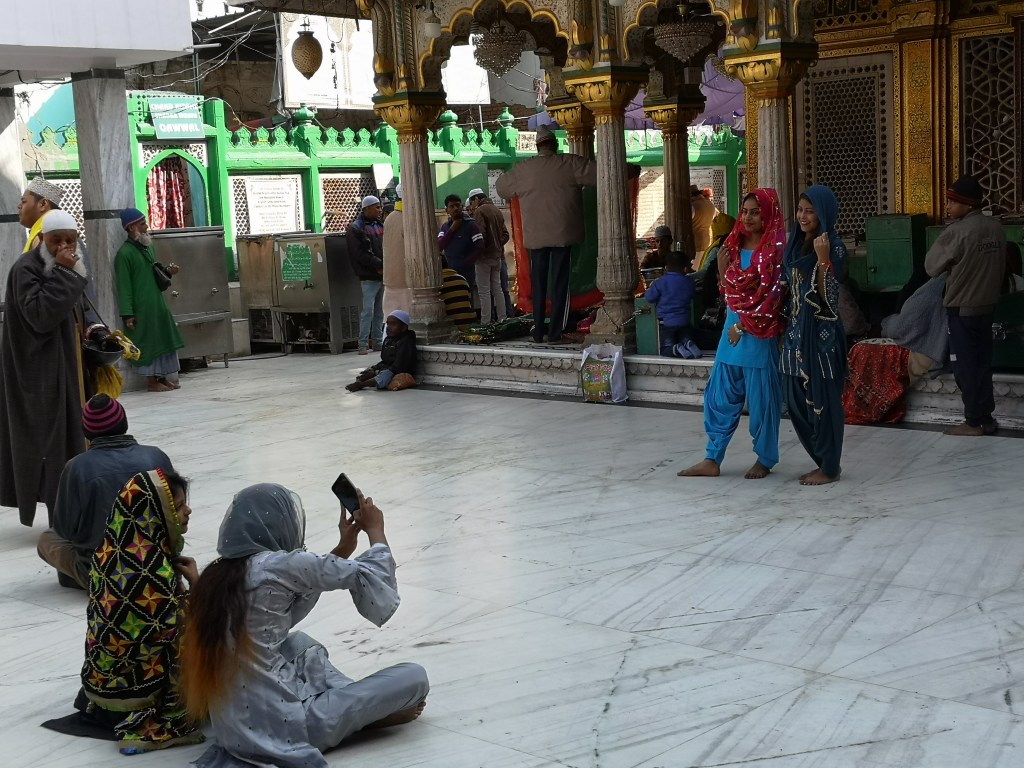
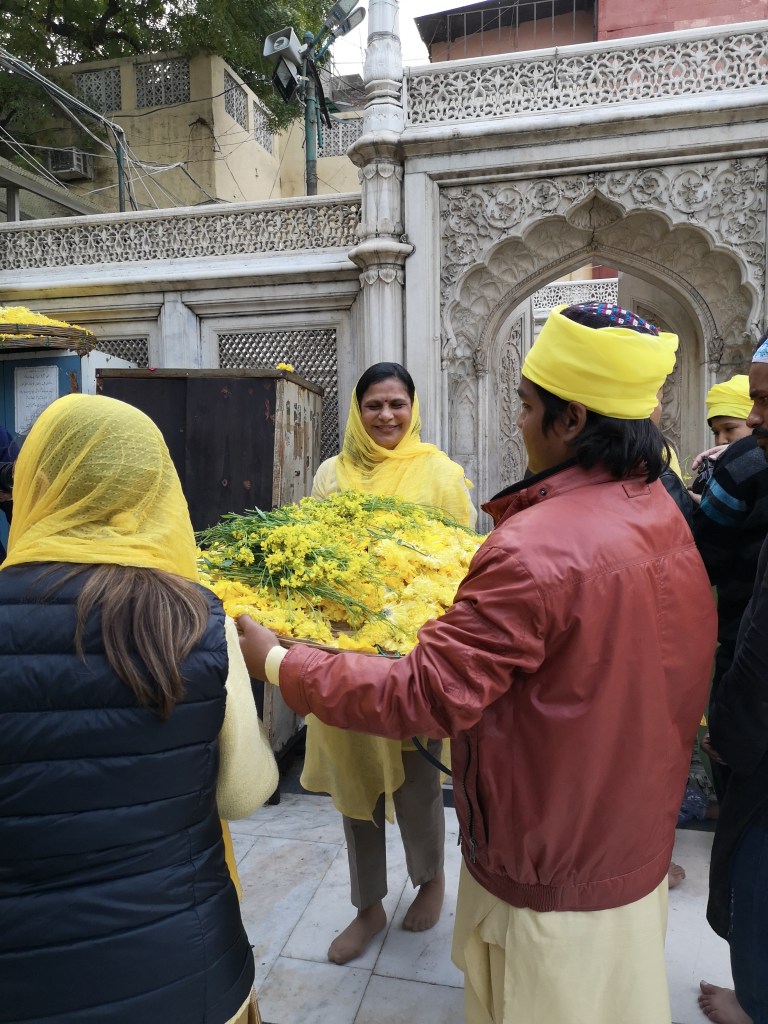
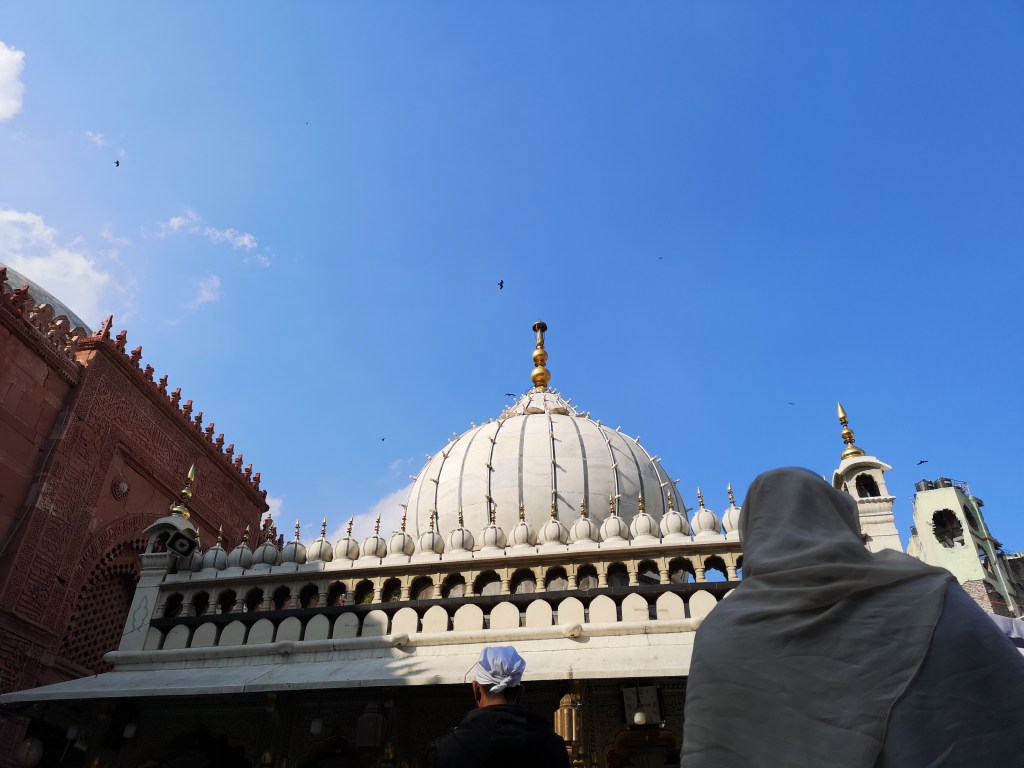
I had not seen this article or any other information about the schedule anywhere except a guided tour that was supposed to be there at 3. So I decided that must be the key time. I promptly reached at 3pm, picked up a place at the back of the seating area in front of the Dargah and waited for what seemed like forever. It was sunny and the dargah looked beautiful under the blue sky. Some people had tied yellow scarfs on their forehead. Some more were brought in. I got fidgety and decided to explore the complex a bit more. A lady beautifully dressed in yellow from head to toe was hurrying around. People were milling about. It was like an Indian wedding celebration. Many people doing many things around me but I didn’t know what actually was going on. Although, I must admit, people watching was the best. Everybody was decked up and excited. People were posing for selfies everywhere. Starting conversations with random strangers.

I got up from my seat when I could hear singing coming from the back entrance. People wearing yellow and holding Sarson ke phool were singing the famous songs – Sakal ban phool rahi sarson, Aaj basant manale suhagan, followed by one more that I hadn’t heard before. They entered the courtyard and sang the same songs again. Then everybody dispersed. A wide area was cleared off in front of the dargah. The kids holding Sarson ke phool, sat down at the back. It was time for evening prayers and everybody dispersed.

After the evening prayers, the groups of singers started again from the previous point in the courtyard behind the dargah. After singing for some time, they walked in procession the dargah at the place cleared out. It was a riot of yellow as the singing progressed and people threw marigold petals in the air.

Sakal ban phool rahi sarson
Umbva boray, tesu phulay
Koyal bolay daar daar
Aur gori karat singaar
Malaniyan gadhwa laya ayin karson
Tarah Tarah ke phool lagaye
Kwaza Nizamuddin ke darawaze pe

The procession then moved to other parts of the dargah complex. Overall it was an interesting experience but would have been much better if I had accompanied somebody who knew what to expect. It will also be good if you can find a place higher up around the dargah to avoid all the media people and professional photographers and videographers who were a menace to say the least.

Social Media, Technology & Education

Corona: fake news galore

I have received two completly misleading posts about Coronavirus so far.
One said you get it in 10 mins if you have dry throat. Avoid fried food and cold drinks and going out in crowded spaces till March 2020. This is just a summary of the post I received on WhatsApp. There is much more baseless nothing about how to avoid it.
The second one I saw as a video, a mother was showing to her kids in the Metro. The video showed, a doctor removing some kind of bug from under a nail or lip or from some wound. It was a super closeup shot. The shocking part was when she said to her kids – this is caronavirus. It has come from China. It catches you if you have coldrinks, icecream, and processed food – Pizza, chowmin etc. I thought she was just trying to scare them before they could ask for all the junk food on their outing but when I looked at it later, there is actually a video circulating and all these fake facts about how to catch it.
It is apalling that such information is circulating instead of the correct information. I can’t wrap my head around the fact that somebody is actually creating these posts. I can’t imagine what might be the motivation.

Musings

Growing up: it takes a village

As we go through the old stuff at my mother’s house, memories tumble down unexpectedely. As I decide to capture it all and not lose it again, I think of my mother who prefers to read in Marathi rather than English. So this one is for her. The one who gave us wings.
आईकडच्या जुन्या कागदपत्रांच्या निमित्ताने लहानपणीच्या आठवणींचा धागा उकलला आणि स्वेटर उसवावा तश्या आठवणीतुन आठवणी उलगडत चालल्या आहेत.

लहान असताना उन्हाळ्याच्या सुट्टीत आम्ही आजोळी जायचो. त्याआधी अगदी लहान असताना दिवाळीच्या सुट्टीत, कारण तेंव्हा आई बाबांनाही सुट्टी असायची. आई बाबांबरोबर म्हणजे ट्रेन. मिरजेला बदलावी लागायची पहाटे पहाटे 5 ला. त्यावेळची सर्वात ठळक आठवण म्हणजे प्लॅटफॉर्म वर खाल्लेलं डबल ऑम्लेट आणि बाबांनी सांगितलेल्या त्यांच्या वालचंद कॉलेजच्या आठवणी. नंतर कितीही वेळा डबल आम्लेट घरी केलं तरी गुलाबी थंडीत अर्धवट झोपेत पण charged with excitement, पुढच्या गाडीत बसण्या आधी प्लॅटफॉर्म वर खाल्लेलं आम्लेट खाण्याची ती मज्जा येणे नाही.

नंतर खानापूरवरून जाणारी कारवार बस सुरु झाली. बदला बदलीची गरज उरली नाही. एका वर्षी हृदयावर दगड ठेऊन आईनी आम्हा तिघींना बस मध्ये बसवून दिलं. उतरवायला आजोबा येणार होते. नाश्ता, जेवण, खाऊ असं बरंच बांधून दिलं होतं. त्यातलं सर्वात लक्षात राहिलं ते आम्रखंड. विकतच, कोयरीच्या आकारातल्या डब्यात पॅक केलेलं. जायची टूम निघाल्यावर आम्ही खाऊ जमा करायला लागलो होतोच. कुणी गोळ्या बिस्किटं दिली की ती खाऊच्या पिशवीत जमा होत. सकाळी 5 ला निघून 3 ला दुपारी पोचायचं त्यामुळे बस मध्ये खायला असा सर्व जामानिमा होता. आईनी बसमध्ये कोणीतरी ओळखीचे शोधले होते, आमच्यावर लक्ष ठेवायला. ते प्रत्येक थांब्यावर विचारत पेरू हवा का, दाणे हवे का, काकडी हवी का. आम्हाला हे माहीत नसल्यामुळे आम्ही चांगल्याच घाबरलो. पळवून नेल्यास काय काय करता येईल ह्याच्या क्लुप्त्या तयार झाल्या. Overactive imagination gone wild. भरपूर खाऊ खिडकीवर विकायला येत होता. पण आम्ही शहाण्या मुलींसारखं सगळ्याला नको म्हटलं. पहिल्या वहिल्या एकल्या प्रवासात न चाखलेल्या या एसटी स्टॅन्ड मेव्याची कसर आता कितीही पेरू, बोरं, काकड्या, दाणे खाल्ले तरी भरून निघत नाही.

खानापूरला पोचेपर्यंत बस चांगलीच भरली होती. अगदी पुढे बसलेल्या आम्हाला मागच्या दारापर्यंत येऊन उतरायला बराच वेळ लागला. तोपर्यंत आजोबांनी आम्हाला शोधण्यासाठी बसला चारपाच प्रदक्षिणा घातल्या होत्या. त्यांचं panic आजही मला तसंच्या तसं डोळ्यासमोर दिसतं. आम्ही आरामात महिनाभर आजोळी राहिलो, नदीवर हुंदडलो. भरपूर दंगा केला. परत येताना मात्र मामा सोडायला आला. तो असल्यानी कोणतीही चिंता नसल्यामुळे पूर्णवेळ उलट्या सीटवर गुढघे रोवून बसून, वेगाने पळत जाणारी गुलमोहोराची बघितलेली झाडं आजही लक्षात आहेत. नंतर प्रत्येक सुट्टीत आम्ही दोघी बहिणी कारवार गाडीनी खानापूरला जात राहिलो. लहानपणी असलेल्या गाई म्हशींपासून ते मामानी नंतर आणलेल्या कोंबड्यांपर्यंत, जिन्याखालच्या भाताच्या ढिगापासून ते पोह्याच्या गिरणीपर्यंत, शहरात न मिळणारे सर्व अनुभव या सुट्टीतल्या शाळेनी आम्हाला दिले. आजोबा त्यांच्या स्वछ पांढऱ्या धोतर, शर्ट आणि काळ्या कोटात बाहेर निघाले की आम्हीही बरोबर निघायचो. दोन दिवस मागच्या खोलीत भिजत घातलेलं भात उपसून तयार असे. ते आजोबा पोहे काढण्यासाठी घेऊन जात. त्यांच्या मोटठ्या काळ्या छत्रीखाली गिरणीतून परत येताना, पिशवीत हात घालून, चालता चालता खाल्लेल्या, जिभेवर विरघळणाऱ्या ताज्या गरम पोह्यांची चव अजूनही लक्षात आहे.

दुसरा उद्योग म्हणजे बाबुकाकांच्या गिरणीत तासनतास बसून येणाऱ्या जाणाऱ्या शेतकऱ्यांची विविध दळणे बघत बसणे – धान्य, तेलबिया, मिरची, आणि काहीबाही शेतमाल. The way things spiralled down the spout and transformed into something completely different in color, feel, and smell was memsmerizing. आम्हाला हे सगळं इतकं नवीन होतं की आम्ही प्रत्येक गोष्टीला हात लावून आणि चव घेऊन बघत असू. तेल काढून उरलेल्या दाण्याची पेंड खाऊन बघण्यापर्यंत काहीही. बाबुकाकाही आमचे हे पराक्रम चालवून घेत असत. अगदी मिरची दळायला आल्यावर त्याचा खाट येईपर्यंत आम्ही गिरणीत ठाण मांडून बसत असू. बाबुकाका गिरणीत दहाबारा फूट उंचावर असलेल्या त्यांच्या खुर्चीत बसत असत. लहानपणी सिंहासना सारखी वाटणारी ती खुर्ची आणि उंच शिडशिडीत बाबुकाका म्हणजे काहीतरी वेगळच प्रकरण वाटायचं. बाबुकाका सुद्धा वल्ली माणूस. “हल्याळ यष्टी गॉन तुझ्या नाकावरून गॉन” असं म्हणत माझ्या नकट्या नाकाची चेष्टा करणारा त्यांचा खणखणीत आवाज, गिरणी इतकाच अजूनही कानात भरून राहिला आहे.

As I think back I realize, aai, ajoba-ajji, mama-mami and many more had to endure anxiety, agitation, lack of quiet and much more to give us a chance at becoming the independent, inquisitive, brave women we have grown up to be.

Musings · Social Media, Technology & Education

Growing up

Going through all the old stuff at my mother’s house has been an education in how privileged my life was in terms of at least one parent taking active interest in my education and Marathi language development. Previously I wrote about the newspaper cuttings of poems. Poems that she taught me to enact. During the recent visit we found a poem she wrote herself to teach us about fruits. I remember enacting, in fifth grade, a story she wrote. It had a somewhat sad ending but taught me about ethics and not making assumptions about people. Simple lessons that have served me well my entire life. She used to write speeches for me for ellocution competitions as well. I particularly remember the one she wrote for B G Tilak’s Jayanti – an age appropriate story from his childhood depicting his independent spirit.

This one looks like a poem written for a much younger age. Focused on interesting sounds and imagery – खाड खाड बूट आपटत , अंतू चिंतू मंडळी, लट्ठमभारती पोंक्षे etc. You can see extra lines scribbled in the margin probably to include some fruits missed in the first effort. Here is the complete poem:

फळांची ओळख
बंडोबान काढलं फळांचं दुकान
फळं घ्या फळं गोड ताजी छान
लोकांना मिळाली वर्दी
दुकानात झाली एकच गर्दी

काठी टेकत टेकत आले मिस्टर तांबे
खोकत खोकत म्हणाले कसे डझन आंबे
अंतू चिंतू मंडळी, पाहून आली जंजीर
बंडोबाना म्हणाली गॉड आहे ना अंजीर
सुलू ताई आल्या, बरोबर होती कुक्कु
म्हणाली आई मला नको काही, घे फक्त चिक्कू

खाड खाड बूट आपटत आले दोन शिपाई
ऐटीत राहूंन उभी, मागितली पपई
डुलत डुलत आले लट्ठमभारती पोंक्षे
सीझन नव्हता तरी म्हणे हवी मला द्राक्षे

सकूटर थांबवत थोडी म्हणाले सुरेश मंत्री
आहेत का हो तुमच्याकडे नागपुरी संत्री
विद्याताई आली साडी नेसून डाळिंबी
आजोबांसाठी तिला घ्यायची होती मोसंबी
प्रतिभाची मुलं म्हणे खात नाहीत भाजी पोळी
शिकरणाला हवीत तिला रोज घरात केळी

यमुनाताईंची सदा घाई, दोन हवे अननस
लवकर द्या हो नाहीतर चुकेल माझी बस

बंडोबान काढलं फळांचं दुकान
माल गेला संपून व्यापार झाला छान

Musings

Labor of love & power

Yesterday I came across this set of images of sculptures showing birthing, in a facebook group on Indian Art and Architecture. The images are from regions all across India. The sculptures depict various poses – standing, squatting, resting on hands and knees. None of them show the woman lying down, a default birthing position in current times. Some people commented on this and questioned if the poses depicted were practical. In reality, the lying down position is the most unnatural position of all, designed for the comfort of the medical staff rather than the mother giving birth.

I started thinking about birthing practices when I started watching Call the Midwife, a BBC TV series based on Jennifer Worth’s memoirs about her work in East End of London in the 1950s. The midwives provide care to mothers before and after labor in their homes in this poor part of London. It is an intimate relationship with the mother and the entire family, with the midwife helping the woman and the people around her confidence that they are capable of this natural process. The birthing poses are as depicted in the sculptures with the woman actively participating and taking ownership of the process. As the series progresses, we can see how the landscape of care changes as birthing is pushed to the hospitals and comes under the purview of doctors ob/gyn with detrimental effect in some cases. The doctors do not have an intimate relationship with women. Women lose agency lying down as passive participants at the mercy of the doctor.

Today Hindustan Times article “Labour rooms in govt hospitals set for a fancy makeover” reflects this warped understanding of what is and is not natural or okay in a birthing situation. The initiative is part of the Respective maternity Care with the objective to make natural childbirth stress free. It plans to introduce nurses trained in midwifery in a phased manner in government hospitals with high case load. Midwives or nurses trained in midwifery are the most effective birthing partners in majority of natural birthing situations. Only a few need attention from an obstetrician. If this is the reality, then why are midwives being called the ‘fancy addition’ or ‘extra frills’ and not the doctors who are not essential to the process?

Here is a video clip that collates depiction of birthing practices across the world. The narrator points out that the depictions show: mother as the important figure in the process, active, capable. They are seen as a strong person and their inate ability to give birth is respected

Can we get over our perception of what is normal birthing process and help women do what their bodies are designed to do?

Musings

People: NYC strangers/kin

After our big move to Delhi, I was told it will take a couple of years to get used to our new life. People who had similar experience talked about how they pined for things in their old life.
We have graduated from missing things, to missing experiences like sitting on the comfy couch on a winter morning reading a book. The other day out of the blue I thought, visualized, and also experienced the aroma of a moment standing at the coffee cart in front of Teachers College. It was right outside the building where my office was as well as the dungeon where I worked on my dissertation. The Coffee cart guy knew me well, knew how I liked my coffee. In that moment, I longed for the smile that said, I know you, I know how you like your coffee. The warm heartfelt ‘how are you’ after a long absense that told me I was home amongst the people who cared.

The coffee guy started an avalanche of memories of such everyday strangers who made the city my home.

Keni the Super: Selen and I shared an apartment in Riverdale while I was studying at Columbia University. Parag was studying at another University so he visited once in a while. When his coursework was done he moved to NYC so that we could stay together while he worked on his thesis. So we moved out of the apartment into our own. When Parag accepted a position at UMass after graduation, he moved again and I decided to move back with Selen. When we were bringing in our boxes Keni came to check on us. He asked Parag with a worried look, was everything OK? did he lose his job? Clearly we were together so that wasn’t the problem why I was moving back with Selen. We were surprised at this reaction. We hadn’t realized how much he cared. The visual of that concerned look is still fresh in my mind.

Popey guy: When I got down at 231st street station late at night, the smell of fried chicken from Popeys was the most overpowering. Some days I used to give in and indulge. People at the counter and the elderly guy who was probably a manager knew me very well and my order. The comfort food and the smiles that said we know you were real comfort on some really bad days. One day the manager came forward to have a word with me. This was after the 2008 bomb blasts in India. He told me how sorry he was. He was Pakistani and wanted me to know that he was with me in my grief. I still remember his expression, scared that I might lash out but still making an effort so that I knew he cared.

Note: For non-NYC people Super is a person who takes care of the upkeep of the building and most probably stays in the basement apartment.

Social Media, Technology & Education

What is education for?

Conversations about JNU student agitation against raised fees were trending on twitter last week. Many commented that the increase is not much. Rs300 per month is pittance. Others pointed out that 40% of JNU students are from families below poverty line who cannot afford even this sum that others think is small so they will be priced out. The oft repeated discourse was:

  • The students are free loaders.
  • Government should not be wasting tax payers’ money on subsidising education.
  • Medicine and technology education should be subsidized than humanities, liberal arts education that earns nothing.
  • Students should start earning after BA. Should do odd jobs to support themselves.

There are many points to discuss /refute here but I picked up one that is on my mind everytime there is a controversy related to education. The fundamental question: What is education for? Much of the browbeating assumes the primary and only objective of education is to get a well paying job. What about:

  • Education as a means to develop well rounded citizens in a democracy.
  • Education as a means of self actualization.
  • Education as a cognitive, metacoginitive, social, emotional -skill building, over and above the core subject or the degree. What we call Learning to Learn.

Current education might not be fulfilling these objectives but the point is to aspire to it and plan for it rather than getting hung up on just a job at the end of a degree.

From many of the twitter conversations it looks like it is not just the question of what is education for… but also about who can aspire to which motivation/objective for education. As this tone deaf tweet assumes – poor people can only think about education as a means to a job that can earn a quick buck.

Free or subsidized education in all disciplines is an investment in the future of the country and not a waste of taxpayer’s money. ‘All disciplines’ needs to be stressed here as “We want engineers in the world but not a world of engineers” (Churchill??). More number of better educated people from diverse backgrounds (education, life experience etc) generate more, better ideas. According to economists that is the only durable source of growth in the long run. The government paying for education is not a handout to the person getting educated. It is not just for personal benefit but a necessity for future of the entire society. Definitely investment with better returns than statues and vain projects with nationalistic fervour.