Musings

People: NYC strangers/kin

After our big move to Delhi, I was told it will take a couple of years to get used to our new life. People who had similar experience talked about how they pined for things in their old life.
We have graduated from missing things, to missing experiences like sitting on the comfy couch on a winter morning reading a book. The other day out of the blue I thought, visualized, and also experienced the aroma of a moment standing at the coffee cart in front of Teachers College. It was right outside the building where my office was as well as the dungeon where I worked on my dissertation. The Coffee cart guy knew me well, knew how I liked my coffee. In that moment, I longed for the smile that said, I know you, I know how you like your coffee. The warm heartfelt ‘how are you’ after a long absense that told me I was home amongst the people who cared.

The coffee guy started an avalanche of memories of such everyday strangers who made the city my home.

Keni the Super: Selen and I shared an apartment in Riverdale while I was studying at Columbia University. Parag was studying at another University so he visited once in a while. When his coursework was done he moved to NYC so that we could stay together while he worked on his thesis. So we moved out of the apartment into our own. When Parag accepted a position at UMass after graduation, he moved again and I decided to move back with Selen. When we were bringing in our boxes Keni came to check on us. He asked Parag with a worried look, was everything OK? did he lose his job? Clearly we were together so that wasn’t the problem why I was moving back with Selen. We were surprised at this reaction. We hadn’t realized how much he cared. The visual of that concerned look is still fresh in my mind.

Popey guy: When I got down at 231st street station late at night, the smell of fried chicken from Popeys was the most overpowering. Some days I used to give in and indulge. People at the counter and the elderly guy who was probably a manager knew me very well and my order. The comfort food and the smiles that said we know you were real comfort on some really bad days. One day the manager came forward to have a word with me. This was after the 2008 bomb blasts in India. He told me how sorry he was. He was Pakistani and wanted me to know that he was with me in my grief. I still remember his expression, scared that I might lash out but still making an effort so that I knew he cared.

Note: For non-NYC people Super is a person who takes care of the upkeep of the building and most probably stays in the basement apartment.
Social Media, Technology & Education

What is education for?

Conversations about JNU student agitation against raised fees were trending on twitter last week. Many commented that the increase is not much. Rs300 per month is pittance. Others pointed out that 40% of JNU students are from families below poverty line who cannot afford even this sum that others think is small so they will be priced out. The oft repeated discourse was:

  • The students are free loaders.
  • Government should not be wasting tax payers’ money on subsidising education.
  • Medicine and technology education should be subsidized than humanities, liberal arts education that earns nothing.
  • Students should start earning after BA. Should do odd jobs to support themselves.

There are many points to discuss /refute here but I picked up one that is on my mind everytime there is a controversy related to education. The fundamental question: What is education for? Much of the browbeating assumes the primary and only objective of education is to get a well paying job. What about:

  • Education as a means to develop well rounded citizens in a democracy.
  • Education as a means of self actualization.
  • Education as a cognitive, metacoginitive, social, emotional -skill building, over and above the core subject or the degree. What we call Learning to Learn.

Current education might not be fulfilling these objectives but the point is to aspire to it and plan for it rather than getting hung up on just a job at the end of a degree.

From many of the twitter conversations it looks like it is not just the question of what is education for… but also about who can aspire to which motivation/objective for education. As this tone deaf tweet assumes – poor people can only think about education as a means to a job that can earn a quick buck.

Free or subsidized education in all disciplines is an investment in the future of the country and not a waste of taxpayer’s money. ‘All disciplines’ needs to be stressed here as “We want engineers in the world but not a world of engineers” (Churchill??). More number of better educated people from diverse backgrounds (education, life experience etc) generate more, better ideas. According to economists that is the only durable source of growth in the long run. The government paying for education is not a handout to the person getting educated. It is not just for personal benefit but a necessity for future of the entire society. Definitely investment with better returns than statues and vain projects with nationalistic fervour.

Dilli Diary

Bir Bazar

I fell in love with the bir bazar the first time we tried it the winter we moved to Delhi. Heaps of fresh vegetables in assortment of colors line the roadside, peppered with ironsmith shops, spice vendors, plastic basket vendors. It’s still humid and hot, not exactly the time to walk the length of Bir Bazar but we have been making time so that we can eat better than we have this summer.

The vendors now recognize us. I like to chitchat, ask questions about strange vegetables, and overall happenings of the day. Today was a good day. We found Vali bhaji (Malabar Spinach) at our favorite leafy veggies vendor at the end of the bazar. I have been looking for a cutting to start my own vine. Now I have one. We also found Desi varieties of pumpkin and white gourd. Expensive but worth it. Everything now-a-days otherwise is hybrid and huge. Other vegetables were expensive too. Apparently, flooding of Yamuna a couple weeks back destroyed the vegetable crops. I had read about it in the newspaper and had wondered if our vegetables came from these farms in the floodplains. It is a scary thought, given how polluted the water is.

Every year Yamuna crosses the flood line, policemen inform the basti to gather their belongings and move into the makeshift tents built on higher ground that the government provides. The news item said that the people were trying to save their produce till the water was almost ankle or knee high, risking their lives as the policemen urged them to move to higher ground. It seems it happens every year and Delhi looses chunk of its vegetable supply. Many of our veggies today came from Rajasthan and Haryana. After the river recedes, the riverside farms will crop up again and we will start getting vegetables in a couple of months, depending on what they sow. The cycle goes on in the same exact way every year.

It was very intersting how the vendors talked about the river reverently. “Yamunaji” they called her. Our neighbour Tauji also calls the river Yamunaji I remembered. Just the other day he was telling us stories of major flooding in 1970s when the water came as far as his house and the ground floor was underwater.

For the last year and a half we have been in Delhi, I have tried to stay away from the river. To me it is just a polluted stinking mess. Listening to the stories and the way people talk about Yamunaji, has whetted my apetite to explore more about the river and how the people relate to her.

Dilli Diary

Ganesh Festival in Delhi

Last year I was surprised to see so many Ganesh pandals around our house. Pune. Mumbai, and Maharashtra are know for its Ganesh festival celebration. However, public celebrations or Ganesh Puja is not a norm. Historically, it was a home afair, till B G Tilak as a public celebration as a way to congregate during British rule. In Delhi, various Marathi groups have Ganesh Pandals but the one in Malikpur gaon close to our house was a surprise.

This year, when I was wandering in Model Town I saw this hoarding declaring the first year of the …. Ganesh Mandal. So this is how it starts. People look at all the fun and celebrations and decide they want a piece of it too. Just like we have Navaratra Pendals in Pune now. Indians love festivities, public celebrations, and unfortunately loud music to go with it.

Bir bazar was ready with Ganesh idols, thursday before the big day (September 2). I am not too excited about the idols though. They have too much glitter for my taste. Parag was especially impressed by the black idol. It was in stark contrast with all the gold and mirror laden Ganeshas around it.

Yesterday, wandering in Karol Baug of all places, we were pleasantly surprised to see two shops selling Ganesh idols and quite a crowd around it, finalizing the idol to take home and all the trappings to go with it.

May be next time we will partake in the fun more consciously than just bumping into Punekar’s favourite god.

Dilli Diary

A new beginning

I had a chance to attend the Ambedkar University Delhi (AUD) Foundation Stone Laying ceremony today. CM Kejriwal was the chief guest but most exciting thing for me was being part of something starting from scratch.
The plans look impressive with zero carbon footprint. AUD with DDA is supposed to be the custodians of the existing wetland park. Hope it actually works out that way.

The huge stage had all the dignitaries you could think of. In addition to CM Kejriwal, there was Manish Sisodiya, the cultural minister. I know him very well because I get messages in his name about cultural programs in Delhi. The MLA of Timarpur, MLA of Burari (?), Secretary of Higher Education, PWD and so on. I was pretty impressed to see the Vice Chancelor Prof. Lather, only woman on the male dominated stage, holding her

The architects had a beautiful video with commentary on the design of the campus. Much of it was about the beautiful views and how impressive it is going to look. Would have been much impressive if there were a couple of points about the design wrt the main function of the space – teaching, learning, research.

The Timarpur MLA Pankaj Pushkar, talked about the relationship of Institutes of Higher Education with the society in which it is embedded, the skillsets needed and the pedagogical models that cater to it. He thought that we are still using the colonial /European models of education created for the Industrial age and universities like AUD (with its focus on humanities) were trying to answer the question of how education relates to self and society in which one is embedded.

Mr. Sisodia spoke well. I really appreciated his speech, especially after Mr Kejriwal’s speech that sounded more like an election speech. Mr. Sisodia talked about collaboration (??) between Government and the University. The talks he used to have with previous VC Mr. Menon and how it enlightened him and pushed AUD to increase capacity. He also mentioned the Delhi oral history project, a recent collaboration between Delhi government and AUD. He talked about AUD as their go to experts when thinking of new ideas and introducing education reforms. If the sentiments he expressed are true and not just a politician’s speech, I am excited to see how it all pans out.

Musings

टाळ मृदंगाच्या घोषात

टाळ मृदंगाच्या घोषात
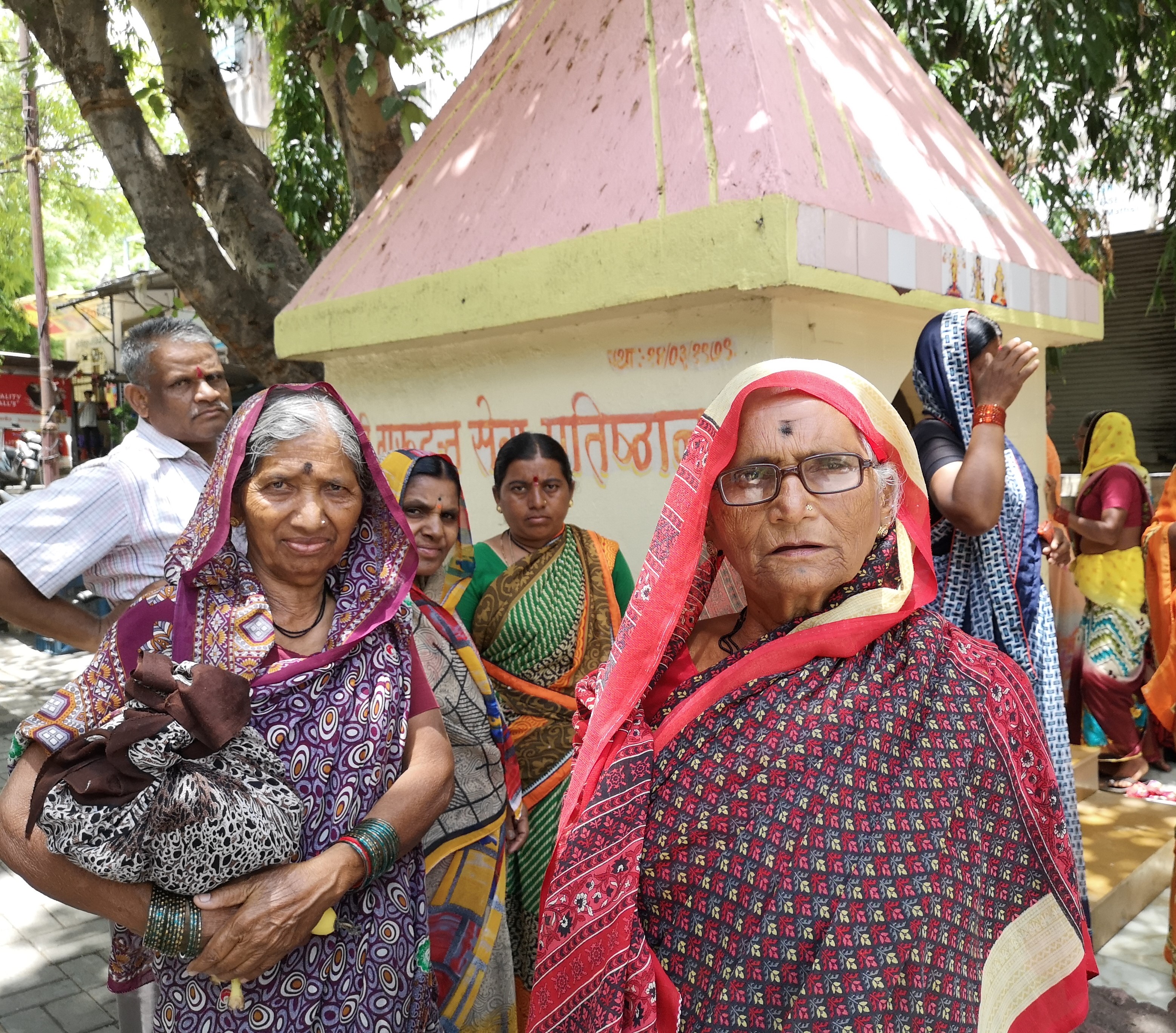
Kushivarta bai and Padmabai from Aurangabad district have joined the vari for the first time. They travelled by road to Alandi and then started their journey on foot. They were a bit amused but more skeptical of my interest in their journey and unsure of how much to divulge. As soon as the familiar rhythms of टाळ and मृदंग started they came alive.

Today is the day the पालख्या (Palkhya) stay in Pune, to start fresh tomorrow at day break. So many of the दिंड्या (groups/bands of pilgrims) are staying around my mother’s house. A couple in the school building, a few in the warehouses made available for them for the night. Early in the morning, one of the groups in the school walked towards the Ganesh temple singing bhajans to the rhythm of टाळ Taal and मृदंग Mrudunga. It is such a soothing sound. Listening to it after so many years brought tears to my eyes.

Later in the afternoon they gathered around the Datta temple, probably on the invitation of one of the shopkeepers behind the temple.

Another bhajan. This time men take the lead.

Musings

People: Vaarkari

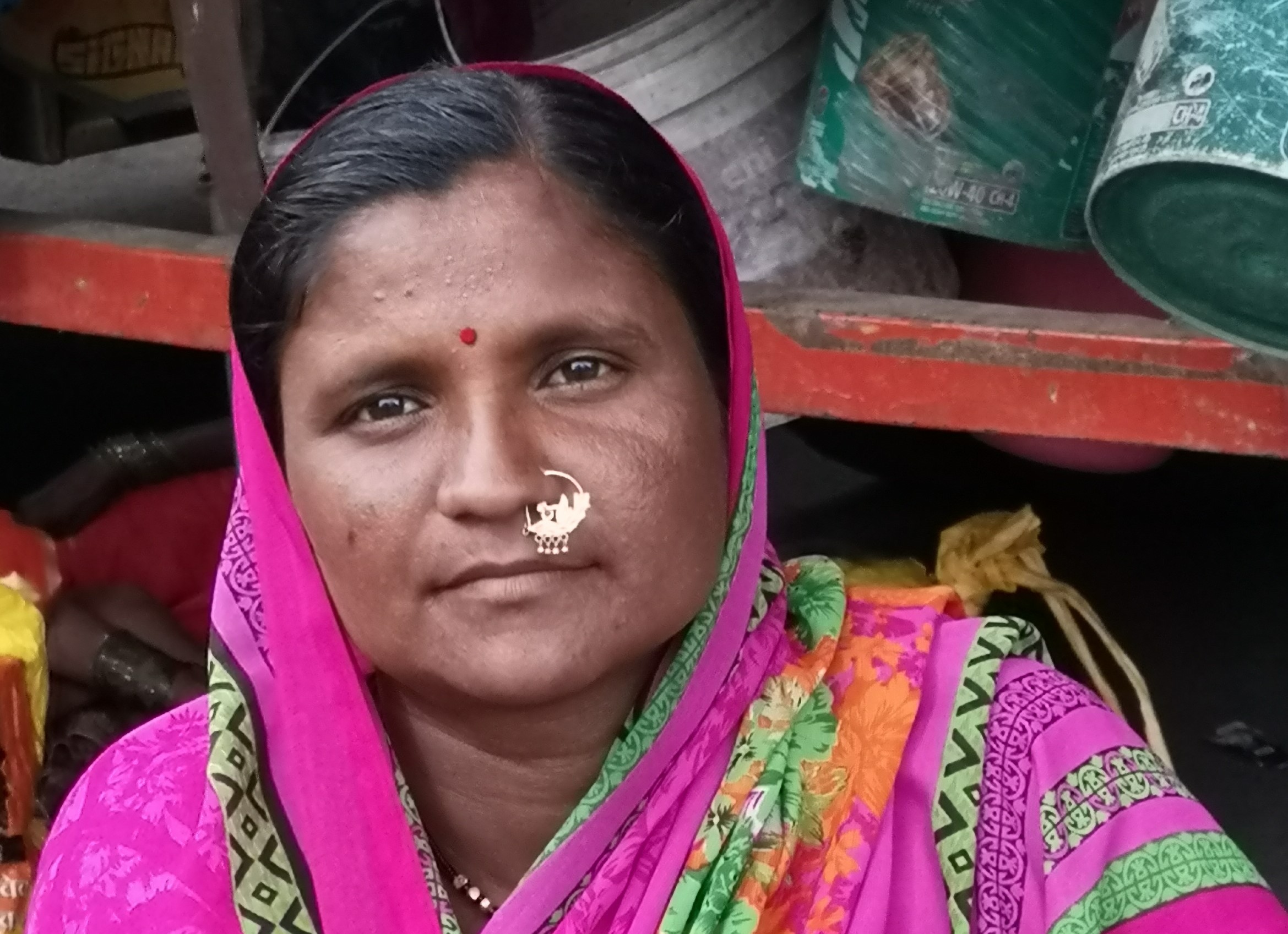
Last two three days everybody has been talking about Palakhi (palanquins of saints) going through Pune but I had completely forgotten that today, as I walked towards Lakshmi road. I have been in the city during this time after 15 years or so. I stopped in my tracks to look closely at a beautiful nosering one of the vaarkari (pilgrims walking to Pandharpur) women was wearing. A group of them was sitting around chit-chatting after a day long walk. Some people sitting in the truck that travelled with their belongings, some sitting on the road with no care in the world.

Meerabai

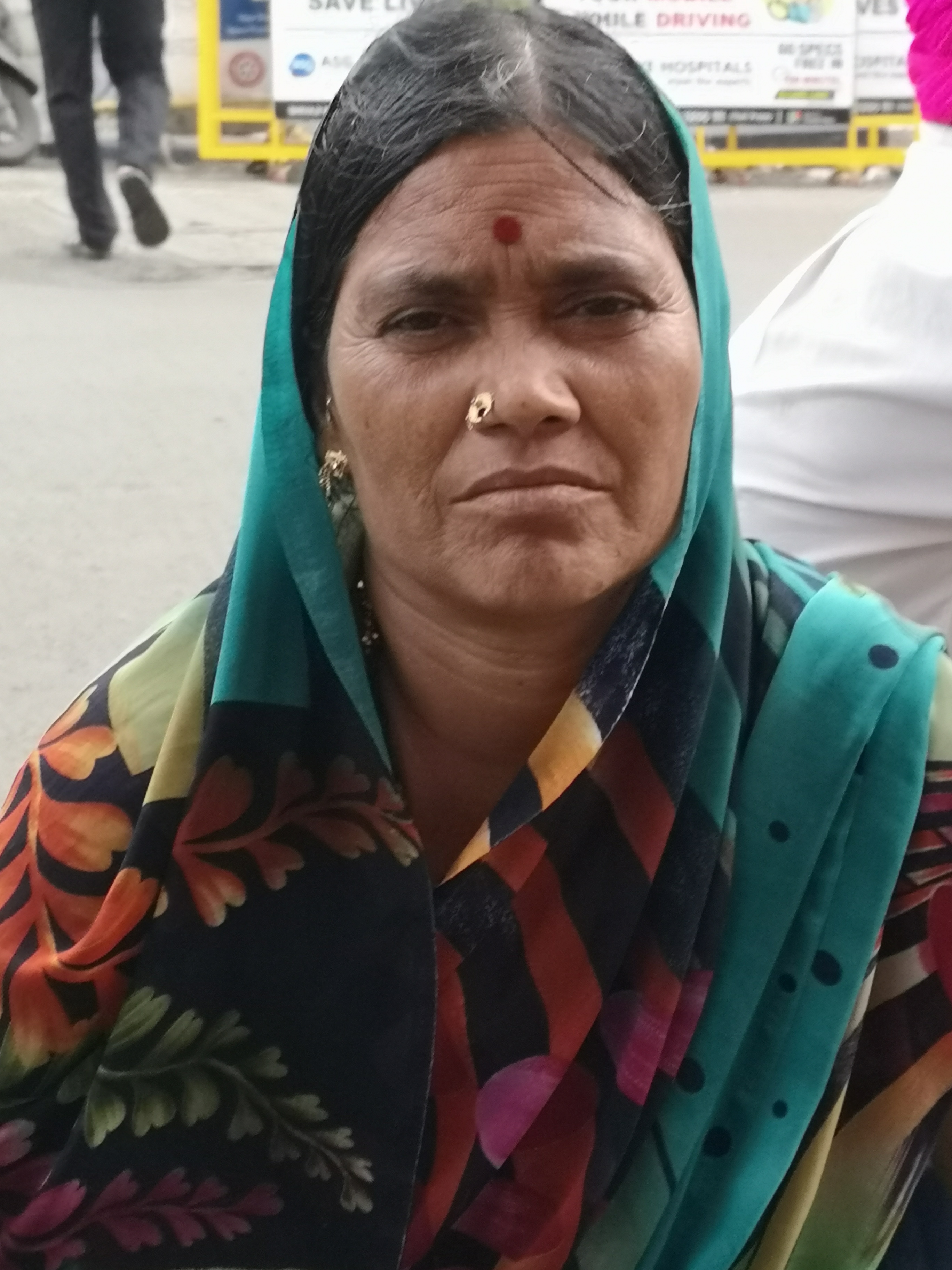
I asked if I could take a close up of her face, and another woman in the group enthusiastically gave permission. Meerabai was confused but agreed at the end, rearranged her Padar on her head and was ready for the photo op.

I sat down for a bit to take a group photo and exchange a few words. The group was from Beed. They were planning to walk all the way to Pandharpur. The whole endeavour from home and back was going to take a month. Meerabai talked about how her feet hurt now that she was half way in the journey. Her Tulshivrundavan (Holy basil plant in a decorative pot) was safely kept inside the tempo, and she was too tired to take it out for a photo op. I wasn’t looking for the typical Vari photos anyways, so I just sat down for a bit.

The other two ladies Anasuya and Godabai were enthusiastic about their ‘Ekla’ (solo) photo as well. Then the oldest of the bunch, Sudhamati, insisted that she wanted to see all the photos. The phone made a round. Everybody happy with the outcome. Grandma especially liked Meerabai’s closeup. We sat for a few more moments chit-chatting and it was time for me to be on my way.
I wish I had more time to just sit around talk about life, the motivation to travel for days on foot away from their families, experiences on the way, and may be sit and sing a bhajan or two.

Dilli Diary · Musings

Election 2019

This was my first time voting after at least 12 years. We checked our names in the online portal to make sure we were on the list and ventured out early morning to beat the Delhi heat. Although we didn’t realize we should have got our booth and serial number to make the process smoother. After the frustration of looking through the paper list at the booth, we resorted to the online portal again on our mobile phones and found ourselves. After this experience I decided to stay at the information desks to help out people who couldn’t find their names or booth locations.

The enthusiasm at the voting booth in Malikpur was refreshing. When people didn’t find their names in the electoral rolls, they came to us to check online. Some brought their AAdhar card. When we told them we need election card and the EPIC number to search in the online portal they felt dejected. At this point, I thought we had lost them. Many were getting late to go to their jobs. They were mostly daily wage workers, maids, and people who depend on their work for daily bread and butter. But they went home and brought the election cards. Made sure they had the ‘Parachi’ and voted.

There was some story floating that after filing form 7 people who have election cards but their names were missing can vote. We gave that information and told people to report back if that worked. Nobody reported back.

Couple of women kept insisting that somebody should go with them to the booth so that they can tell the officers to help them vote. They clearly didn’t trust that just going by themselves will get the work done. Clearly they learnt it from previous experiences with government officials somewhere.

People were flumoxed that they can’t vote with AAdhar card. Many people who had now made Delhi their home had changed their address on AAdhar or got new AAdhar for this purpose. Nobody told them that they had to move their name from the previous constituency to Delhi or register as a new voter if they hadn’t voted before. It was disheartening that nothing can be done at this point. I am thinking of working with the election commission to see if I can go door to door and get people from Malikpur gaon registered for the next election.

Musings · Social Media, Technology & Education

Whataboutery

Lately, it has been hard to continue any dialogue, on social media (Facebook, Twitter,WhatsApp) . If the topic is lynchings, the response is, what about Kashmiri Pandits who suffered at the hand of muslims, or the historic atrocities. If the topic is economic issues due to demonetization or corruption, the reaction is, what about all the ghapalas Congress engaged in, or Lalu or some other person, party engaged in. If a person points at the atrocities on animals, or refugees in need of help, the reaction is, what about these other groupings of people? Why wouldn’t you comment on that?

This particular way of arguing, whataboutery, does not move dialogue. Here is a definition of whataboutery from Wikitionary:

  1. Protesting at hypocrisy; responding to criticism by accusing one’s opponent of similar or worse faults.
  2. Protesting at inconsistency; refusing to act in one instance unless similar action is taken in other similar instances.

This is an ‘Ad Hominum Tu Quoque’ type of fallacy , Tu Quoque literally translated as ‘you also’. Instead of refuting or engaging with the argument put forth, the focus is on labeling the commentor with hipocracy.

Whataboutery does not move dialogue, so how do we teach people how to argue productively? Looking back to see the influences in my life; I learnt about fallacies in my Logic class in 11th grade. It might be the basis of how I learnt to argue well, or how I learnt to write well, building on arguments to reach a desired point. But then again, I remember one of my classmates being frustrated with the subject as she could not make head or tail of the T,F table or the list of fallacies and their definitions. Much of it was taught like math is taught in many Indian schools. Learn the steps and just follow them without a thought. Nobody expected any particular effect on the way we think, argue, spot faulty arguments etc. Other subjects most definitely did not teach us how to argue a point well or write an opinion piece based on solid facts and reasoning. No wonder I keep getting papers to review at masters and even PhD level that are a hodgepodge of borrowed ideas than a well formed argument. But I diagress.

Coming back to the problem of public discourse – I realize now that my basic assumption that people will engage in productive dialogue if they were provided with the tools, might be faulty. The entire reason to resort to whataboutery is to shut up the person whose views do not match your world view. So the problem is much more funadamental.

The basis for the need to shut up another is because of the perception that my way is the right way and there can be none other. Some of it is because of the current polarizing discourse. Much of it I think is also because of the subpar education in schools and colleges that do not teach or expose students to the diverse experiences, histories of people. The ability to acknowledge and celebrate (not tolerate) others’ way of being and ability to listen, reflect deeply, and graciously agree to disagree – these are the skills we need to teach kids in homes and in schools.

Dilli Diary

Terrace gardening

We are more than one year old in Delhi now. Gardening was among many of the items on the list ‘struggle to adjust’. One of the reasons we chose this rental place was the huge terrace (double the size of the living space) and the potential to have a bustling veggie garden. It has been a bumpy road to say the least.

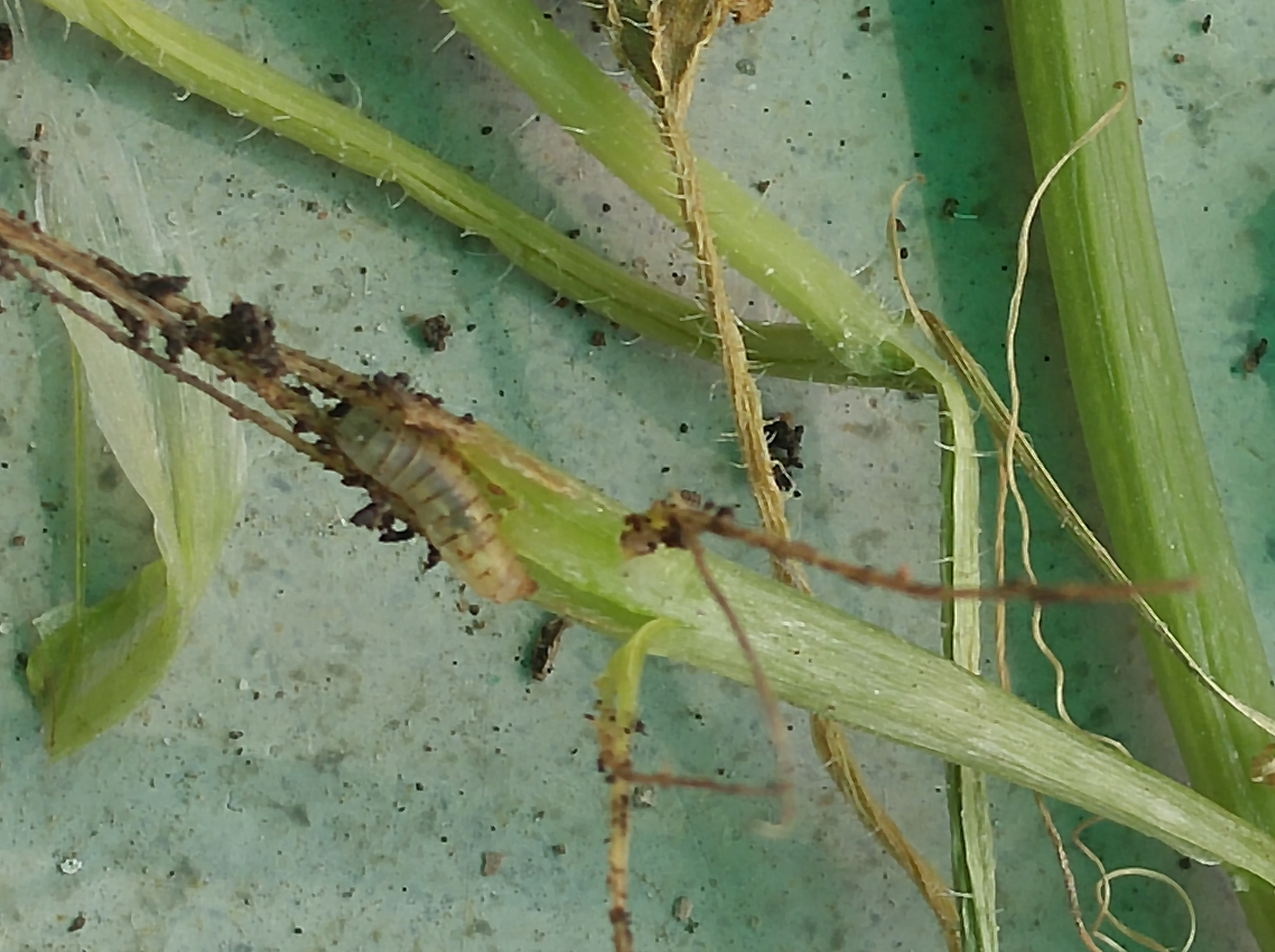
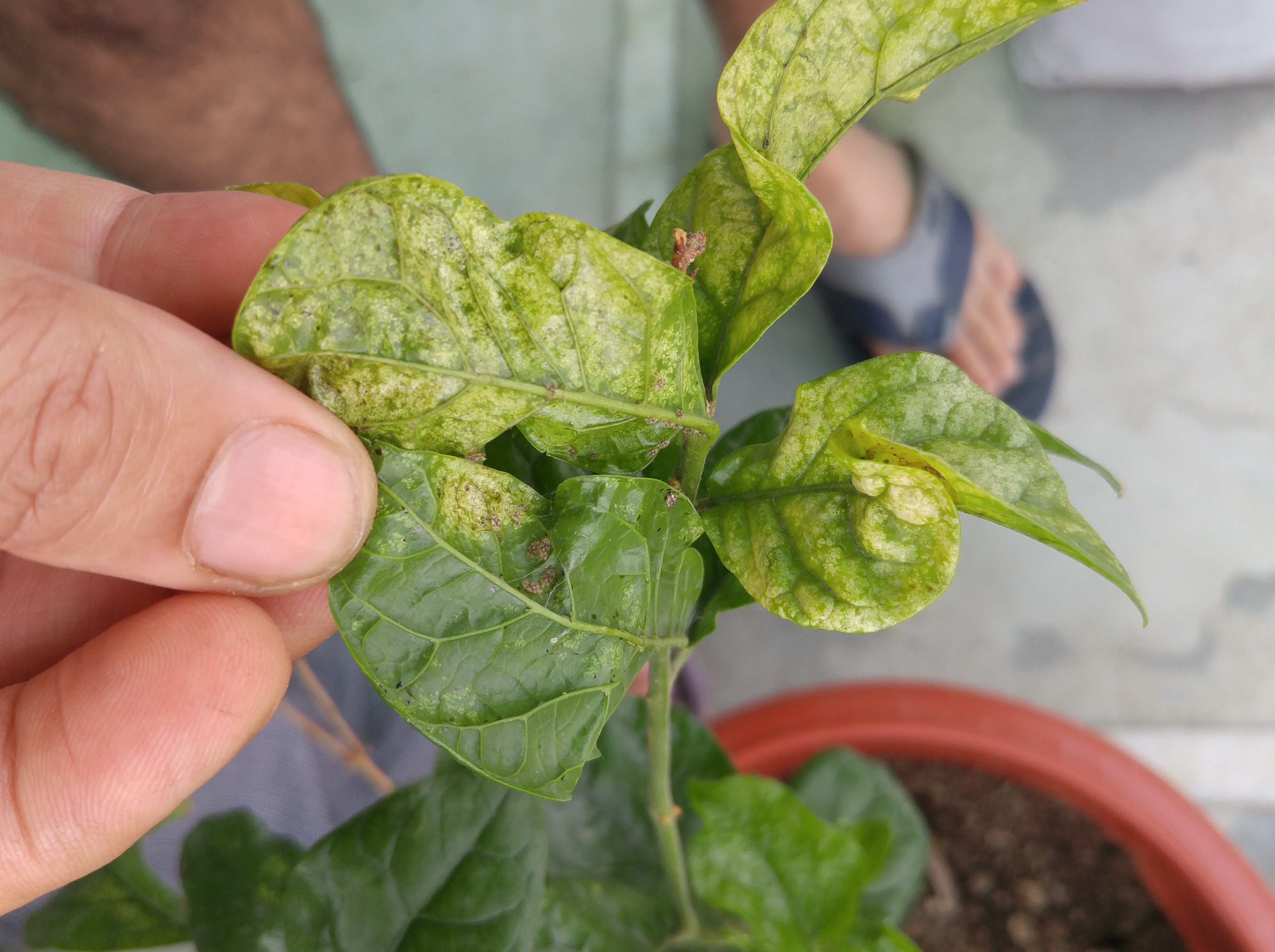
The weather was perplexing. How do you get any length of any season when you go suddenly from bitter cold to extreme heat? The warming up in March brought insects and infestations like I have never seen before. Aphids, white flies, and things unknown to me that burnt the plant to a stick in just one day. Then there were birds – mostly pigeons and peacocks that feasted on every young shoot in sight, leaving nothing to grow to even a foot of height.

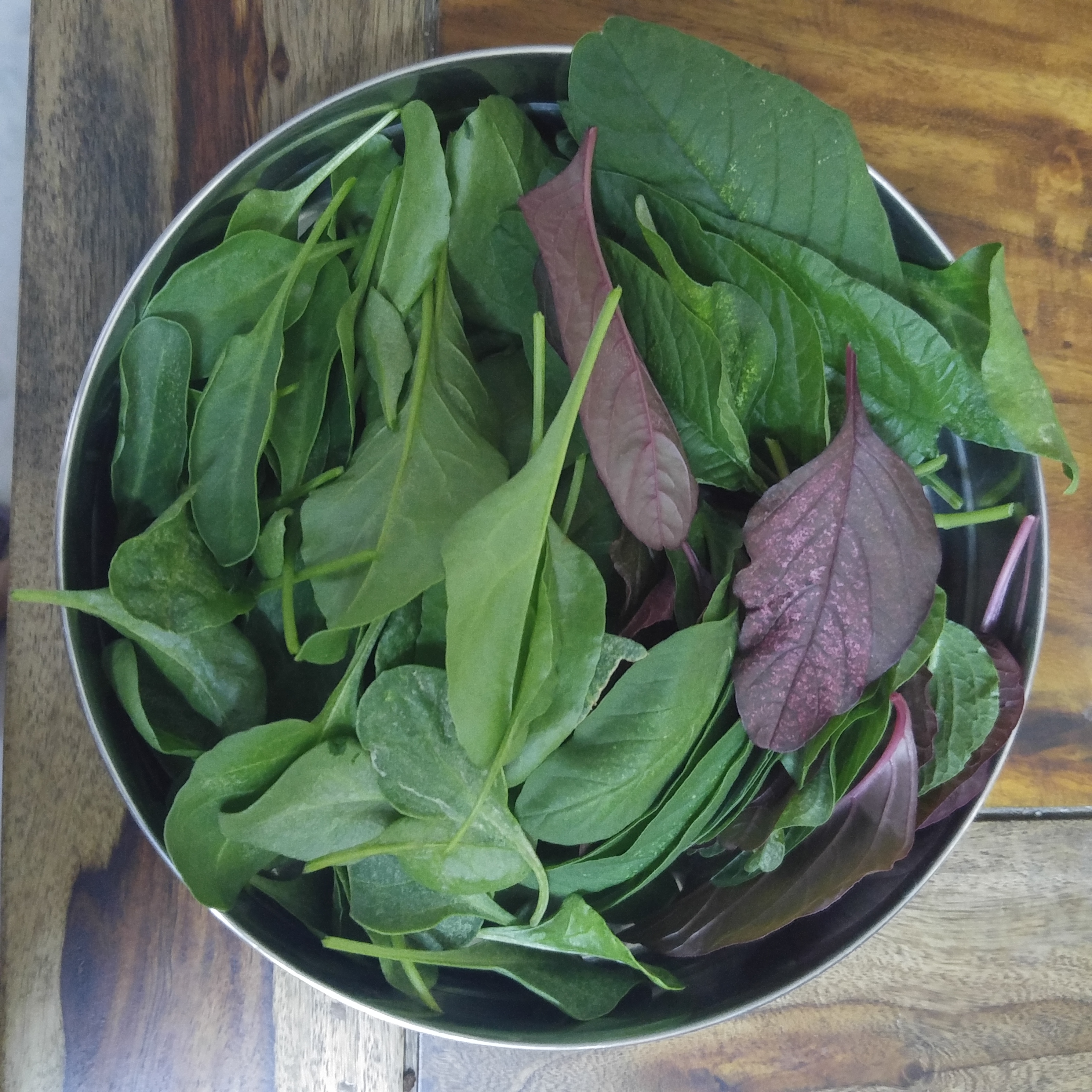
I was cleaning old photos today and found many many photos of plants, infestations, and other garden related things, captured to share with my facebook and whatsapp groups. They have been a godsend. It was amazing to see how the terrace garden has grown to what it is now in spite of all this, from the first three pots left by previous tenant and some plants I got from Pune. And more importantly, the photos of veggies we ate in between since last June and now. Overall, a mixed bag.

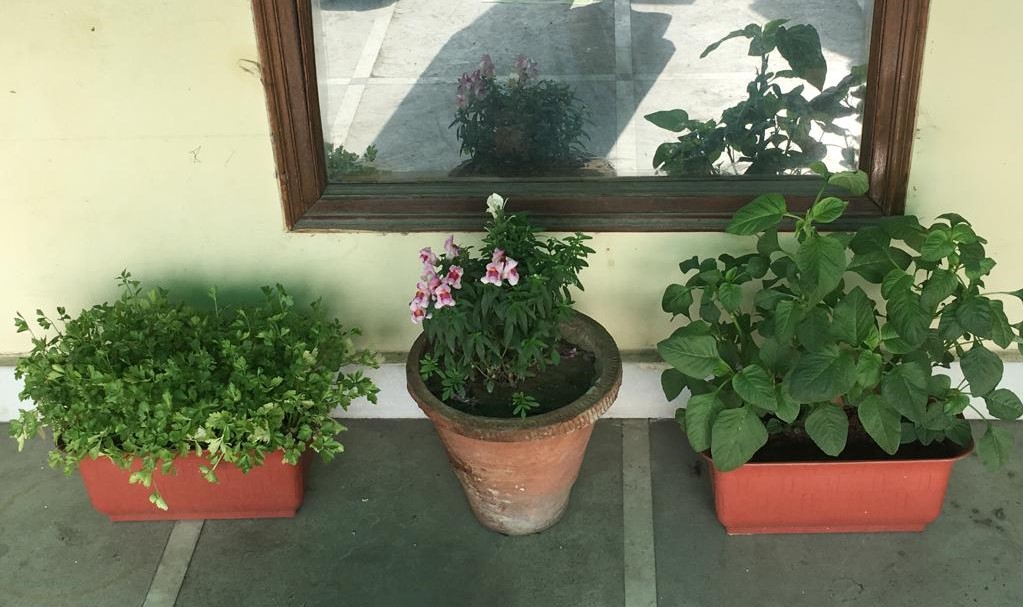
The starters from Pune and initial plants bought in Delhi:

Some photos of produce, flowers, and seedlings. I need to take more as motivators to flip through when going gets tough 🙂