Musings

निसर्गातली लगबग

रोज आंघोळ करताना खिडकीतून एक सुगरणीचं जोडपं घरटं करताना दिसतं. सुरवातीला नुसतं फांदीला लटकलेला अर्धगोल होता आता पूर्ण गोळा तयार झालाय. त्याला आत जायला जागा आणि त्याला वरून आवरण आहे. काडी काडी आणून, रोज थोड थोड करून अगदी सुबक बांधकाम झालंय.
जागोजागी शिंपी सुद्धा गवताची पाती आणून खोपच्यामध्ये घरटी बनवताहेत. एक खिडकी आणि जाळीच्या मध्ये, एक गुलाबाच्या वेलीच्या गचपणात अस जोरदार काम चालू आहे. लांब लचक गवताची पाती घेऊन उडताना हे पक्षी फारच मजेशीर वाटतात. पलिकडे शेतात लावलेली सोयाबीन आणि इतर पिकं जेमतेम दिसत होती, ती आता वाढून शेत गच्च भरल आहे.

हराळीला आलं की अशी निसर्गात चाललेली अॅक्शन बघता बघता आपोआप मन स्थिरावतं.

आज नाश्ता करायला जाताना मुंग्यांची रांग दिसली पण काहीतरी वेगळ वाटल म्हणून थांबले तर मुंग्या नाही तर termite ची लगबग चाललेली दिसली. एका बिळातून दुसऱ्या बिळात ओळीनी सर्व चालले होते. मध्येच एक काळा मोठा मुंगळा आला आणि त्यांच्यात घुसला. भोजनगृहाबाहेर मुंगळ्यांची रांग गेले 4-5 दिवस आहे. पण हा पठ्ठ्या वाट चुकून इथे अलीकडेच कुठे असा विचार करत होते तोपर्यंत तो termite च्या लायनीत घुसला आणि त्यांना खायला लागला. गौरी आणि मी आश्चर्यानी बघायला लागलो आणि तो खरतर termite सोडतोय आणि त्यांच्या पकडीत असेलेल पांढरं काहीतरी खतोय अस लक्षात आल. म्हणजे ही सगळी मंडळी बहुतेक अंडी हलवत होती असं दिसतय. मुंग्यांना अंडी हलवताना पाहिल होतं पण termite ना कधी पाहिलं नव्हत.

मुंगळ्याचा असा डल्ला मारणं सुरू होतं तोपर्यन्त termite च्या रांगेत अचानक उलट्या दिशेनी येणारे मोठया लाल डोक्याचे प्रकार दिसू लागले. त्यांच्या कडे बघत होतो तोपर्यन्त त्यांच्या फौजेपैकी काहीनी मुंगळ्याला घेरल आणि बहुतेक चावायला सुरवात केली. मुंगळ्यानी self-defence साठी स्वतःचं मुटकुळ करून घेतल. पण मुंगळा जोपर्यन्त रांगे पासून दूर जात नाही तोपर्यंत ह्या पठयानी त्याला सोडल नाही. हे विशेष फौजेतले termite चे प्रकारही मी पहिल्यांदाच पाहिले.

एक महिनाभरामध्ये जसं हळूहळू पुढे जाणारं काम, बदलत जाणारा निसर्ग पाहायला मिळतो तसं अचानक थरार नाट्य सुद्धा पाहायला मिळतं.
Musings

The Colonial Legacy

Nainital was in news end of April due to forest fires that came too close to the residences and the army campus. I explored more as we were planning to visit the Kumaon region in May. Realised that forest fires in the Garhwal and Kumaon region during this time are a regular occurance. It just ended up in news because it was out of control and threatened Nainital proper. The visual of the helicopter lifting water from Bhimtal to dump it on the forest fire was newsworthy.

Among a variety of reasons, some pointed the finger at miscreants, cattle grazers who set fire to prompt new grass, campers and tourists who accidently set fire; some talked about the weather this year – it has been a dry winter. No snow, no spring rains. Everything is dry. There was also a mention of pakistani elements sabotaging. Of course somebody has to bring up our neighbour. One thing was missing though, the fodder provided by the Chir trees and the history of it.

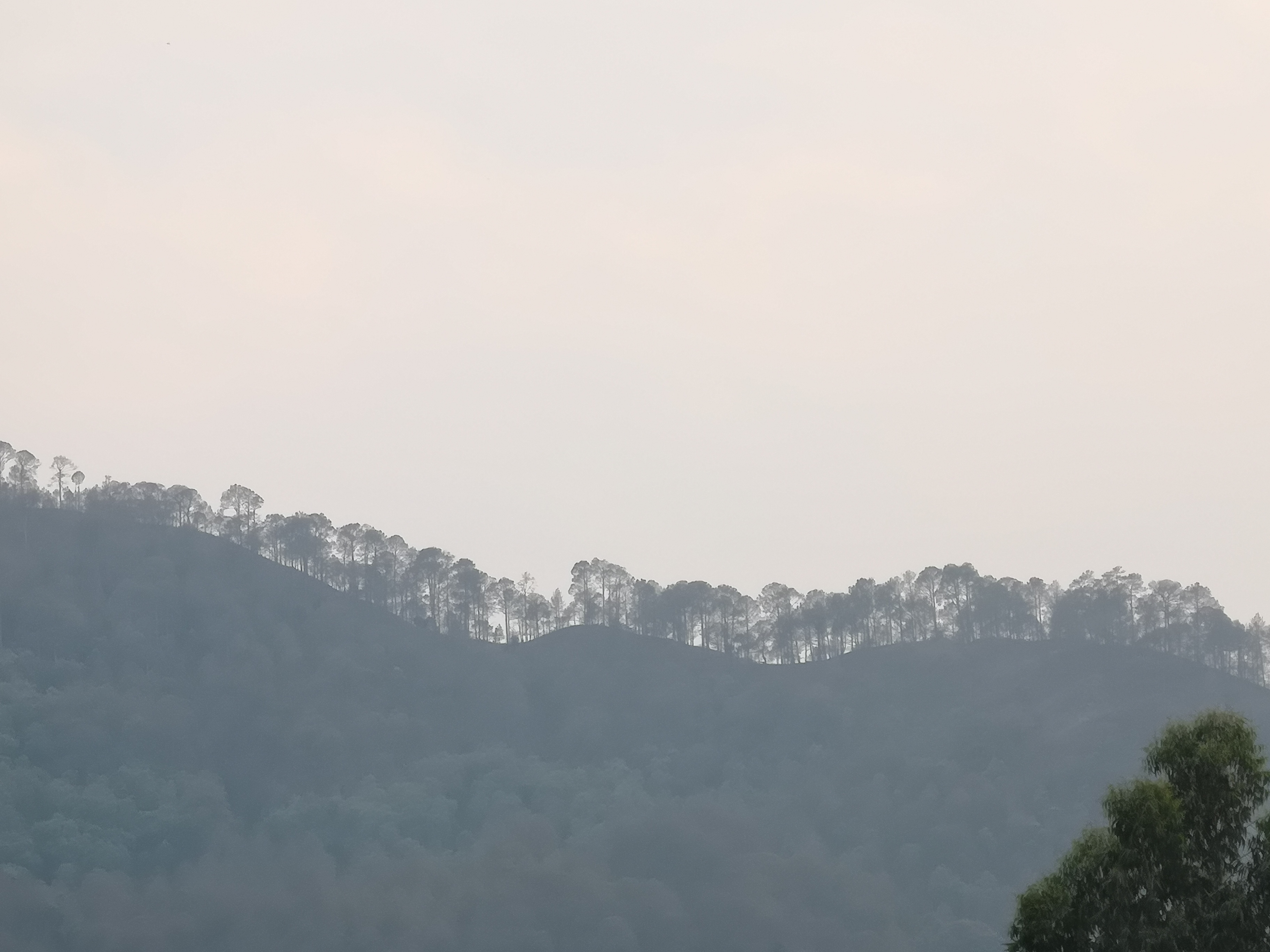
Chir or Pine, the straight tall trees, that create the beautiful picure perfect silhoute of the moutains are highly flamable. Their needles cathch fire very quickly. Our taxi driver said, the wet/green leaves/needles are flammable, once they are dry, it can be ignited with just a stone falling on another stone. We saw a demonstration immediately after at a rest stop. A driver (obviously an outsider) threw a cigarette butt and walked ahead, unaware of the fire ignited behind him.

The mono-culture of Pine (Pinus roxburghii) is a colonial legacy. It was grown for its straight wood and the resin. Kathgodam, the last train station, entry to the Kumaon region gets its name from this history. It was a depot that transported Pine from the hills to the seaport of Calcutta. When we were in the Garhwal region in the Fall, our treck guide had talked extensively about the nuisance that is the Pine tree. The tree does not allow any other tree to grow around it. It has shallow roots leading to soil erosion, it dries up land and makes it barren. The needles are flammable, cover the ground and makes it acidic so that nothing else grows on it. Rhododendron and the Banj Oak are two of the species that can push back. The Banj is a multiuse tree of the region. Offers shade, fodder for domestic animals, the leaf litter makes the land fertile, the cones are edible, branches are used as cooking fuel. However, its wood is not useful for furniture. It is also a slow growing tree. Thus over the years it has been replaced with the Pine.

This 200 year old story still haunts the hills every summer with forest fires. It has also made the soil increasingly dry and infertile, and the hill slopes barren.

Relevant Reading:

Dilli Diary

The Kites

September 2018
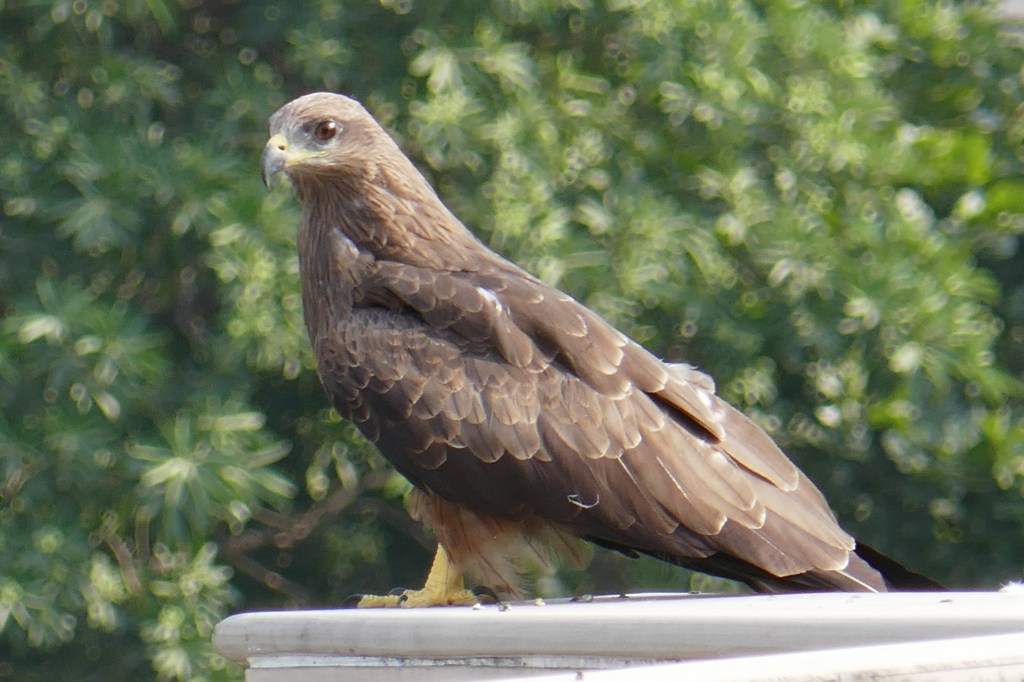
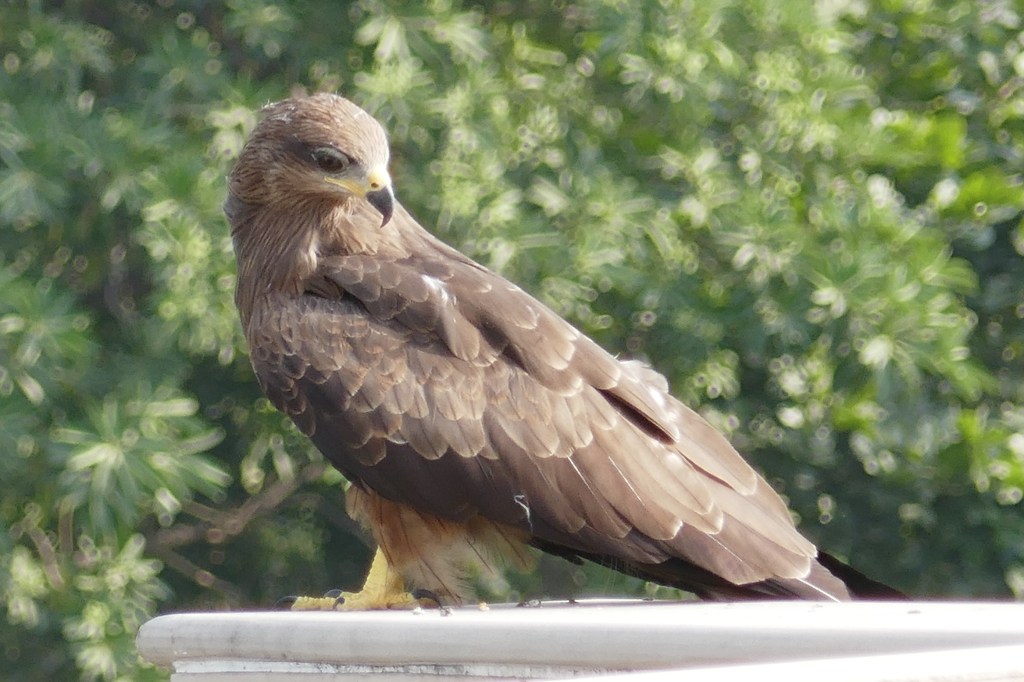
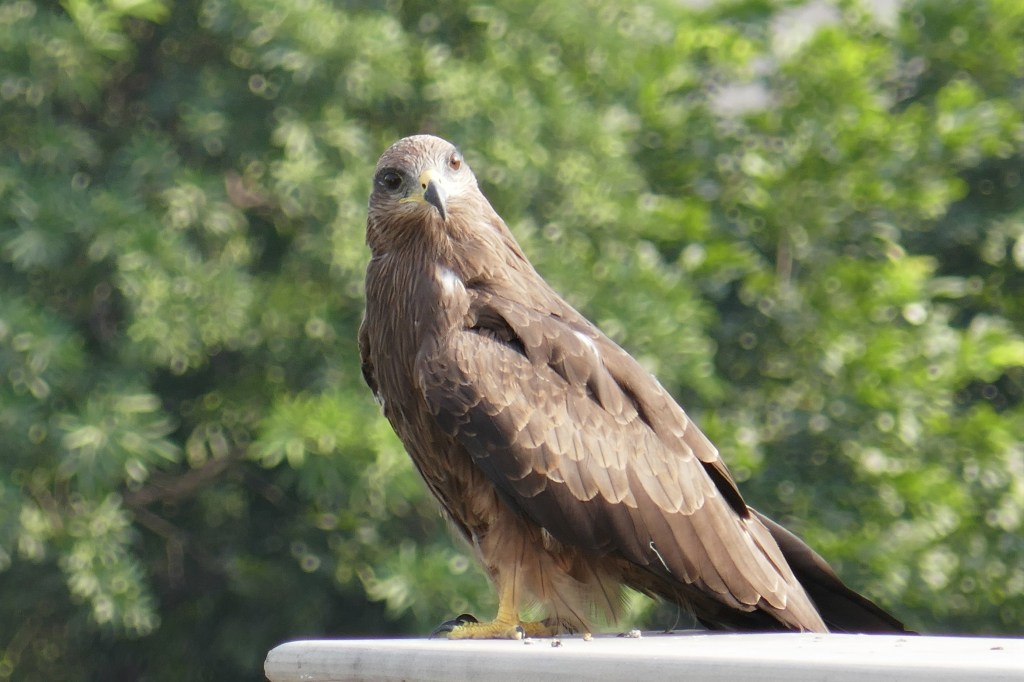
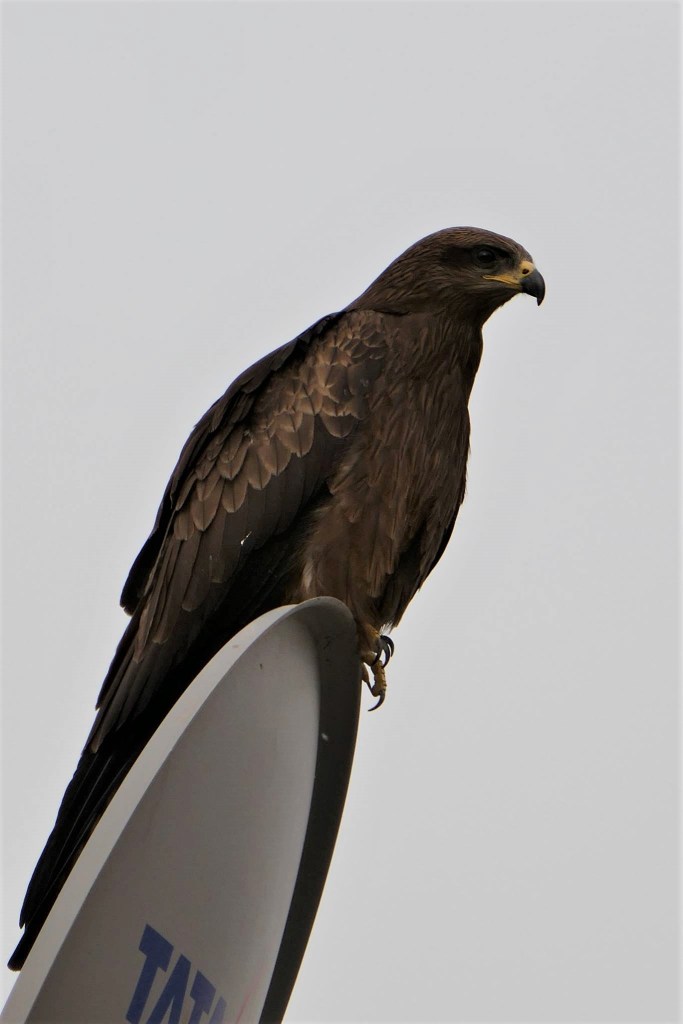
Birds in our backyard · Kite. Ghaar in marathi. A bird of prey. But many times I see smaller birds like crows and pigeons chasing it.
There is a pair that has used the stadium light in the garden in front of us for nesting. So I have a clear view as their life unfolds. They also see them perched on the Tatasky dish on top of our building.

Baby’s visit, 16 January, 2019
The baby birds are used to our terrace and visit often. It is fascinating to see them changing so fast.

I can Fly, September 25, 2019
Yesterday, I was amazed to see the kite baby fly out of its nest for the first time. There is a very tall pole with floodlights on four sides in the garden in front of us. A pair of Black Kites seems to like it. This is the second year they built the nest there. I was staring out the door, while talking with my mother. And suddenly I saw a smaller bird coming out and standing on the edge as if contemplating. Then taking flight. I thought the breeding begins in winter and Kites were grown and ready to fly in summer. So may be it wasnt the first flight. Whatever it was, it was mesmerizing.

Nesting, September 30, 2020
The Kite is gathering long sticks for a few days now. Somewhere a nest is coming up. The place on the light pole seems to be abandoned. Proably because the construction right across from it is now taller than the stadium light.
It picked up a stick from our terrace from the bundle I have been saving to use in the veggie patch. Then quickly dropped it. May be because of the thorns or because I suddenly stepped out on the terrace exactly at that moment. It took a wide flight around the marsh/patch of grass in the forest behind us and then swooped in and picked up a stick. This one seems to have worked better. Balancing the stick in its beak, it flew around the pole and behind the building. I so wish I can go wandering, looking for the nest.